Prototyping for Designers: Developing the Best Digital and Physical Products
Kathryn McElroy
2016
View book
Book guide and evaluation
Sheila Pontis
0 reviews
Published
pages
views
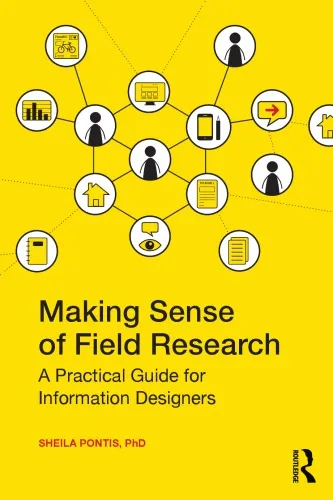
Introduction to "Making Sense Of Field Research: A Practical Guide For Information Designers" "Making Sense Of Field Research: A Practical Guide For Information Designers" is an essential guidebook for anyone working in the field of design, particularly those focusing on infor
Before you read
"Making Sense Of Field Research: A Practical Guide For Information Designers" is an essential guidebook for anyone working in the field of design, particularly those focusing on information design. Authored by Sheila Pontis, the book brings clarity to the often complex and nonlinear process of conducting field research by providing step-by-step practical advice and a wealth of real-world examples. This unique work bridges the gap between academic research frameworks and the practicalities of design practice, ensuring that both novice and experienced designers can apply field research effectively in their projects.
Field research is a valuable tool that allows designers to delve deep into the needs, behaviors, and contexts of people to inform their designs. However, it can also be overwhelming and challenging, especially for those new to the practice. This book aims to demystify the process while emphasizing the importance of critical thinking, planning, and data interpretation in order to make well-grounded design decisions. With its clear framework and actionable tools, this book has become a staple resource for anyone aiming to connect research insights to meaningful design outcomes.
Whether you're a student, a professional designer, or an educator, "Making Sense Of Field Research" will guide you in mastering the skills needed to understand your audience, define problems effectively, and create design solutions that truly meet users' needs.
The book is structured to take the reader through the entire process of field research, from preparation to application. It introduces core research methodologies and explains how to adapt these techniques to suit the specific challenges of information design. By breaking the research process into manageable, actionable steps, Sheila Pontis provides a roadmap that prioritizes understanding and interpretation over formulaic solutions.
Readers will find detailed chapters on preparing to enter the field, collecting data, analyzing findings, and integrating insights into the design process. The book offers practical advice on interviewing users, observing behaviors, and documenting findings, all while maintaining an emphasis on user-centered thinking. Additionally, it explores how to synthesize data through diagrams, sketches, and frameworks that allow designers to convert abstract concepts into tangible ideas.
What truly sets this book apart is its ability to illuminate the "why" behind research activities, encouraging designers to reflect critically on their role as intermediaries between data and design. Each chapter is filled with detailed examples, exercises, and case studies, ensuring that readers not only understand the principles but also feel prepared to apply them in real-world scenarios.
"Good design is not about what you want to say, but about truly understanding what your audience needs to hear."
"Field research is not simply about collecting data; it’s about interpreting human behavior in a way that yields actionable design solutions."
"Research challenges us to not settle for the obvious, but instead to dig deeper into understanding context, culture, and complexity."
"The best design outcomes emerge when research and creativity combine to solve real-world problems."
In today’s fast-paced, information-driven world, the ability to design meaningful and effective communication solutions is more important than ever. Central to this ability is the skill of conducting thorough and thoughtful field research, which ensures that designs are informed by real-world needs rather than assumptions. "Making Sense Of Field Research" is more than just a guide—it's a call to action for designers to embrace the complexities of human experience and translate them into impactful design.
What makes this book stand out is its practicality and relatability. It doesn’t overwhelm readers with theoretical jargon or abstract concepts; instead, it offers concrete advice and actionable steps. By prioritizing the connection between research and design, this book equips designers with the knowledge and confidence to navigate ambiguous challenges, advocate for user needs, and create solutions that resonate.
Ultimately, "Making Sense Of Field Research" is a must-read for anyone who wants to elevate their design practice by grounding it in empathy, critical thinking, and evidence-based approaches.
Your question is answered in the context of this title and author. Each answer uses 2 points.
0 reviews, 4.5 average out of 5
Sign in to publish a review.
Ask a focused question and learn from the community.
Related references that continue this learning path.
Kathryn McElroy

Anthea Innes (editor);Debra Morgan (editor);Jane Farmer (editor)