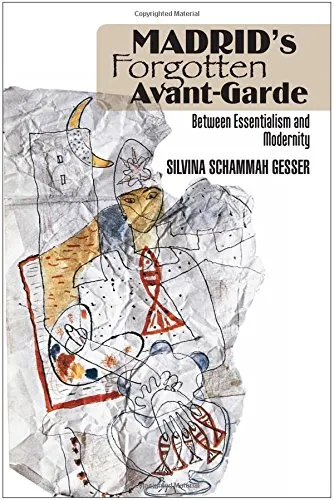
Introduction to Madrid's Forgotten Avant-Garde: Between Essentialism and Modernity
Madrid during the early 20th century was a rich yet tumultuous cultural battleground. While much attention has been given to the avant-garde movements in Paris, Berlin, or New York, the avant-garde scene of Madrid remains an underexplored and somewhat forgotten segment of European cultural history. Madrid's Forgotten Avant-Garde: Between Essentialism and Modernity seeks to redress this oversight. The book delves into the dynamic interplay between essentialist traditions deeply rooted in Spanish heritage and the modernist impulses that sought to disrupt and redefine artistic, literary, and social norms of the time.
Combining in-depth research with cultural analysis, this text revisits overlooked works, forgotten figures, and marginal intellectual spaces, illuminating their contributions to Spain's cultural landscape and their broader impact on the European avant-garde. The narrative situates Madrid's avant-garde movements within the context of its time, characterizing the unique tensions between nationalism, cosmopolitan aspirations, and cultural innovation. This book is an invitation to rethink the significance of Madrid's artists, intellectuals, and their quest for meaning in a rapidly modernizing world.
The following sections provide a detailed overview of the book’s content, its key insights, inspiring quotes, and why its study remains paramount in understanding 20th-century cultural history.
Detailed Summary of the Book
Madrid's Forgotten Avant-Garde is divided into several thematic explorations, uncovering the artistic and intellectual movements that defined Madrid's cultural sphere during the interwar period. At the heart of the book is the struggle to balance tradition and modernity — a duality that characterized much of Spain's fervent debates in the early 20th century.
The early chapters trace Madrid's role as an intellectual hub, where figures like José Ortega y Gasset and the Residencia de Estudiantes (Student Residence) cultivated an environment for interdisciplinary experimentation. From poetry to painting, from surrealism to futurism, Madrid's avant-garde engaged actively with global artistic currents while remaining deeply interlaced with Spanish cultural identity. Groundbreaking literary figures, such as Federico García Lorca and Ramón Gómez de la Serna, emerge as central players in this narrative.
The book also scrutinizes the socio-political barriers that hindered Madrid's avant-garde from gaining international recognition. Fascist ideologies, political upheavals, and the Spanish Civil War disrupted artistic practices, pushing many creators into exile and relegating their works to obscurity. Through archival research and close readings, the text sheds light on how these socio-political currents affected Madrid's artistic creativity and the endurance of its cultural expression.
Its final chapters emphasize the posthumous recognition that Madrid's avant-garde deserves, drawing attention to legacies that influenced subsequent artistic generations and contemporary cultural movements.
Key Takeaways
- Madrid was a vibrant yet marginalized cultural center during the avant-garde era.
- The contrast between essentialist traditions and modernist ideals created unique artistic tensions.
- Political and social upheavals deeply impacted Madrid's cultural legacy, often overshadowing its contributions to global avant-garde movements.
- Understanding Madrid's avant-garde is crucial to holistically analyzing European modernism.
- Many influential works and creators have been unjustly overlooked by dominant cultural narratives.
Famous Quotes from the Book
"Madrid’s avant-garde did not exist in the shadows of Paris or Berlin, but at the intersection of tradition and rupture, entwining cultural patrimony with revolutionary artistic visions."
"Essentialism was not the enemy of modernity but its partner in dialogue, a tension that birthed cultural artifacts of stunning complexity."
Why This Book Matters
Madrid's Forgotten Avant-Garde: Between Essentialism and Modernity is more than an academic exploration; it is a critical reframing of cultural history. By revisiting Madrid's avant-garde scene, the book challenges the predominant Eurocentric narrative that disproportionately celebrates Paris, Berlin, and London while neglecting the contributions of other centers like Madrid.
This text invites readers to rethink modernism through the lens of forgotten voices, marginalized movements, and the complexities of cultural exchange amidst political instability. In a time when discussions of cultural inclusivity and diversity dominate the global stage, this book adds an essential historical layer to those conversations, urging us to look beyond the established canons of modernity.