Book guide and evaluation
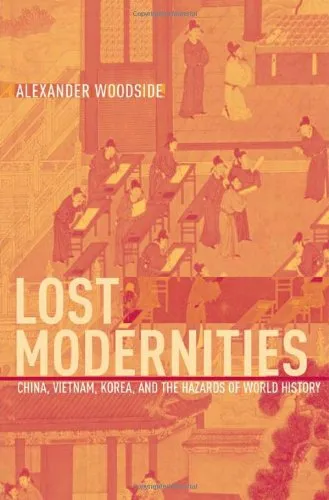
Lost Modernities: China, Vietnam, Korea, and the Hazards of World History (The Edwin O. Reischauer Lectures)
Alexander Woodside
English
Intermediate
novel
4.0 / 5
0 reviews
2006
Published
155
pages
447
views
Introduction to Lost Modernities: China, Vietnam, Korea, and the Hazards of World History "Lost Modernities: China, Vietnam, Korea, and the Hazards of World History" by Alexander Woodside offers a compelling examination of the overlooked trajectories of modernization in Ea
Before you read
What will you get from this book?
Introduction to Lost Modernities: China, Vietnam, Korea, and the Hazards of World History
"Lost Modernities: China, Vietnam, Korea, and the Hazards of World History" by Alexander Woodside offers a compelling examination of the overlooked trajectories of modernization in East Asian civilizations. The book focuses on historical developments in China, Vietnam, and Korea, and argues that conventional western narratives of modernization often miss the complexities and contributions of these cultures. Throughout this insightful work, Woodside encourages readers to rethink world history and recognize the multifaceted nature of progress across different societies.
Detailed Summary of the Book
In "Lost Modernities," Alexander Woodside challenges the Eurocentric view of world history by highlighting the underappreciated developmental paths of East Asian societies. The book provides a detailed investigation into the historical and cultural contexts of China, Vietnam, and Korea, and examines how these regions have approached modernization independently of Western influences. Woodside delivers a nuanced analysis that uncovers how these civilizations developed complex governmental systems, legal codes, and philosophical doctrines that can be considered early forms of modernity.
The author contends that the historiography of modernization has traditionally undervalued the contributions and historical significance of East Asian societies. By exploring the unique characteristics and historical milestones of each region, Woodside reveals how they negotiated their own paths toward modernity, often preceding or paralleling similar developments in the West. China's bureaucratic governance, Vietnam's public policy evolution, and Korea's systems of societal organization are meticulously explored to demonstrate their advanced approaches to social and political challenges.
Key Takeaways
- The concept of modernity is not exclusive to the Western world; it has multiple manifestations across different cultures.
- East Asian civilizations developed sophisticated governance, legal, and philosophical systems that contributed to their unique paths to modernity.
- The study of history should embrace diverse narratives, acknowledging non-Western contributions to global development.
- The recognition of East Asia's historical achievements encourages a re-evaluation of modern global dynamics and the interconnectedness of cultures.
Famous Quotes from the Book
"The linear path to modernity depicted by Western history fails to account for the complex realities of East Asian development."
"By examining the nuanced evolutions in China, Vietnam, and Korea, we find that modernity wears many faces, each shaped by local realities."
Why This Book Matters
"Lost Modernities" is significant not only for its corrective approach to the Eurocentric model of history but also for its timing and relevance in today's globalized world. As international relations and global histories become increasingly intertwined, Woodside's work serves as a critical reminder of the importance of inclusive historical narratives. By understanding the distinct paths taken by China, Vietnam, and Korea towards modernity, readers gain a deeper appreciation of their cultural contributions and socio-political advancements. This recognition helps to foster mutual respect and understanding in contemporary global discourse.
Moreover, this book stands as a crucial resource for historians, scholars, and anyone interested in world history from an equity-driven perspective. It invites a reconsideration of traditional historical education and encourages a broader scope of study, which is vital for anyone seeking a comprehensive understanding of modern developments that shape our world.
Ask this book
Your question is answered in the context of this title and author. Each answer uses 2 points.
Sign in to ask the book assistant.
Reader reviews
0 reviews, 4.0 average out of 5
No reviews yet
If you have read this book, help the next reader with your experience.
Write a review
Sign in to publish a review.
Reader questions and answers
Ask a focused question and learn from the community.
Sign in to ask or answer a question.
No questions yet
Be the first to ask a clear, useful question.
What to read next
Related references that continue this learning path.

The Well-Educated Mind: A Guide to the Classical Education You Never Had
Susan Wise Bauer
2003
View book