
Book guide and evaluation
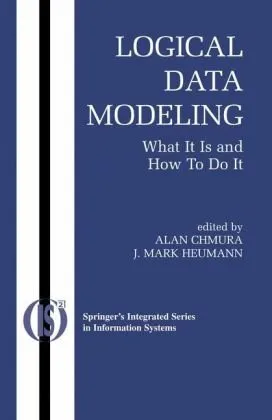
Logical Data Modeling: What it is and How to do it
Alan Chmura,J. Mark Heumann
English
Beginner
Data Modeling
4.9 / 5
0 reviews
2004
Published
234
pages
474
views
Introduction to Logical Data Modeling: What it is and How to do it In the ever-evolving landscape of data management, mastering the art and science of logical data modeling remains a cornerstone skill for professionals who aspire to excel in fields like database design,
Before you read
What will you get from this book?
Introduction to Logical Data Modeling: What it is and How to do it
In the ever-evolving landscape of data management, mastering the art and science of logical data modeling remains a cornerstone skill for professionals who aspire to excel in fields like database design, data architecture, and information systems analysis. "Logical Data Modeling: What it is and How to do it" serves as an essential resource, offering a comprehensive guide to understanding and implementing logical data models effectively.
Detailed Summary of the Book
The book opens with an exploration into the foundational concepts of data modeling, illustrating the importance of an accurate logical data model in bridging the gap between business needs and technical implementation. Readers are taken on a journey through the phases of data modeling, including requirements gathering, abstraction, normalization, and validation. Each concept is illustrated with real-world examples and detailed diagrams that demystify the complexities involved.
Further chapters delve into the intrinsic relationship between logical and physical data modeling. The book methodically explains how an effective logical model acts as a blueprint for physical data structures and serves to facilitate communication among stakeholders. By understanding these connections, readers can ensure that their data models fulfill both current and future business needs.
The text also addresses common challenges and pitfalls associated with data modeling, offering strategies for overcoming these issues. From aligning with business processes to ensuring scalability and adaptability, the book is laden with insights derived from years of experience in the field.
Key Takeaways
- Understanding the fundamental principles underpinning logical data models.
- Methods for gathering and analyzing business requirements effectively.
- Insights into converting business needs into clear, concise, and relatable data models.
- Strategies for overcoming common obstacles in logical data modeling.
- The role of logical data models in the broader data management landscape and their importance in crafting robust databases.
Famous Quotes from the Book
"A logical data model is the education and compass for all that follows in the world of data."
"The capacity of a logical data model to accurately mirror business reality is what empowers organizations to utilize data as a strategic asset."
Why This Book Matters
In an era where data is often hailed as the new oil, the ability to model data logically and meaningfully is an indispensable skill. This book emerges as a vital educational resource, suitable not only for novices but also for seasoned data professionals seeking to refresh or enhance their skills. By offering a blend of theoretical and practical insights, the book stands out as a critical tool for translating complex data sets into strategic organizational value.
Moreover, "Logical Data Modeling: What it is and How to do it" advocates a philosophy of thoughtful, intentional modeling, asserting that thoughtful models pave the way for clear, accurate communication within and across teams. As industries continue to evolve and demand more from their data, understanding the principles outlined in this book will empower professionals to harness the true potential of data, driving innovation and efficiency like never before.
Ask this book
Your question is answered in the context of this title and author. Each answer uses 2 points.
Sign in to ask the book assistant.
Reader reviews
0 reviews, 4.9 average out of 5
No reviews yet
If you have read this book, help the next reader with your experience.
Write a review
Sign in to publish a review.
Reader questions and answers
Ask a focused question and learn from the community.
Sign in to ask or answer a question.
No questions yet
Be the first to ask a clear, useful question.
What to read next
Related references that continue this learning path.

Conceptual Modeling: Foundations and Applications: Essays in Honor of John Mylopoulos
Michael L. Brodie (auth.),Alexander T. Borgida,Vinay K. Chaudhri,Paolo Giorgini,Eric S. Yu (eds.)
2009
View book
Data and Reality: A Timeless Perspective on Perceiving and Managing Information in Our Imprecise World, 3rd Edition
William Kent,Steve Hoberman
2012
View book