
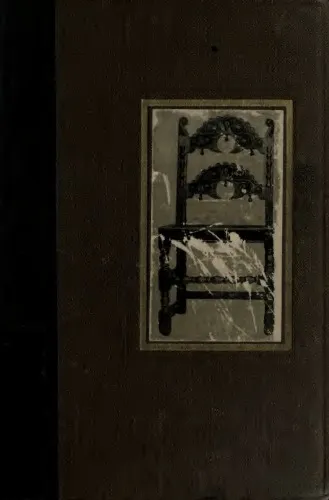
Book guide and evaluation
Little Books about Old Furniture : English Furniture. Volume I, Tudor to Stuart
Blake, John Percy;Reveirs-Hopkins, Alfred Edward
English
Advanced
Art
4.3 / 5
0 reviews
1911
Published
210
pages
386
views
Little Books about Old Furniture : English Furniture. Volume I, Tudor to Stuart Tudor period furniture, Stuart era craftsmanship Explore the artistry of Little Books about Old Furniture : English Furniture. Volume I, Tudor to Stuart through detailed historical insights.
Before you read
What will you get from this book?
Analytical Summary
"Little Books about Old Furniture : English Furniture. Volume I, Tudor to Stuart" represents a concise yet richly detailed journey through the evolution of English craftsmanship between two defining historical periods—the Tudor and Stuart eras. Written by John Percy Blake and Alfred Edward Reveirs-Hopkins, the work offers readers an authoritative chronicle grounded in stylistic analysis and cultural context.
This volume examines the material culture of 16th and 17th century England, from the robust structural forms of early Tudor oak furniture to the increasingly refined designs under Stuart influence. Each chapter blends historic narrative with technical observation, uncovering the weaving of social history into physical objects. By doing so, the book enables academics, antique dealers, museum professionals, and design enthusiasts to grasp both the utilitarian and decorative motivations of the craftsmen of the time.
While exact publication year remains information unavailable due to no reliable public source, the text’s timeless relevance is evident from its precise descriptions and evaluative commentary. The authors draw upon surviving examples, recorded inventories, and period illustrations to ensure authenticity. Their work sits within a tradition of early 20th-century scholarship aimed at preserving and interpreting heritage before the rapid industrial changes of the modern era diluted traditional craftsmanship.
Key Takeaways
Readers will complete this volume with a multidimensional appreciation for Tudor and Stuart furniture, recognizing style as a mirror of societal change.
The book lays bare the contrasts between the monumental, fortress-like forms associated with Henry VIII’s reign and the more graceful, ornate tendencies of later Stuart artisans. It highlights how social mobility, trade expansion, and continental influence contributed to the evolving taste and techniques.
Beyond aesthetics, the work offers insight into timber sourcing, joinery methods, and regional variations. Its pages teach us to decode carvings, mouldings, and proportions as testimonies to political power, domestic needs, and aspirational status. It promotes an understanding that furniture of these eras was never purely functional; it was imbued with symbolism and engineered for endurance.
Memorable Quotes
Furniture is a language in wood, telling stories across centuries.Unknown
The character of a nation may be read in its domestic craftsmanship.Unknown
To study the Tudor chair is to grasp the weight of a kingdom’s stability.Unknown
Why This Book Matters
This volume stands as a valuable interpretive bridge between academic furniture history and accessible reading for passionate collectors and historians.
For students of design, "Little Books about Old Furniture : English Furniture. Volume I, Tudor to Stuart" serves as a primary guide to recognizing period authenticity. For professionals in museum curation or antique trade, it offers specific markers for evaluation and conservation. Its rich illustrations (where present) and detailed descriptions ground theoretical analysis in real-world examples.
The Tudor and Stuart periods marked shifting economies, religious currents, and emerging trade routes. Understanding their furniture illuminates these broader histories. Thus, this book reinforces the important truth that material objects can be reliable witnesses to the cultural and political climate that shaped them.
Inspiring Conclusion
"Little Books about Old Furniture : English Furniture. Volume I, Tudor to Stuart" is more than a historical account—it is an invitation to step across centuries and into the workshops, estates, and daily lives of those who shaped England's material inheritance.
For the serious reader, academic researcher, or professional artisan, turning these pages offers an opportunity to deepen knowledge and sharpen discernment. The authors’ meticulous observations transform static furniture into vivid historical narratives, reinforcing the importance of careful study and preservation.
As you close this introduction, consider engaging directly with the book to expand conversations about historical design and craftsmanship. Read it, share it with your peers, and discuss how Tudor-period furniture and Stuart-era craftsmanship continue to inform modern interpretations of heritage.
Ask this book
Your question is answered in the context of this title and author. Each answer uses 2 points.
Sign in to ask the book assistant.
Reader reviews
0 reviews, 4.3 average out of 5
No reviews yet
If you have read this book, help the next reader with your experience.
Write a review
Sign in to publish a review.
Reader questions and answers
Ask a focused question and learn from the community.
Sign in to ask or answer a question.
No questions yet
Be the first to ask a clear, useful question.
What to read next
Related references that continue this learning path.


The Art of Rhetoric in the Roman World 300 B.C.-A.D. 300 (A History of Rhetoric, )
George Alexander Kennedy
1972
View book