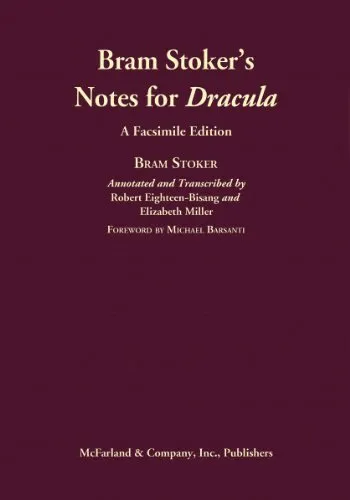
Bram Stoker's Notes for Dracula: A Facsimile Edition
Robert Eighteen-Bisang,Elizabeth Miller
2008
View book
Book guide and evaluation
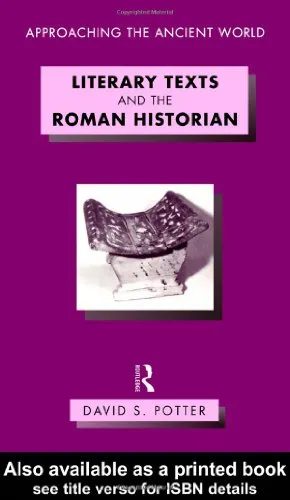
David Potter
0 reviews
Published
pages
views
Welcome to an exploration of Roman historiography through the lens of its literary heritage. "Literary Texts and the Roman Historian" offers a compelling journey into the ways ancient literary works inform our understanding of Roman history. This book is an essential read for h
Before you read
Welcome to an exploration of Roman historiography through the lens of its literary heritage. "Literary Texts and the Roman Historian" offers a compelling journey into the ways ancient literary works inform our understanding of Roman history. This book is an essential read for historians, classicists, and anyone interested in the intricacies of ancient Rome.
In "Literary Texts and the Roman Historian," David Potter delves into the complex relationship between Roman historical writing and literary texts. The book positions itself at the intersection of historical fact and literary analysis, exploring how historians can leverage literary sources to construct a more nuanced understanding of Roman history. Potter challenges the traditional notion that literary texts serve merely as a backdrop to historical inquiry. Instead, he argues that these works are vital historical sources in their own right, capable of providing unique insights into the culture, society, and politics of ancient Rome.
Structured into several key sections, the book begins by setting the stage for why literary analysis is integral to historical study. It then moves into case studies, examining specific Roman texts that have been influential in shaping historical narratives. Throughout these examinations, Potter provides detailed analyses, revealing the multi-layered nature of Roman writings and their implications for historical interpretation.
"The past is never a singular narrative; it is a tapestry woven with threads of truth, myth, and the imaginations of those who lived it."
"In understanding the ancients, we must listen not only to their voices but also to the echoes of their unwritten stories."
"Literature and history are partners in the dance of time, each reflecting the movements and gestures of the other."
"Literary Texts and the Roman Historian" is a pivotal work that reshapes how we approach Roman historiography. At a time when scholarly emphasis on interdisciplinary studies is growing, this book stands as a testament to the rich insights that can be garnered from considering historical texts through a literary prism. It has become an influential piece in both the fields of history and classics, challenging historians to rethink how they interpret and prioritize sources.
For students and scholars, this book provides not only a framework for analyzing sources but also a call to appreciate the artistry and depth of Roman literary contributions as foundational elements of historical research. Its academic rigor combined with clear, engaging writing makes it an accessible yet profound exploration of an essential aspect of historical study.
Your question is answered in the context of this title and author. Each answer uses 2 points.
0 reviews, 4.0 average out of 5
Sign in to publish a review.
Ask a focused question and learn from the community.
Related references that continue this learning path.
Robert Eighteen-Bisang,Elizabeth Miller