Book guide and evaluation
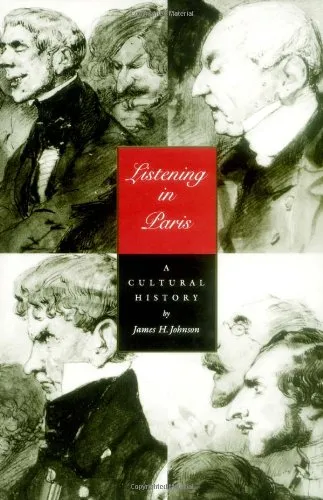
Listening in Paris: A Cultural History (Studies on the History of Society and Culture)
James H. Johnson
English
Beginner
Historical
4.5 / 5
0 reviews
1996
Published
403
pages
391
views
Introduction to "Listening in Paris: A Cultural History" Welcome to a world where history is heard as much as it is read. "Listening in Paris: A Cultural History", authored by James H. Johnson, unravels the intricate tapestry of sound and public engagement in the lively city o
Before you read
What will you get from this book?
Introduction to "Listening in Paris: A Cultural History"
Welcome to a world where history is heard as much as it is read. "Listening in Paris: A Cultural History", authored by James H. Johnson, unravels the intricate tapestry of sound and public engagement in the lively city of Paris, from the period of the Old Regime through the Revolution and into the burgeoning 19th century. This book is an auditory journey through time, examining how Parisians tuned into music, conversation, and the tumultuous sounds of change around them. Johnson provides a fascinating lens on cultural and societal transformations through the act of listening, offering insights into how soundscape influences social consciousness and cultural expression.
Detailed Summary
In "Listening in Paris", Johnson embarks on an exploration of how listening practices evolved in Paris, tracing its development from passive reception to a vigorous engagement with music and public discourse. The book begins by setting the scene in the salons and concert halls of Paris, where the elite would gather for performances. Initially, the audience was more interested in the social aspect than in the performance itself. However, as time progressed, there was a perceptible shift towards dedicated listening practices, driven by changes in musical composition and public taste.
Fundamentally, the book chronicles the relationship between music and listener, revealing how this dynamic transformed during key historical epochs such as the French Revolution and the Napoleonic era. In the wake of political upheaval, music served as both a tool of dissent and a medium for unity. Musicians and composers like Mozart and Beethoven are central to this narrative, illustrating how their compositions resonated with and reflected the broader societal currents.
Additionally, Johnson delves into the evolving public spaces of Paris, such as the shift from private salons to public concert halls, which facilitated a new kind of auditory experience. These changes not only democratized music but also fostered new cultural norms and expectations surrounding performances and audiences.
Key Takeaways
- The evolution of listening in Paris serves as a mirror to societal and cultural shifts during a pivotal historical period.
- Music's role in society extends beyond entertainment; it is a reflection and catalyst of social and political change.
- The transformation from passive listening audiences to engaged and critical ones highlights changes in cultural norms and intellectual engagement.
- Public engagement with music and sound paved the way for modern cultural experiences and consumption.
Famous Quotes from the Book
"Listening is not merely a passive activity but an active engagement that reflects and shapes the world around us."
"As the notes danced through the halls, they carried with them the whispers of revolution, dissent, and the hope for a new world."
Why This Book Matters
"Listening in Paris" matters because it addresses an often-overlooked aspect of cultural history: auditory culture. The book invites readers to consider how listening practices can influence cultural and societal evolution, broadening our understanding of history beyond visual and textual sources. For historians, musicologists, and cultural theorists, this book provides a comprehensive framework for examining the interrelationship between sound and society.
Moreover, it's a relevant discourse in today's world, where sound, media, and cultural expression continue to play crucial roles in societal dynamics. Johnson’s rigorous historical research opens our ears to the complexities of the past, offering valuable insights into the ever-evolving terrain of cultural history.
Ask this book
Your question is answered in the context of this title and author. Each answer uses 2 points.
Sign in to ask the book assistant.
Reader reviews
0 reviews, 4.5 average out of 5
No reviews yet
If you have read this book, help the next reader with your experience.
Write a review
Sign in to publish a review.
Reader questions and answers
Ask a focused question and learn from the community.
Sign in to ask or answer a question.
No questions yet
Be the first to ask a clear, useful question.
What to read next
Related references that continue this learning path.
Can't you hear me calling: the life of Bill Monroe, father of Bluegrass
Monroe, Bill;Smith, Richard D
2009
View book