

Sabiston Textbook of Surgery The Biological Basis of Modern Surgical Practice
Courtney M. Townsend Jr.,R. D. Beauchamp,B. M. Evers,K. L. Mattox
Book guide and evaluation
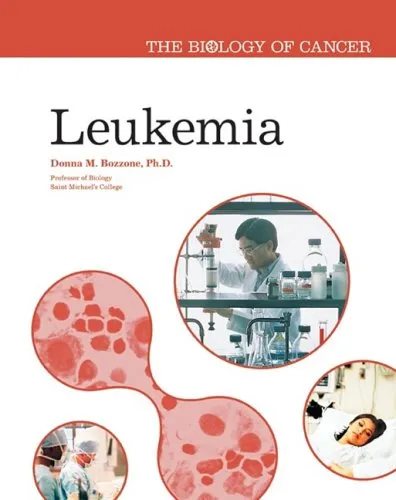
Donna M. Bozzone
0 reviews
Published
pages
views
Leukemia (The Biology of Cancer) Hematologic malignancies, oncological research Leukemia (The Biology of Cancer) offers a detailed, accessible exploration of leukemia's biology for students, scholars, and professionals. Analytical Summary Leukemia (The Biology of
Before you read
Leukemia (The Biology of Cancer) is a rigorous examination of one of the most complex and devastating categories of hematologic malignancies. Written with an emphasis on integrating foundational biological principles with clinical realities, this work navigates the multifaceted terrain of leukemia’s onset, progression, and treatment strategies. The text serves as both a scholarly resource and a practical guide, making it invaluable to researchers, healthcare providers, and advanced students committed to understanding cancer at the cellular and molecular levels.
Grounded in evidence-based analysis, this book traces the historical development of leukemia research, highlighting pivotal breakthroughs in diagnostics, molecular biology, and targeted therapies. It details the pathophysiology of leukemia, from genetic mutations and chromosomal abnormalities to disruptions in hematopoiesis and immune function. Readers encounter both classical concepts and cutting-edge innovations, including emerging immunotherapies and precision medicine approaches.
While the scientific content is dense, the clear and logical organization ensures accessibility without sacrificing depth. Complex topics, such as signaling pathways or tumor microenvironment interactions, are approached with precision, contextualizing their relevance to patient outcomes and future research trajectories. The work’s interdisciplinary scope bridges molecular oncology with hematology, underscoring leukemia’s place within the larger framework of cancer biology.
This book imparts crucial insights into the biology of leukemia, making it an indispensable resource for both academic study and applied medical practice.
Readers will grasp the nuanced mechanisms driving leukemogenesis, including genetic predispositions and external carcinogenic influences. They will understand the role of key cellular processes and how their dysregulation culminates in uncontrolled proliferation of abnormal white blood cells.
Another significant takeaway is the emphasis on translational research—how laboratory discoveries can be converted into clinical applications, enhancing survival rates and quality of life for patients. Practical diagnostic frameworks and biomarker identification are presented alongside treatment modalities, giving a holistic view of care.
Finally, the book encourages critical thinking by comparing conventional chemotherapeutic methods with innovative options, fostering a dialogue about the future direction of oncology research as it pertains to leukemia.
“Understanding leukemia requires both an appreciation for cellular complexity and a commitment to patient-centered application.” Unknown
“The biology of cancer is as much a story of resilience as it is of pathology.” Unknown
“Advances in hematologic research are built on meticulous study and relentless curiosity.” Unknown
Leukemia (The Biology of Cancer) matters because it bridges the gap between deep scientific inquiry and the urgent clinical need for better patient outcomes.
In an era where oncological research is rapidly evolving, comprehensive, accurate, and accessible resources are essential. This book offers exactly that, providing insights into hematologic malignancies that empower readers to engage more effectively in research, diagnosis, and treatment. Its measured balance of theory and application ensures that no aspect of leukemia biology is left unexplored.
Additionally, the text’s sustained focus on both foundational concepts and novel therapeutic approaches ensures that it remains relevant as scientific knowledge grows. Such depth makes it an enduring addition to any medical library, educational program, or research institution concerned with cancer biology.
Leukemia (The Biology of Cancer) stands as an authoritative resource for anyone seeking to understand the intricacies of hematologic malignancies and their place within the broader study of cancer.
By offering evidence-based analysis, detailed biological insights, and practical applications, this book invites readers not only to absorb knowledge but also to engage with it—whether through scholarly research, clinical application, or informed discussion. Armed with the understanding gained from this work, readers are better equipped to contribute meaningfully to the field of oncology.
If you are ready to delve deeper into the science, share what you’ve learned, or spark critical conversations in your professional circles, then this book is a decisive next step. Let Leukemia (The Biology of Cancer) inspire your studies, enhance your practice, and enrich the discourse on the fight against cancer.
Your question is answered in the context of this title and author. Each answer uses 2 points.
0 reviews, 4.8 average out of 5
Sign in to publish a review.
Ask a focused question and learn from the community.
Related references that continue this learning path.
Courtney M. Townsend Jr.,R. D. Beauchamp,B. M. Evers,K. L. Mattox
American College of Physicians
N Cherny,M Fallon,S Kaasa,R K Portenoy,D C Currow (eds.)

Bruce Alberts,Dennis Bray,Karen Hopkin,Alexander Johnson,Julian Lewis,Martin Raff,Keith Roberts,Peter Walter