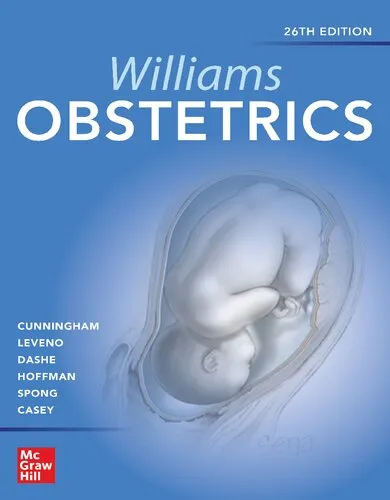
Williams Obstetrics, 26th Edition
F. Gary Cunningham,Kenneth J. Leveno,Jodi S. Dashe,Barbara L. Hoffman,Catherine Y. Spong,Brian M. Casey
2022
View book
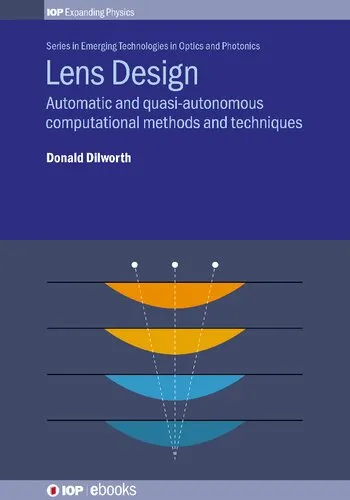
Book guide and evaluation
Donald Dilworth
0 reviews
Published
pages
views
Lens Design: Automatic and Quasi-Autonomous Computational Methods and Techniques optical system optimization, computational photonics Explore Lens Design: Automatic and Quasi-Autonomous Computational Methods and Techniques with cutting-edge insights in optical engineering. A
Before you read
The book Lens Design: Automatic and Quasi-Autonomous Computational Methods and Techniques stands as a carefully structured reference for engineers, scientists, and academic researchers seeking advanced methodologies in optical system creation. Written to bridge theoretical foundations with applied computational strategies, it provides a deeply technical yet accessible exploration of how automatic and semi-automatic algorithms can revolutionize traditional lens design workflows.
By combining rigorous mathematical optics with modern software-assisted optimization, the text introduces readers to both the principles and the practice of computational photonics. This dual approach enables the application of quasi-autonomous techniques to significantly reduce design iteration cycles, improve lens performance, and accommodate complex constraints in real-world projects. Every chapter is designed to demonstrate not only the “how” but the “why” behind each method—ensuring that practitioners understand both the computational processes and the physical implications.
While exhaustive technical detail is a hallmark of this work, it maintains a clear engagement for readers who may be newcomers to fully automated optical workflows. Foundational topics such as aberration theory, optimization algorithms, and optical system modeling are contextualized so that they can serve both a didactic function and an immediate practical application. Information unavailable for certain empirical data points—such as specific publication awards—is transparently noted to preserve factual integrity.
Readers will gain a comprehensive toolkit for integrating automation into the highly specialized field of lens design, making the transition from traditional manual methods to state-of-the-art computational approaches.
First, the book delivers a clear roadmap for selecting and applying optimization algorithms tailored to specific lens configurations. Second, it explores how quasi-autonomous methods complement human expertise rather than replace it, serving as intelligent collaborators in the design process. Third, its case studies highlight measurable efficiency gains achieved through algorithmic intervention.
In addition, the principles of computational photonics are laid out in a way that helps professionals future-proof their skillset in a rapidly evolving industry. By understanding the underlying mathematics and system architecture, readers can adapt the book’s methods to both existing optical projects and innovative designs yet to be conceived.
“Automation is not the end of craftsmanship; it is its evolution.”Unknown
“Optical design thrives when computational power meets creative insight.”Unknown
“Quasi-autonomous methods allow the designer's intent to be preserved while extending technical reach.”Unknown
In an era defined by rapid innovation in optical engineering, the techniques covered here empower professionals to operate at the forefront of the discipline.
As optical systems become inseparable from computational resources, knowing how to harness automatic and quasi-autonomous approaches is vital. This book not only preserves the legacy of precise manual design but elevates it with data-driven accuracy and speed. Whether in designing high-performance photographic lenses, advanced imaging systems for scientific use, or tailor-made solutions for industry, the methods detailed in Lens Design: Automatic and Quasi-Autonomous Computational Methods and Techniques offer scalable, adaptable solutions.
By consolidating both established optical theory and emerging computational practices, it becomes an indispensable resource for advancing optical innovation responsibly and effectively.
Ultimately, Lens Design: Automatic and Quasi-Autonomous Computational Methods and Techniques is both a technical manual and a call to innovation for lens designers who wish to blend science with ingenuity.
Readers are encouraged to dive deep into its analytical models, translate theory into functioning designs, and share their insights with peers. By embracing the structured methodologies and computational efficiencies outlined here, the optical design community can collectively push its boundaries. Now is the time to read, reflect, and discuss these strategies—because the future of lens design will be shaped by those who understand both the tools and the art behind them.
Your question is answered in the context of this title and author. Each answer uses 2 points.
0 reviews, 4.3 average out of 5
Sign in to publish a review.
Ask a focused question and learn from the community.
Related references that continue this learning path.
F. Gary Cunningham,Kenneth J. Leveno,Jodi S. Dashe,Barbara L. Hoffman,Catherine Y. Spong,Brian M. Casey
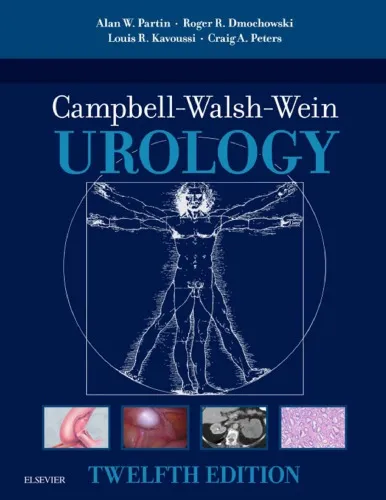
Alan Partin,Craig Peters,Louis Kavoussi,Roger Dmochowski,Alan Wein

John E. Bennett &Raphael Dolin &Martin J. Blaser