
Book guide and evaluation
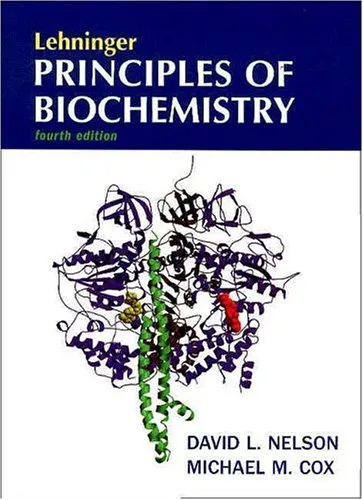
Lehninger's Principles of biochemistry
David L. Nelson,Michael M. Cox
English
Intermediate
Product Management
5.0 / 5
0 reviews
2004
Published
1120
pages
755
views
Introduction to Lehninger's Principles of Biochemistry Lehninger's Principles of Biochemistry has long been established as the premier textbook for students and professionals alike who seek to understand the complex world of biochemical processes. Authored by David L. Nels
Before you read
What will you get from this book?
Introduction to Lehninger's Principles of Biochemistry
Lehninger's Principles of Biochemistry has long been established as the premier textbook for students and professionals alike who seek to understand the complex world of biochemical processes. Authored by David L. Nelson and Michael M. Cox, this book provides an in-depth perspective on the fundamental principles of biochemistry, integrating both foundational concepts and cutting-edge research to offer a comprehensive educational experience.
Detailed Summary of the Book
The book covers a wide array of topics essential for understanding the molecular basis of life. It begins with an overview of the chemical foundations of biochemistry, including atomic structure, molecular interactions, and the nature of biochemical macromolecules. The early chapters lay the groundwork by introducing fundamental concepts like the structure and function of proteins, enzymes, and nucleic acids, which are crucial to understanding cellular metabolism and genetics.
The discussion advances to more complex topics including the principles of cellular organization, thermodynamics in biological systems, and the energetic pathways that fuel life, such as glycolysis and the citric acid cycle. Special emphasis is placed on metabolic pathways, with detailed insights into their regulation and integration within the cell. The book also explores topics like signal transduction, cellular communication, and the molecular basis of genetic information flow.
Lehninger's Principles of Biochemistry is also known for its semester-friendly chapters on particular biological processes, like photosynthesis and the fixation of atmospheric nitrogen, offering rich context and connection with applied biochemistry. The later chapters delve into advanced topics, ensuring that readers can appreciate the frontiers of biochemistry research, from molecular motors to the biochemistry of diseases.
Key Takeaways
One of the key takeaways from the book is the unifying theme of how molecular structure determines function, providing a deep understanding of how biomolecules interact and contribute to the complex functions of life. It equips the reader with the ability to decode cellular puzzles using a biochemical lens, promoting critical thinking and problem-solving abilities.
The book also emphasizes the iterative nature of scientific research, showing how hypotheses are tested and revised, which is essential for anyone aspiring to conduct research or dissect biochemical literature critically.
Famous Quotes from the Book
Lehninger's Principles of Biochemistry is filled with insights that inspire and enlighten. Some notable quotes include:
"Biochemistry illuminates our understanding of the complexity and the simplicity of life at the molecular level."
"By understanding the chemistry of the biological macromolecules, we understand ourselves."
Why This Book Matters
Lehninger's Principles of Biochemistry is more than just a textbook; it is a gateway to understanding the molecular intricacies of life itself. Its detailed yet accessible style makes it a staple in academic environments and a trusted reference for professionals in the field. By coupling rich visuals with thorough explanations, it supports diverse learning styles, making complex concepts comprehensible.
In a world where biochemical innovations continuously reshape industries from healthcare to agriculture, a strong understanding of biochemistry is indispensable. As such, this book not only forms the cornerstone of a science education but also supports readers in becoming informed participants in ongoing biochemical dialogues.
Ask this book
Your question is answered in the context of this title and author. Each answer uses 2 points.
Sign in to ask the book assistant.
Reader reviews
0 reviews, 5.0 average out of 5
No reviews yet
If you have read this book, help the next reader with your experience.
Write a review
Sign in to publish a review.
Reader questions and answers
Ask a focused question and learn from the community.
Sign in to ask or answer a question.
No questions yet
Be the first to ask a clear, useful question.
What to read next
Related references that continue this learning path.


Biochemistry, 5th Edition (Lippincott’s Illustrated Reviews)
Richard A. Harvey,Denise R. Ferrier
2010
View book