
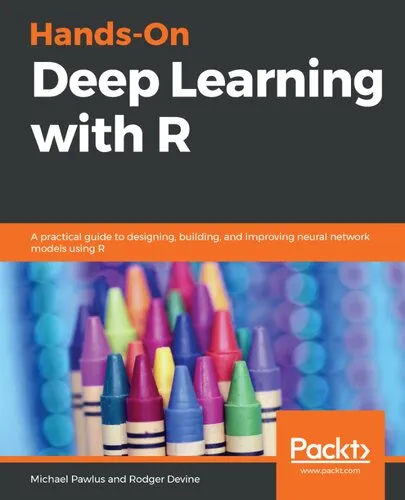
Hands-On Deep Learning with R: A practical guide to designing, building, and improving neural network models using R
Michael Pawlus,Rodger Devine
2020
View book
Book guide and evaluation
Pramod Singh
0 reviews
Published
pages
views
Introduction to 'Learn PySpark: Build Python-based Machine Learning and Deep Learning Models' In the modern data-driven world, the ability to process and analyze vast amounts of data effectively has become a critical skill. PySpark, the Python API for Apache Spark, is a po
Before you read
In the modern data-driven world, the ability to process and analyze vast amounts of data effectively has become a critical skill. PySpark, the Python API for Apache Spark, is a powerful tool for distributed computing that can empower you to harness the full potential of Big Data. This book, "Learn PySpark: Build Python-based Machine Learning and Deep Learning Models," serves as a comprehensive guide, designed for data enthusiasts, software engineers, and data scientists who aspire to leverage PySpark for both Machine Learning (ML) and Deep Learning (DL) purposes.
Through this book, you'll delve into the fundamentals of PySpark, explore its rich ecosystem, and learn how to implement advanced ML and DL techniques for solving real-world problems. With a balanced mix of theoretical concepts and practical examples, this guide lays the foundation for working with large-scale data. Whether you're a beginner or looking to strengthen your existing skillset, this book is tailored to provide you with the knowledge necessary to excel in the field of data science and engineering.
The book begins with an introduction to Apache Spark and its distributed computing capabilities, explaining why PySpark has become a preferred framework in Big Data processing and analytics. The foundational chapters gently guide readers through setting up a PySpark environment and understanding Spark’s architecture, including Resilient Distributed Datasets (RDDs), DataFrames, and Spark SQL.
As you progress, you’ll explore PySpark’s strengths in managing Big Data through detailed case studies and real-world scenarios. The book then transitions into the exciting world of Machine Learning by leveraging Spark MLlib—the ML library in PySpark. You’ll learn how to build scalable models for clustering, classification, regression, and recommendation systems.
In the later chapters, the book takes a deeper dive into the realms of Deep Learning. By integrating PySpark with popular tools like TensorFlow and Keras, it demonstrates how you can deploy deep neural networks at scale on distributed clusters. Practical tips, best practices, and optimization techniques are shared to ensure end-to-end implementation success.
Finally, the closing sections of the book focus on advanced topics, such as model evaluation, tuning, deployment, and production considerations. You'll walk away with a solid understanding of how to transform raw data into actionable insights and intelligent systems with PySpark.
"PySpark is the Swiss Army knife of data analytics—powerful, versatile, and indispensable in the age of Big Data."
"When scaling Machine Learning models, the cost of inefficiency can be exponential. Distributed frameworks like PySpark eliminate these bottlenecks."
"Data is the foundation; PySpark is the architect; and Machine Learning is the masterpiece."
The surge in data generation has made distributed data analytics crucial for organizations worldwide. This book holds significant value, as it bridges the gap between basic Python programming and deploying scalable data solutions in real-world environments. It not only serves as a technical manual but also as an inspiration for aspiring data scientists to explore the uncharted territories of Big Data.
By focusing on both Machine Learning and Deep Learning use cases, the book ensures that readers are equipped to handle present-day challenges in data science. Be it designing a recommendation system for millions of users or building and deploying robust neural networks, this book provides the knowledge and tools required for success.
Readers will find this guide invaluable, whether they are taking their first steps in PySpark or striving to enhance their expertise in building data-intensive applications. The emphasis on real-world examples, coupled with practical implementation steps, ensures that this book remains a timeless resource for years to come.
Your question is answered in the context of this title and author. Each answer uses 2 points.
0 reviews, 4.5 average out of 5
Sign in to publish a review.
Ask a focused question and learn from the community.
Related references that continue this learning path.
Michael Pawlus,Rodger Devine
Akshay Kulkarni,Adarsha Shivananda