Book guide and evaluation
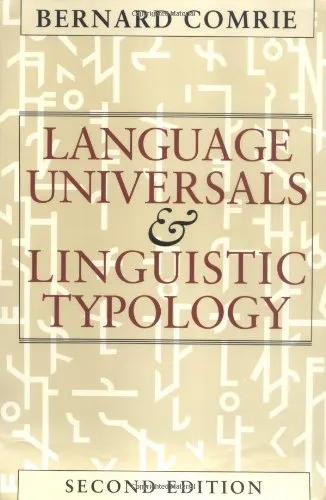
Language Universals and Linguistic Typology: Syntax and Morphology
Bernard Comrie
English
Unordered
Computer Science and Theory
4.7 / 5
0 reviews
1989
Published
279
pages
458
views
Since its first publication, Language Universals and Linguistic Typology has become established as the leading introductory account of one of the most productive areas of linguistics—the analysis, comparison, and classification of the common features and forms of the organization
Before you read
What will you get from this book?
Since its first publication, Language Universals and Linguistic Typology has become established as the leading introductory account of one of the most productive areas of linguistics—the analysis, comparison, and classification of the common features and forms of the organization of languages. Adopting an approach to the subject pioneered by Greenberg and others, Bernard Comrie is particularly concerned with syntactico-semantic universals, devoting chapters to word order, case making, relative clauses, and causative constructions. His book is informed throughout by the conviction that an exemplary account of universal properties of human language cannot restrict itself to purely formal aspects, nor focus on analysis of a single language. Rather, it must also consider language use, relate formal properties to testable claims about cognition and cognitive development, and treat data from a wide range of languages. This second edition has been revised and updated to take full account of new research in universals and typology in the past decade, and more generally to consider how the approach advocated here relates to recent advances in generative grammatical theory.
Ask this book
Your question is answered in the context of this title and author. Each answer uses 2 points.
Sign in to ask the book assistant.
Reader reviews
0 reviews, 4.7 average out of 5
No reviews yet
If you have read this book, help the next reader with your experience.
Write a review
Sign in to publish a review.
Reader questions and answers
Ask a focused question and learn from the community.
Sign in to ask or answer a question.
No questions yet
Be the first to ask a clear, useful question.
What to read next
Related references that continue this learning path.