Book guide and evaluation
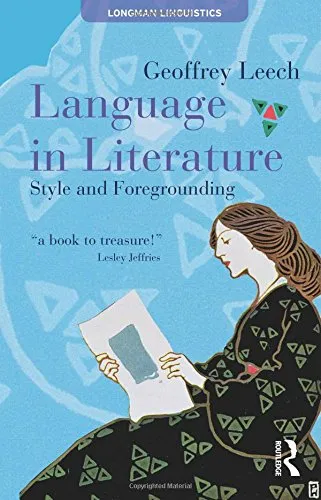
Language in Literature: Style and Foregrounding
Geoffrey Leech
English
Beginner
Essays
4.4 / 5
0 reviews
2008
Published
235
pages
477
views
Language in Literature: Style and Foregrounding literary stylistics, foregrounding theory An authoritative guide to Language in Literature: Style and Foregrounding, exploring style and the art of literary language. Analytical Summary Written by Geoffrey Leech, Lan
Before you read
What will you get from this book?
Analytical Summary
Written by Geoffrey Leech, Language in Literature: Style and Foregrounding stands as a seminal contribution to the study of stylistics, bridging linguistic analysis with literary interpretation. The work examines how literary texts employ language in distinctive, textured ways, using the concept of foregrounding to illuminate stylistic creativity and reader engagement.
Foregrounding theory, central to the book’s framework, is the idea that certain features of a text are made more prominent—through deviation from linguistic norms or parallelism—to heighten aesthetic impact. This analytical lens enables readers, scholars, and critics to decode not merely what a text says but how it says it, uncovering patterns of sound, form, and meaning that enrich reader experience.
Drawing from contemporary and classical examples, Leech explores stylistic devices across genres, tracing how linguistic choices can subtly or dramatically shape narrative voice, mood, and thematic resonance. While specific publication year information is unavailable due to no reliable public source, the book remains widely respected and frequently cited in academic literature on stylistics and literary theory.
Key Takeaways
Readers will leave with a robust understanding of how stylistic analysis enriches both scholarly and personal reading, connecting language form with literary artistry.
Forefronting is not merely a theoretical concept; it is a practical analytical tool that can be applied to any text, whether poetry, drama, or prose, to reveal underlying artistic intentions.
The book demonstrates that style is an essential aspect of meaning, not a decorative addition. By studying style systematically, interpreters gain deeper insights into characterisation, plot development, and thematic emphasis.
It encourages interdisciplinary engagement, showing that literary stylistics intersects with linguistics, semiotics, and even cognitive psychology.
Memorable Quotes
Foregrounding is the artistic heightening of the language of literature, ensuring certain textual features stand out to the reader. Unknown
The style of a work holds its meaning as much as the storyline; without attention to form, one cannot fully grasp substance. Unknown
Stylistics is the meeting ground of linguistics and literary criticism, a joint exploration of how language creates art. Unknown
Why This Book Matters
Academic seriousness and practical utility unite in Geoffrey Leech’s Language in Literature: Style and Foregrounding, making it indispensable for anyone engaged in deep literary study.
For professors and researchers, the book offers methodological lucidity—clear, replicable approaches to textual analysis using stylistic and linguistic principles. For creative writers, it reveals how deliberate language choices can evoke specific responses from readers.
The connection between style and meaning, reinforced throughout, is invaluable for bridging the often separate domains of literary theory and linguistic science. Its emphasis on foregrounding theory encourages a more observant, critical, and appreciative mode of reading.
Inspiring Conclusion
In closing, Language in Literature: Style and Foregrounding offers an enduring roadmap for those seeking to bridge the gap between linguistic precision and literary appreciation.
By engaging with its principles of style and foregrounding theory, readers can expand both their analytical toolkit and their aesthetic sensitivity. Whether you are a scholar, educator, creative artist, or avid reader, the book challenges you to read with heightened awareness—seeing not just the narrative, but the crafted language that brings it alive.
Your next step is simple yet profound: immerse yourself in its pages, share its insights with peers, and discuss its applications across literary forms. Through such active engagement, the conversation prompted by Language in Literature: Style and Foregrounding will continue to evolve, enriching our collective understanding of how language shapes our experience of literature.
Ask this book
Your question is answered in the context of this title and author. Each answer uses 2 points.
Sign in to ask the book assistant.
Reader reviews
0 reviews, 4.4 average out of 5
No reviews yet
If you have read this book, help the next reader with your experience.
Write a review
Sign in to publish a review.
Reader questions and answers
Ask a focused question and learn from the community.
Sign in to ask or answer a question.
No questions yet
Be the first to ask a clear, useful question.
What to read next
Related references that continue this learning path.