

Book guide and evaluation
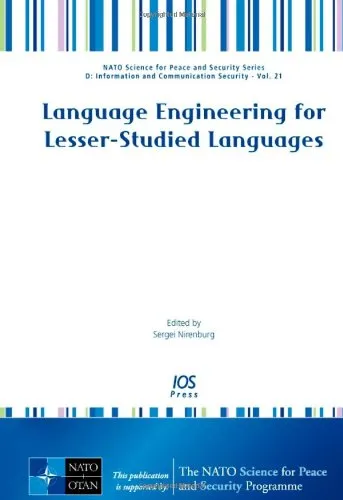
Language Engineering for Lesser-Studied Languages - NATO Science for Peace and Security Series - D: Information and Communication Security (Nato ... and Communications Security- )
S. Nirenburg
English
Beginner
Software Engineering
4.4 / 5
0 reviews
2009
Published
345
pages
167
views
Introduction to 'Language Engineering for Lesser-Studied Languages' In an increasingly globalized world, the digital representation and computational processing of language have become vital for advancing communication, education, and security. While major languages like E
Before you read
What will you get from this book?
Introduction to 'Language Engineering for Lesser-Studied Languages'
In an increasingly globalized world, the digital representation and computational processing of language have become vital for advancing communication, education, and security. While major languages like English, Spanish, and Mandarin have enjoyed considerable technological focus in natural language processing (NLP) and computational linguistics, lesser-studied languages lag far behind due to a lack of resources, funding, and scholarly attention. 'Language Engineering for Lesser-Studied Languages' addresses this significant gap and charts a path toward the equitable integration of such languages into the realm of language technology.
This book is the 21st volume in the esteemed NATO Science for Peace and Security Series – D: Information and Communication Security. It provides an authoritative guide for researchers, linguists, policy-makers, and technologists interested in exploring innovative approaches to computational linguistics for lesser-known languages. Through an interdisciplinary lens, the book examines state-of-the-art methodologies, challenges, and future possibilities, making it an indispensable resource for anyone dedicated to advancing linguistic diversity in the digital age.
Detailed Summary
The book opens with an overview of the core challenges facing lesser-studied languages in the digital arena, such as scarce data availability, orthographic complexities, and limited standardization. It underscores the importance of addressing these issues not merely for academic purposes but also for fostering cultural preservation, inclusivity, and geopolitical security.
Subsequent chapters delve into a variety of technical topics, including resource development (such as annotated corpora and lexicons), machine translation for low-resource languages, morphological parsing, and semantic analysis. Recognizing the multidisciplinary nature of language engineering, the book integrates perspectives from linguistics, computer science, anthropology, and policy studies.
Key case studies are presented for languages that exemplify unique computational challenges. These examples illuminate how technologies like neural networks, rule-based systems, and hybrid models can be applied to address intricate phonetic, syntactic, and semantic characteristics of lesser-resourced languages. Alongside theoretical insights, practical frameworks for developing multilingual systems are proposed.
The final chapters explore ethical considerations, emphasizing the importance of culturally sensitive engineering practices. They also discuss the role of international collaboration, particularly within the framework of NATO's mission to enhance intercultural communication and maintain global peace and security.
Key Takeaways
- Lesser-studied languages require tailored engineering approaches due to their unique structural and resource-related characteristics.
- Resource creation, such as compiling lexicons and corpora, is foundational for advancing NLP technologies in low-resource settings.
- Interdisciplinary collaboration is essential for achieving meaningful and sustainable progress in language engineering.
- Ethical and sociocultural considerations are paramount in preserving linguistic heritage while integrating these languages into the digital space.
- The development of multilingual systems not only enhances inclusivity but also contributes to security through better communication and understanding.
Famous Quotes
"The fate of a language in the digital age is not merely an academic concern but a cultural and moral imperative that shapes our collective future."
"The challenge of lesser-studied languages is a call to action: to innovate, collaborate, and build technology that values diversity as much as efficiency."
"Equitable access to language technology strengthens not only the fabric of global communication but also that of global peace."
Why This Book Matters
Language diversity is a cornerstone of humanity's shared heritage. Unfortunately, many lesser-studied languages face the threat of digital extinction as technological innovation prioritizes dominant languages. This book is a critical contribution to reversing this trend. By equipping experts with the tools and methodologies to engineer technologies for underrepresented languages, it helps bridge the digital divide and ensure linguistic equity.
Additionally, this work furthers the broader goals of global peace and security. In conflict zones and multicultural regions, fostering multilingual understanding has implications that extend far beyond linguistics – it can literally save lives. Within NATO’s framework, strengthening language technology for lesser-studied languages can serve as a vital asset for diplomacy and conflict resolution.
At its core, 'Language Engineering for Lesser-Studied Languages' is a call to action for the engineering, linguistics, and policy-making communities to collaborate in a mission of both technological and humanitarian importance. Its impact goes beyond academia, offering practical pathways to create a more inclusive digital world.
Ask this book
Your question is answered in the context of this title and author. Each answer uses 2 points.
Sign in to ask the book assistant.
Reader reviews
0 reviews, 4.4 average out of 5
No reviews yet
If you have read this book, help the next reader with your experience.
Write a review
Sign in to publish a review.
Reader questions and answers
Ask a focused question and learn from the community.
Sign in to ask or answer a question.
No questions yet
Be the first to ask a clear, useful question.
What to read next
Related references that continue this learning path.


Modern Computer Vision with PyTorch: A Practical Roadmap From Deep Learning Fundamentals to Advanced Applications and Generative AI, 2nd Edition
V Kishore Ayyadevara,Yeshwanth Reddy
2023
View book