Loading
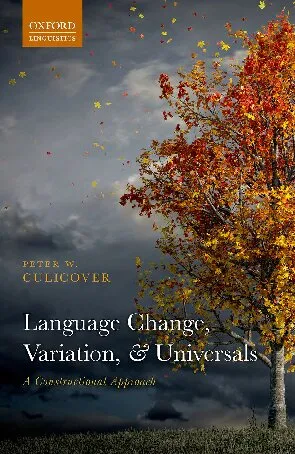
Cover of Language Change, Variation, and Universals
English Advanced Language Learning

Language Change, Variation, and Universals

Peter W. Culicover

Peter W. Culicover

4.8 / 5

0 reviews

2021

Published

335

pages

343

views

This volume explores how human languages become what they are, why they differ from one another in certain ways but not in others, and why they change in the ways that they do. Given that language is a universal creation of the human mind, the puzzle is why there are different la

About this book

This volume explores how human languages become what they are, why they differ from one another in certain ways but not in others, and why they change in the ways that they do. Given that language is a universal creation of the human mind, the puzzle is why there are different languages at all: why do we not all speak the same language? Moreover, while there is considerable variation, in some ways grammars do show consistent patterns: why are languages similar in those respects, and why are those particular patterns preferred? Peter Culicover proposes that the solution to these puzzles is a constructional one. Grammars consist of constructions that carry out the function of expressing universal conceptual structure. While there are in principle many different ways of accomplishing this task, languages are under press to reduce constructional complexity. The result is that there is constructional change in the direction of less complexity, and grammatical patterns emerge that more efficiently reflect conceptual universals. The volume is divided into three parts: the first establishes the theoretical foundations; the second explores variation in argument structure, grammatical functions, and A-bar constructions, drawing on data from a variety of languages including English and Plains Cree; and the third examines constructional change, focusing primarily on Germanic. The study ends with observations and speculations on parameter theory, analogy, the origins of typological patterns, and Greenbergian 'universals'.

Ask this book

Your question is answered in the context of this title and author. Each answer uses 2 points.

Sign in to ask the book assistant.

Reader reviews

0 reviews · 4.8 average out of 5

No reviews yet

If you have read this book, help the next reader with your experience.

Write a review

Sign in to publish a review.

Reader questions and answers

Ask a focused question and learn from the community.

Sign in to ask or answer a question.

No questions yet

Be the first to ask a clear, useful question.

Related references that continue this learning path.