
Book guide and evaluation
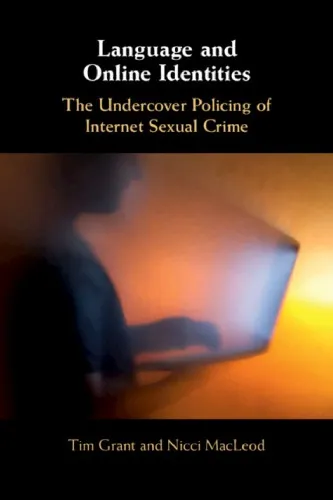
Language And Online Identities: The Undercover Policing Of Internet Sexual Crime
Tim Grant,Nicci MacLeod
English
Beginner
Art
4.5 / 5
0 reviews
2020
Published
215
pages
347
views
Introduction to 'Language and Online Identities: The Undercover Policing of Internet Sexual Crime' In the digital age, the internet is both a liberating tool and a threatening entity. The rise of online connectivity has brought countless benefits, but it also offer
Before you read
What will you get from this book?
Introduction to 'Language and Online Identities: The Undercover Policing of Internet Sexual Crime'
In the digital age, the internet is both a liberating tool and a threatening entity. The rise of online connectivity has brought countless benefits, but it also offers new opportunities for criminal activities, particularly those targeting vulnerable individuals. 'Language and Online Identities: The Undercover Policing of Internet Sexual Crime' provides an in-depth exploration of how language is used to construct, manipulate, deceive, and disguise identities in the world of cyberspace. This book serves as a groundbreaking interdisciplinary work, positioning itself at the crossroads of linguistics, criminology, psychology, and law enforcement.
Co-authored by Tim Grant and Nicci MacLeod, this book delves into the crucial role that language analysis plays in combating internet sexual crime. Specifically, it focuses on how undercover officers assume fabricated personas to infiltrate and investigate crimes, as well as how perpetrators use language to mask their deviant intentions. The text unpacks the power of language – its nuances, subtleties, and potential to reveal or obscure identity – providing readers with a profound understanding of key linguistic patterns at play in online criminal contexts.
Detailed Summary of the Book
The book begins with a discussion of the digital world as a highly flexible medium for creating and manipulating social identities. The authors examine how offenders use pseudonyms and digital platforms to construct compelling, often misleading, personas. This discussion is juxtaposed with the challenges of undercover policing, where law enforcement officials must also develop credible online personas without jeopardizing investigations.
Central to the analysis is the field of forensic linguistics, which provides a suite of tools for uncovering patterns in written communication. The text highlights how linguistic markers can betray clues about a person's demographic profile, such as age, background, and even intent. The authors present both theoretical frameworks and real-life case studies to illustrate the application of language analysis in solving crimes.
Another focal point of the book is its deep dive into conversation management. Forensic linguistics doesn't just uncover who someone is – it also shows how intent can be inferred through word choice, grammar, and tone. This is especially significant in cases of internet grooming, where potential offenders use strategic language patterns to build trust, manipulate victims, or test the boundaries of communication.
The book concludes by emphasizing the ethical, legal, and emotional complexities of undercover work. The need for balance between protecting public safety and preserving the rights of suspects is passionately discussed, making this a critical read for anyone invested in modern crime prevention strategies.
Key Takeaways
- The internet serves as both a tool for offenders and law enforcement, creating a high-stakes battleground for online identities.
- Language analysis is a crucial tool in understanding and tracking the behaviors and intentions of online offenders.
- Undercover operations rely heavily on linguistic mimicking to create plausible online personas.
- Ethical challenges in undercover policing require careful consideration, particularly when engaging with suspects in morally ambiguous scenarios.
- Forensic linguistics offers a unique contribution to criminal justice by bridging technical analysis and practical applications.
Famous Quotes from the Book
"Language is identity-bearing, but its flexibility in the online world can make it a tool for both empowerment and deception."
"To trace a criminal path in the digital sphere is to follow a trail constructed from mere words – yet these words carry the weight of worlds."
"As challenging as it may be, constructing an undercover identity is, at its core, a linguistic act – every word matters."
Why This Book Matters
'Language and Online Identities' is more than a mere academic exploration; it is a call to action for law enforcement professionals, policymakers, researchers, and society at large. In an age where crimes increasingly transcend physical boundaries, understanding the role of language in online spaces is imperative.
This book matters because it sheds light on an underexplored yet critically important aspect of modern policing. Challenging conventions and offering fresh interdisciplinary insights, it equips readers with the tools to both understand and combat the misuse of language in virtual spaces. By bridging language, technology, and law enforcement, the authors provide a pivotal resource for professionals combating internet sexual crime and scholars seeking to advance forensic linguistic methodologies.
Most importantly, this book highlights the human element – the victims, the perpetrators, and the investigators. It serves as a reminder that while technology evolves, the moral and ethical questions surrounding it remain profoundly human in nature.
Ask this book
Your question is answered in the context of this title and author. Each answer uses 2 points.
Sign in to ask the book assistant.
Reader reviews
0 reviews, 4.5 average out of 5
No reviews yet
If you have read this book, help the next reader with your experience.
Write a review
Sign in to publish a review.
Reader questions and answers
Ask a focused question and learn from the community.
Sign in to ask or answer a question.
No questions yet
Be the first to ask a clear, useful question.
What to read next
Related references that continue this learning path.

The devil's long tail : religious and other radicals in the internet marketplace
O'Hara, Kieron;Stevens, David
2015
View book
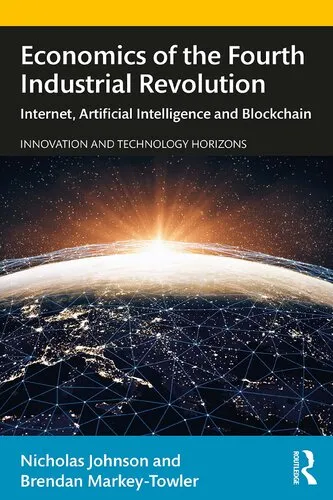
Economics of the Fourth Industrial Revolution: Internet, Artificial Intelligence and Blockchain
Nicholas Johnson,Brendan Markey-Towler
2020
View book