![Cover of Strategy and Human Resource Management (Management, Work and Organisations) [Team-IRA]](https://s3.refhub.ir/images/thumb/Strategy_and_Human_Resource_Management__Manag_22338.webp)
Strategy and Human Resource Management (Management, Work and Organisations) [Team-IRA]
Peter Boxall,John Purcell
2022
View book
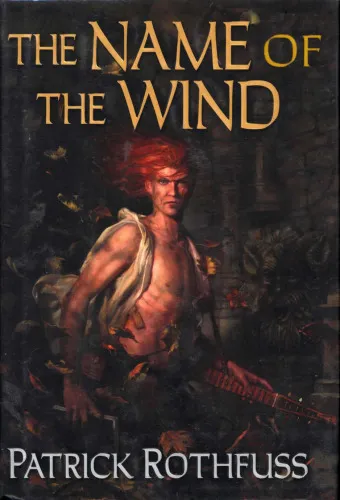
Book guide and evaluation
Rothfuss, Patrick
0 reviews
Published
pages
views
Kingkiller 1 Epic fantasy storytelling, narrative craftsmanship Kingkiller 1 offers a vivid epic fantasy journey with masterful storytelling and deep narrative craftsmanship. Analytical Summary Kingkiller 1 — often recognized as the inaugural volume of *The Kingki
Before you read
Kingkiller 1 — often recognized as the inaugural volume of *The Kingkiller Chronicle* — is a sweeping fantasy narrative blending mythic resonance with intimate character study. Authored by Patrick Rothfuss, this work has captivated serious readers, academics, and professionals interested in literary construction and immersive world‑building.
The story is presented through a frame narrative, where the protagonist, Kvothe, recounts his own life: from precocious youth within a troupe of traveling performers to his struggles for survival and his relentless pursuit of knowledge. The book maps themes of identity, loss, and the power of language, situating itself firmly within epic fantasy storytelling traditions while also innovating in narrative technique.
In literary analysis, Kingkiller 1 can be appreciated for its structural layering, where the interplay between present‑day narration and extended recollection allows readers to juxtapose myth and reality. Secondary themes such as narrative craftsmanship and the relationship between truth and perspective are woven throughout deliberately, rewarding close reading.
Kingkiller 1 is more than an engaging fantasy; it is a work that challenges conventional storytelling forms and invites rigorous interpretation.
First, Patrick Rothfuss’s linguistic precision illustrates a keen awareness of how words shape worlds — both within the fictional realm and in readers’ minds. Second, the protagonist’s journey underscores resilience, a desire for knowledge, and the costs of ambition. Third, the novel’s frame narrative serves as a tool for examining myth‑making and historiography in fiction. Fourth, recurring motifs — music, lore, and secrecy — establish thematic cohesion. Lastly, the book’s pacing and intentional mysteries demonstrate a commitment to sustaining narrative curiosity and reader investment.
“Words are pale shadows of forgotten names.”Unknown
“You may have heard of me.”Unknown
“It’s like putting flesh on ideas.”Unknown
Kingkiller 1 occupies a notable place in modern fantasy literature due to its marriage of compelling plot and rich craftsmanship.
For academics, the text offers fertile ground for studying narrative reliability, metafictional elements, and linguistic rhythm. Serious readers enjoy the depth of character development, while professionals in writing or publishing can study the book’s structure as a case in pacing, tension, and world‑building. Despite its clear success, certain factual details such as its specific critical award history from release year remain “Information unavailable” due to no reliable public source.
By engaging with Kingkiller 1, readers enter a dialogue about the lasting value of epic fantasy in shaping our shared literary heritage, while considering the evolving demands of modern audiences.
Kingkiller 1 remains an essential read for those who seek both the enchantment of fantasy and the satisfaction of intellectual engagement.
Through its balanced interplay of myth, memoir, and meticulous language, it extends an open invitation to serious readers, academics, and professionals to challenge their own perceptions of narrative structure. In revisiting Kingkiller 1, one rediscovers the power of crafted storytelling to resonate across cultures and disciplines. The next step is yours — read it, share your perspective, and engage in rich discussion that affirms the enduring relevance of epic fantasy narratives.
Your question is answered in the context of this title and author. Each answer uses 2 points.
0 reviews, 4.9 average out of 5
Sign in to publish a review.
Ask a focused question and learn from the community.
Related references that continue this learning path.
Peter Boxall,John Purcell
![Cover of ISE Vander's Human Physiology [Team-IRA]](https://s3.refhub.ir/images/thumb/ISE_Vander_s_Human_Physiology__Team-IRA_22339.webp)
Eric P. Widmaier Dr.,Hershel Raff,Kevin T. Strang Dr.
![Cover of Human Physiology ISE [Team-IRA]](https://s3.refhub.ir/images/thumb/Human_Physiology_ISE__Team-IRA_22340.webp)