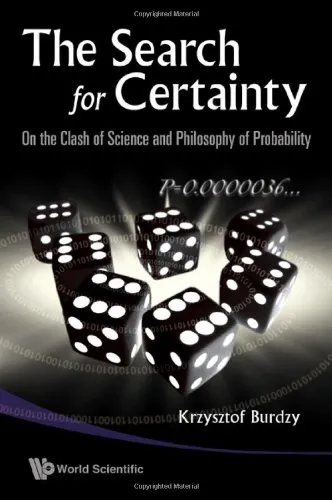
The Search for Certainty: On the Clash of Science and Philosophy of Probability
Krzysztof Burdzy
2009
View book
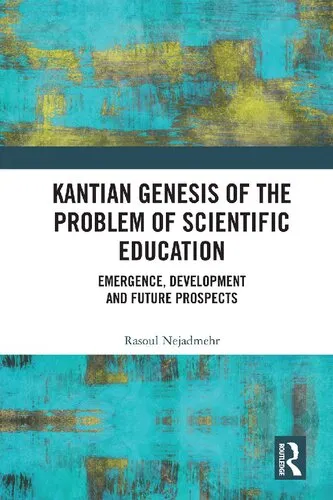
Book guide and evaluation
Rasoul Nejadmehr
0 reviews
Published
pages
views
Introduction Welcome to 'The Kantian Genesis of the Problem of Scientific Education: Emergence, Development and Future Prospects', a thought-provoking journey that delves into the philosophical roots, historical evolution, and future possibilities of scientific education throu
Before you read
Welcome to 'The Kantian Genesis of the Problem of Scientific Education: Emergence, Development and Future Prospects', a thought-provoking journey that delves into the philosophical roots, historical evolution, and future possibilities of scientific education through the Kantian lens. This book provides a comprehensive examination of the interplay between Immanuel Kant's philosophy and the challenges of modern education within the context of science. By tracing the origins of scientific education and its philosophical dilemmas, it offers a nuanced understanding of how these intellectual traditions have shaped, and continue to shape, contemporary educational practices.
Immanuel Kant, the cornerstone of modern philosophy, did not write specifically about educational science, yet his critical philosophy offers profound insights into the nature of human knowledge, freedom, and rationality—the very foundations of effective education. This book builds on Kantian thought to address the central challenges of integrating science into education. More specifically, it examines how these philosophical ideas continue to evolve and remain relevant in guiding scientific educational practices for the future. Whether you are an educator, philosopher, or a student of critical theory, this book invites you to explore how philosophy can inform and challenge our understanding of educational systems.
This book is divided into three major sections, each serving as a pillar in understanding the dynamic relationship between Kantian philosophy and scientific education.
The book not only offers a historically grounded philosophical account but also provides readers with insights into how these ideas can be applied in today’s rapidly changing educational landscape. A deep reflection on the relationship between reason and practicality runs throughout, offering compelling perspectives that go beyond traditional curricula.
"To educate in the sciences is not only to disseminate knowledge but to ignite the flame of reason and autonomy within the human spirit."
"Kant’s ideal of enlightenment—'Dare to know'—remains the most profound call to action for those who seek to integrate science into the educational process."
"Scientific education is, at its core, a philosophical endeavor that requires both precision in knowledge and depth in understanding."
This book is important because it bridges the gap between philosophy and scientific education, providing a framework for understanding and addressing the crises of contemporary education. In an age dominated by rapid technological changes, global competition, and increasing societal demands on education, revisiting the philosophical foundations of learning—especially through a thinker as transformative as Kant—is imperative.
The book challenges educators and policymakers to rethink the very purpose of education. Rather than seeing it as a utilitarian tool for economic development, it calls for the recognition of education’s higher aims: fostering intellectual autonomy, cultivating a love of knowledge, and nurturing a moral and rational society. By revisiting Kant’s insights, this book equips readers with the philosophical tools to rethink how education systems can inspire both students and educators to meet the changing demands of the modern world.
Your question is answered in the context of this title and author. Each answer uses 2 points.
0 reviews, 4.0 average out of 5
Sign in to publish a review.
Ask a focused question and learn from the community.
Related references that continue this learning path.
Krzysztof Burdzy
![Cover of The Mathematical Experience [Study Edn.]](https://s3.refhub.ir/images/thumb/The_Mathematical_Experience__Study_Edn_16194.webp)
Paul Needham (auth.),Paul Needham (eds.)