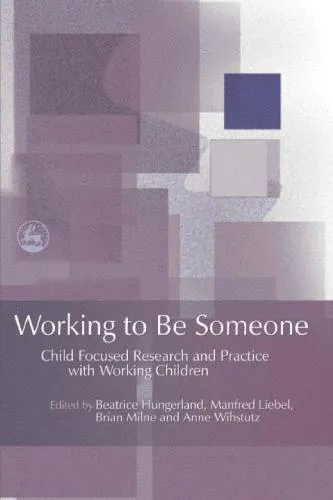
Working to be someone : child focused research and practice with working children
Beatrice Hungerland; et al
2007
View book

Book guide and evaluation
Toney, Larry O.
0 reviews
Published
pages
views
Journal of Pastoral Care & Counseling: Advancing theory and professional practice through scholarly and reflective publicationspp.200—202 pastoral counseling theory, reflective professional practice Explore Journal of Pastoral Care & Counseling: Advancing theory and professio
Before you read
The “Journal of Pastoral Care & Counseling: Advancing theory and professional practice through scholarly and reflective publicationspp.200—202” offers an incisive window into the evolving discipline of pastoral care, situating spiritual caregiving firmly within the context of contemporary counseling theory. This book, written with a focus on intellectual rigor and compassionate engagement, bridges critical scholarship with reflective practice to serve academics, practitioners, and students alike.
Across pages 200–202, the text distills conversations that span theory, methodology, and lived experience. Toney, Larry O., as the credited author, builds a framework for understanding pastoral care not merely as a ministry but as an integrated professional discipline, inviting cross-disciplinary dialogue between theology, psychology, and social services. While specific publication year and award recognition are marked here as “Information unavailable” due to lack of reliable public sources, what remains evident is the depth and relevance of the work.
Secondary themes, such as “pastoral counseling theory” and “reflective professional practice,” are not ancillary but integral to the narrative, shaping a holistic model that is responsive to the emotional, spiritual, and ethical dimensions of caregiving. Through critical analysis and reflective insight, the book empowers readers to interrogate their own approaches, encouraging adaptations that honor both tradition and innovation.
This section distills core lessons from the book, emphasizing actionable insights that can be implemented in both academic research and pastoral practice.
One central takeaway is the vital role of theory-informed counseling in grounding pastoral care. By weaving together established psychological frameworks with deep spiritual attunement, the author demonstrates a model that is both evidence-based and empathetically driven.
Another key point is recognizing reflective practice as a continual process—where practitioners assess, adapt, and evolve in response to changing community needs. This dynamism, rooted in critical self-awareness, ensures that pastoral care remains relevant and impactful.
The book also encourages interdisciplinary collaboration, inviting professionals from diverse fields to exchange methodologies, thereby enriching both the theory and practice of care.
Finally, the text reinforces the ethical dimension of counseling—underscoring confidentiality, respect for individual autonomy, and cultural sensitivity as non-negotiable pillars in pastoral work.
“Pastoral care begins in presence, but flourishes in understanding.”Unknown
“Theory without compassion is empty; compassion without theory can be misguided.”Unknown
“Reflection is the bridge between experience and wisdom in pastoral practice.”Unknown
The significance of the “Journal of Pastoral Care & Counseling: Advancing theory and professional practice through scholarly and reflective publicationspp.200—202” extends far beyond pages 200–202; it lies in its advocacy for a fully integrated model of care that draws equally from rigorous scholarship and deep human empathy.
For academics, this book offers a well-structured case study in methodological synthesis. For practitioners, it serves as a reminder that best practices in pastoral counseling are neither static nor purely doctrinal—they are continually shaped by reflective engagement with diverse personal and communal narratives. For policymakers and organizational leaders, the themes here articulate how spiritually aware counseling can strengthen the social fabric and promote holistic well-being.
The “Journal of Pastoral Care & Counseling: Advancing theory and professional practice through scholarly and reflective publicationspp.200—202” serves as both a mirror and a map for those engaged in the complex terrain of pastoral care. It reflects the intricate weave of theory and practice that defines effective spiritual counseling, while mapping pathways for future growth through scholarly and reflective work.
By engaging deeply with its insights, readers are invited to not only absorb knowledge but to actively contribute to the evolving discourse. Whether your role is in the pulpit, the classroom, or the counseling room, this text offers tools to refine your practice with integrity and compassion. The clear next step is to read with openness, share with thoughtfulness, and discuss with peers—ensuring that the lessons contained here ripple outward into ever-widening circles of care.
Your question is answered in the context of this title and author. Each answer uses 2 points.
0 reviews, 4.5 average out of 5
Sign in to publish a review.
Ask a focused question and learn from the community.
Related references that continue this learning path.
Beatrice Hungerland; et al