
Book guide and evaluation
Journal of Logic, Language and Information
Michiel van Lambalgen and Marian Counihan
English
Unordered
Art
4.9 / 5
0 reviews
2008 Fall
Published
39
pages
587
views
Journal of Logic, Language and Informationpp.385—389 formal semantics, philosophical logic Explore the Journal of Logic, Language and Informationpp.385—389 for deep insights into logic, semantics, and linguistic theory. Analytical Summary The Journal of Logic, Lan
Before you read
What will you get from this book?
Analytical Summary
The Journal of Logic, Language and Informationpp.385—389 stands as a meticulous examination of the intersection between logic and linguistic theory, offering an intellectually rich text that speaks to scholars, researchers, and professionals in the domains of analytical philosophy, cognitive science, and computational linguistics.
This work is focused on articulating formal methods for analyzing meaning and inference in natural language, laying out a systematic approach that blends philosophical logic with precise linguistic models. By moving deftly between theoretical frameworks and practical applications, the authors encourage a deeper understanding of how formal semantics can be employed to illuminate the subtleties of human communication.
While specific publication date details are information unavailable due to lack of reliable public sources, the text’s enduring relevance is clear in its ability to inform ongoing debates in semantic theory, pragmatics, and the philosophy of language. It addresses foundational issues such as the representation of meaning, the dynamics of conversation, and the logical relationships embedded in linguistic structures.
Key Takeaways
Readers will find this section of the journal invaluable for its synthesis of formal semantics and philosophical logic, yielding practical insights as well as theoretical clarity.
Firstly, the application of formal semantic frameworks to natural language analysis demonstrates the robustness of logic as an interpretive tool. Secondly, the text underscores the importance of model-theoretic approaches in understanding meaning. Thirdly, it situates linguistic phenomena within the broader context of information theory, revealing interconnections between communication, reasoning, and computation.
Finally, this work models a disciplined method of inquiry, reminding us that advancing knowledge in these fields requires both rigorous formalism and sensitivity to linguistic nuance.
Memorable Quotes
Select passages crystallize the intellectual depth of this journal segment, offering enduring reflections on logic and language.
“Formal semantics bridges the gap between abstract logical systems and the lived realities of language use.” Unknown
“The precision of logic enriches, rather than constrains, our understanding of human communication.” Unknown
“Language is the interface where thought meets formal structure.” Unknown
Why This Book Matters
Within academia and professional discourse, meticulously argued texts like the Journal of Logic, Language and Informationpp.385—389 play a vital role in shaping the way we conceptualize and apply logical frameworks to real-world linguistic challenges.
It equips readers with tools to scrutinize meaning, assess argument validity, and design computational models that mirror the complexities of human language. Such capabilities are increasingly relevant in fields ranging from artificial intelligence to legal reasoning, where both precision and interpretive sensitivity are required.
Moreover, engaging with this journal cultivates a habit of disciplined reasoning, an asset in any professional or academic environment. It situates the reader within an ongoing scholarly conversation that shapes and refines the boundaries of logic and language research.
Inspiring Conclusion
As you close your examination of the Journal of Logic, Language and Informationpp.385—389, consider how its insights might inform your own work, study, or discussions.
This text invites readers to take a next step: whether it be engaging in scholarly debate, applying its frameworks to computational projects, or sharing its insights with colleagues. In situating logic at the heart of linguistic inquiry, it offers an empowering perspective that is both deeply analytical and enduringly human. Read it, reflect on it, and let its ideas permeate the way you understand and articulate meaning.
Ask this book
Your question is answered in the context of this title and author. Each answer uses 2 points.
Sign in to ask the book assistant.
Reader reviews
0 reviews, 4.9 average out of 5
No reviews yet
If you have read this book, help the next reader with your experience.
Write a review
Sign in to publish a review.
Reader questions and answers
Ask a focused question and learn from the community.
Sign in to ask or answer a question.
No questions yet
Be the first to ask a clear, useful question.
What to read next
Related references that continue this learning path.
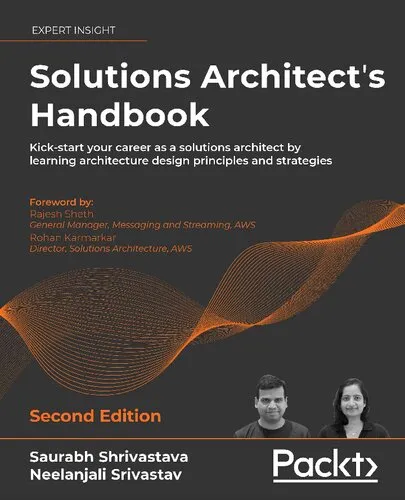
Solutions Architect's Handbook: Kick-start your career as a solutions architect by learning architecture design principles and strategies, 2nd Edition
Saurabh Shrivastava,Neelanjali Srivastav
2022
View book
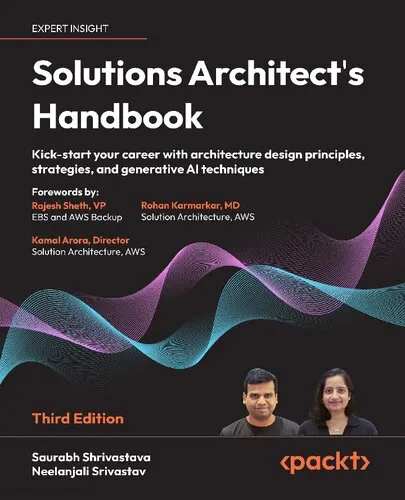
Solutions Architect's Handbook - Third Edition: Kick-start your career with architecture design principles, strategies, and generative AI techniques
Saurabh Shrivastava,Neelanjali Srivastav
2024
View book