
Book guide and evaluation
Journal of Homeland Security and Emergency Management
Boersma, Kees; Wagenaar, Pieter; Wolbers, Jeroen
English
Unordered
Cyber Security
3.9 / 5
0 reviews
2012 January 29
Published
0
pages
192
views
Welcome to the detailed introduction to the book "Journal of Homeland Security and Emergency Management," an essential contribution to the field of crisis management, disaster response, and homeland security. Authored by Kees Boersma, Pieter Wagenaar, and Jeroen Wolbers, this b
Before you read
What will you get from this book?
Welcome to the detailed introduction to the book "Journal of Homeland Security and Emergency Management," an essential contribution to the field of crisis management, disaster response, and homeland security. Authored by Kees Boersma, Pieter Wagenaar, and Jeroen Wolbers, this book offers an interdisciplinary and practical perspective that bridges academic insights with actionable strategies. Whether you are a student, practitioner, or policymaker in the domain of emergency preparedness, the insights contained within this work are vital for facing the complex challenges of modern society.
Detailed Summary of the Book
The "Journal of Homeland Security and Emergency Management" takes a deep dive into the principles, practices, and policies central to safeguarding society from both natural and man-made disasters. The book explores a range of topics, from crisis communication and leadership in emergencies to technological innovations and collaboration across organizations.
Structured around empirical studies and real-world examples, the authors examine how diverse agencies and stakeholders can coordinate effectively during crises. It highlights emerging issues such as cyber threats to critical infrastructure, the role of big data in disaster prediction, and the ethical dilemmas that arise in life-and-death situations. The book also dedicates sections to understanding the importance of community resilience and fostering public trust in governmental responses to emergencies.
While this publication primarily addresses scholars, it also serves as a toolkit for practitioners in emergency management and homeland security. The text provides practical frameworks and case studies that demonstrate successful approaches in complex scenarios, making it applicable to field operations.
Key Takeaways
- Understand the fundamentals of crisis management, including preparedness, response, recovery, and mitigation strategies.
- Explore how technology, data, and innovation are shaping the landscape of homeland security.
- Learn the importance of collaboration across local, national, and international stakeholders during emergencies.
- Gain insights into the psychological and social dynamics during crises to better serve affected populations.
- Discover practical frameworks and case studies that showcase effective emergency management practices.
Famous Quotes from the Book
"In the face of uncertainty, collaboration is not just a tool; it is a necessity for survivability."
"Crisis communication is not merely about disseminating information; it is the cornerstone of building trust and resilience."
"Technological innovation in homeland security must be matched with ethical foresight to navigate the challenges of the future."
Why This Book Matters
The "Journal of Homeland Security and Emergency Management" is not just another academic work; it is a call to action for all stakeholders involved in protecting societies from threats. In an era marked by global interconnectedness and complex risks, the book underscores the necessity of multidisciplinary cooperation, forward-thinking strategies, and community involvement.
By identifying gaps in existing approaches and presenting innovative solutions, the authors advocate for a more integrated and comprehensive approach to disaster and crisis management. This book also contributes to shaping future policies and training programs by providing actionable insights derived from empirical research and case studies. It is essential reading for anyone who seeks to understand how modern disaster response systems can evolve to respond to today's challenges and prepare for those of tomorrow.
Whether you aim to enhance your organization's emergency preparedness or wish to contribute to academic research, this book offers a wealth of knowledge that is both insightful and practical.
Ask this book
Your question is answered in the context of this title and author. Each answer uses 2 points.
Sign in to ask the book assistant.
Reader reviews
0 reviews, 3.9 average out of 5
No reviews yet
If you have read this book, help the next reader with your experience.
Write a review
Sign in to publish a review.
Reader questions and answers
Ask a focused question and learn from the community.
Sign in to ask or answer a question.
No questions yet
Be the first to ask a clear, useful question.
What to read next
Related references that continue this learning path.
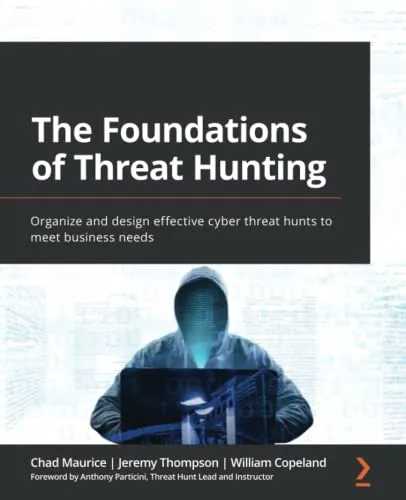
The Foundations of Threat Hunting: Organize and design effective cyber threat hunts to meet business needs
Chad Maurice,Jeremy Thompson,William Copeland
2022
View book