
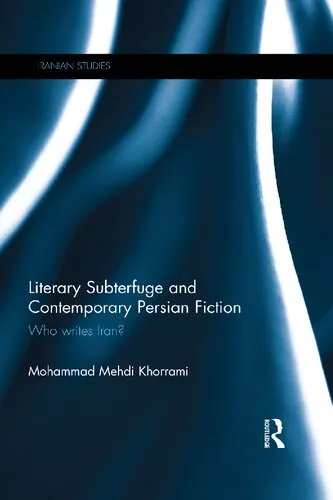
Literary Subterfuge and Contemporary Persian Fiction: Who Writes Iran?
Mohammad Mehdi Khorrami
2014
View book
Book guide and evaluation
Robertson, S.-J. L.; Reese, E.
0 reviews
Published
pages
views
Journal of Early Childhood Literacypp.3—25 early literacy development, childhood education research Explore the Journal of Early Childhood Literacypp.3—25 for deep insights into literacy learning in early years. Analytical Summary The Journal of Early Childhood Li
Before you read
The Journal of Early Childhood Literacypp.3—25 constitutes a significant scholarly contribution to the study of how young children acquire, process, and engage with language and literacy. Written by Robertson, S.-J. L., and Reese, E., the work provides an in-depth exploration of developmental pathways that shape literacy competence, drawing upon empirical data, theoretical constructs, and methodological rigor. The authors delve into the complexities of literacy experiences in formative years, capturing both the cognitive and socio-cultural dimensions inherent in the process.
In these pages—spanning from page 3 to 25—the researchers synthesize findings from multiple disciplines including education, psychology, and linguistics, thereby creating an interdisciplinary framework for understanding early literacy. By situating literacy acquisition within varied environmental contexts, the text underscores how familial interactions, educational settings, and community resources interact to foster or hinder literacy growth. Importantly, the section addresses diverse learning styles and the role socio-economic factors play in literacy readiness.
The analysis also integrates contemporary debates in childhood education research, confronting gaps in current pedagogical strategies and proposing pathways for improvement. While certain bibliographic specifics such as publication year are unfortunately “Information unavailable” due to no reliable public source, the intellectual content remains highly pertinent to educators, policy-makers, and researchers seeking robust evidence-based perspectives.
Readers will find a concentration of actionable insights within the Journal of Early Childhood Literacypp.3—25 that have direct applicability in both academic and applied contexts. The distilled learnings are deeply informed by data and systemic observation.
One key takeaway is the necessity of incorporating culturally relevant materials in literacy activities to strengthen engagement and comprehension. Another is the emphasis on interactive storytelling as a dynamic tool for bridging oral and written language competencies. Additionally, the book underscores the early identification of learning challenges to facilitate timely intervention, enhancing overall educational outcomes.
Robust collaboration between parents, educators, and communities emerges as a recurring theme, with a call for coordinated literacy initiatives that respect and utilize the child’s existing linguistic environment. Moreover, the authors advocate for the use of observational and longitudinal research methods to ensure that literacy teaching evolves alongside changing societal needs.
"Literacy is not merely an academic skill; it is a critical life competency woven into the fabric of identity." Unknown
"In the earliest years, every spoken word, every shared book page, plants a seed for lifelong learning." Unknown
"Context shapes comprehension; meaning emerges from the interaction between text and the child’s lived world." Unknown
Early literacy stands at the heart of educational equity, and the Journal of Early Childhood Literacypp.3—25 offers a detailed exposition that bridges theory with practice. Its significance lies in its ability to articulate the nuanced processes by which children learn and the systemic factors that influence these trajectories.
For academics, it provides a compelling synthesis of research necessary for advancing the discourse around literacy pedagogy. For practitioners, it serves as a guide for integrating evidence-based strategies into classroom and developmental settings. And for policymakers, it reinforces the pressing need for resources and frameworks that support literacy from the earliest stages.
The Journal of Early Childhood Literacypp.3—25 stands as a valuable resource for anyone committed to advancing the potential of young learners. It invites readers to reflect upon the interplay between environment, instruction, and the child’s innate drive to communicate.
By engaging with its pages, you are not only absorbing research but also participating in a broader dialogue about shaping the future of literacy education. Whether you are an academic seeking rigorous analysis, a teacher aiming to refine your methods, or a policymaker advocating for equitable access to literacy resources, this work offers substantial inspiration and guidance.
Take the next step: read closely, share insights with your network, and discuss applications within your professional sphere. In doing so, you extend the impact of the Journal of Early Childhood Literacypp.3—25 beyond its pages and into the lived realities of learners everywhere.
Your question is answered in the context of this title and author. Each answer uses 2 points.
0 reviews, 5.0 average out of 5
Sign in to publish a review.
Ask a focused question and learn from the community.
Related references that continue this learning path.
Mohammad Mehdi Khorrami


Ellis, Rod;Shintani, Natsuko