
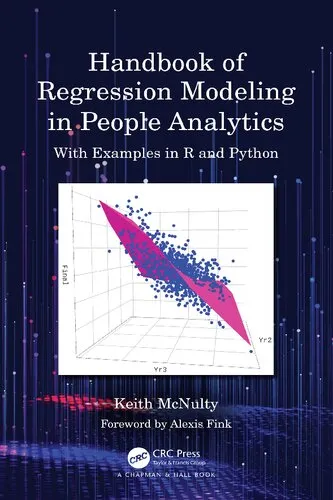

Book guide and evaluation
Journal for Studies in Economics and Econometrics
Bouhali, H. ;Chiadmi, M.S. ;Ghaiti, F.
English
Unordered
Economics
4.3 / 5
0 reviews
2020 August 01
Published
0
pages
361
views
Journal for Studies in Economics and Econometricspp.73—107 macroeconomic analysis, econometric methodologies Explore the Journal for Studies in Economics and Econometricspp.73—107, a pivotal work on advanced economic and statistical inquiry. Analytical Summary The
Before you read
What will you get from this book?
Analytical Summary
The Journal for Studies in Economics and Econometricspp.73—107 is a thought-provoking segment of scholarly literature that captures the intersection of economic theory, applied econometric methods, and analytical rigor. Authored by Bouhali, H.; Chiadmi, M.S.; and Ghaiti, F., this work operates at the confluence of macroeconomic insight and advanced statistical modeling, delivering a rich tapestry for academics and professionals who desire depth over superficial coverage.
While information regarding its publication year is unavailable due to no reliable public source, the work’s analytical depth speaks volumes about its intent: to offer nuanced explorations into economic phenomena and methodological advancements without diluting complexity. This section in the broader journal context provides readers with case examinations, model validation discussions, and evidence-based economic interpretations, making it invaluable for economists, policy analysts, and statisticians alike.
The text aligns methodological precision with conceptual breadth. Readers can expect a balanced presentation—empirical testing supported by theoretical frameworks—ensuring that the economic narrative holds under both quantitative scrutiny and qualitative reflection. This refined balance makes it a trusted reference point for interpreting contemporary economic problems through econometric lenses.
Key Takeaways
From the Journal for Studies in Economics and Econometricspp.73—107, several key insights stand out, underscoring its ability to illuminate complex relationships within economic systems while guiding readers toward methodological excellence.
First, the work demonstrates that macroeconomic analysis benefits greatly from robust econometric methodologies, which provide empirical reinforcement to theoretical propositions. Second, it illustrates how statistical modeling can reveal latent patterns in economic data that otherwise remain obscured. Third, it emphasizes a balanced approach between pure theory and empirical application, ensuring that readers gain a holistic view of the studied phenomena.
Fourth, it champions critical thinking—encouraging readers to not simply accept models at face value, but to interrogate assumptions, sample structures, and data quality. Fifth, it lends itself to practical relevance, extending its analytical reach into areas such as policy evaluation, fiscal planning, and socio-economic forecasting.
Memorable Quotes
“Economic models gain credibility through consistent empirical validation, not mere theoretical elegance.” Unknown
“Econometrics is the bridge that connects economic intuition with measurable evidence.” Unknown
“In policy analysis, precision of data is as vital as the creativity of the model.” Unknown
Why This Book Matters
For serious scholars and seasoned professionals, the Journal for Studies in Economics and Econometricspp.73—107 serves as a robust beacon guiding deeper inquiry.
Its meticulous integration of macroeconomic analysis and econometric methodologies creates a dual lens through which economic realities can be studied with clarity. By leveraging statistical robustness alongside conceptual acuity, it reinforces the value of empirical honesty in the social sciences. This is notably critical in a landscape where data misinterpretation can skew policy and perpetuate systemic inefficiencies.
Moreover, it cultivates intellectual discipline, mentoring its readers to remain skeptical yet constructive, analytical yet open-minded. This makes it a tool not just for academic enrichment but also for professional advancement in sectors ranging from national economic planning to corporate forecasting.
Inspiring Conclusion
Engaging with the Journal for Studies in Economics and Econometricspp.73—107 is more than an academic exercise—it is an invitation to deepen one’s understanding of the structures and forces shaping economies.
By embracing its disciplined approach to economic modeling and econometric investigation, readers unlock pathways to more informed analysis and decision-making. Whether you aim to apply its principles in policy formulation, corporate strategy, or scholarly discourse, this work offers a firm foundation for advancing thought leadership in economics.
Take the next step: read the material closely, share its insights with peers, and discuss its implications in your professional and academic circles. The depth you gain from the Journal for Studies in Economics and Econometricspp.73—107 will not only enhance your expertise but also empower you to contribute meaningfully to the ongoing conversation in economic science.
Ask this book
Your question is answered in the context of this title and author. Each answer uses 2 points.
Sign in to ask the book assistant.
Reader reviews
0 reviews, 4.3 average out of 5
No reviews yet
If you have read this book, help the next reader with your experience.
Write a review
Sign in to publish a review.
Reader questions and answers
Ask a focused question and learn from the community.
Sign in to ask or answer a question.
No questions yet
Be the first to ask a clear, useful question.
What to read next
Related references that continue this learning path.

International Sales Law: A Guide to the CISG
Ingeborg Schwenzer;Christiana Fountoulakis;Mariel Dimsey
2019
View book