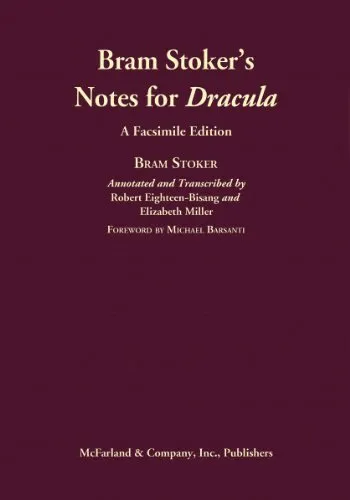
Bram Stoker's Notes for Dracula: A Facsimile Edition
Robert Eighteen-Bisang,Elizabeth Miller
2008
View book
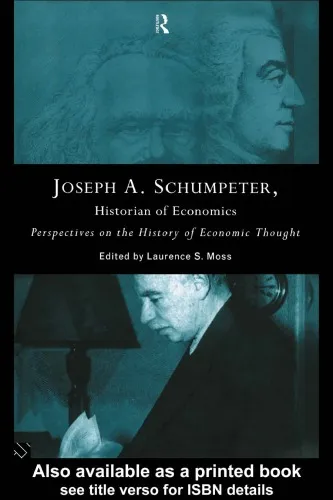
Book guide and evaluation
Lawrence Moss
0 reviews
Published
pages
views
Introduction to Joseph A. Schumpeter Historian of Economic Thought Welcome to the captivating exploration of one of the most influential figures in the realm of economic thought, Joseph A. Schumpeter. In "Joseph A. Schumpeter Historian of Economic Thought: Perspect
Before you read
Welcome to the captivating exploration of one of the most influential figures in the realm of economic thought, Joseph A. Schumpeter. In "Joseph A. Schumpeter Historian of Economic Thought: Perspectives on the History of Economic Thought," we delve into the profound impact Schumpeter had on the field of economics. This book serves not only as an in-depth analysis of Schumpeter’s theories and contributions but also as an essential resource for understanding the evolution of economic thought.
Joseph A. Schumpeter is renowned for his innovative ideas and theoretical contributions to economics, particularly his theories on economic development and capitalism. This book provides a comprehensive examination of Schumpeter’s role as a historian of economic thought. Through an exploration of his work, readers gain insight into his analyses of capitalism, entrepreneurship, and the dynamics of economic innovation.
The book is structured around Schumpeter's seminal ideas, with a focus on his concept of "creative destruction" and its implications on economic and social structures. We discuss how his work provides a framework to understand the continual evolution of economies, the rise and fall of industries, and the transformative power of entrepreneurship. Furthermore, Schumpeter's perspective on the cyclical nature of economic activity is explored, illustrating his lasting influence on economic theory and practice.
"Capitalism is by nature a form or method of economic change and not only never is but never can be stationary."
"The evolution of the economic structure cannot be understood without its historical context, and Schumpeter offers crucial insights into this intricate process."
Schumpeter’s contributions to economic thought extend far beyond his lifetime, continuing to influence economists, policymakers, and scholars. This book is essential for anyone seeking to understand the historical contours of modern economic theories and the foundational role Schumpeter played in shaping them. It not only enhances our understanding of his theories but also places them within the broader historical context, offering readers an all-encompassing look at the development of economic ideas.
As the global economy continues to evolve, the insights provided by Schumpeter remain as relevant as ever. By exploring his rich legacy, this book invites readers to reflect on the ongoing processes of economic transformation and the relentless march of innovation.
Your question is answered in the context of this title and author. Each answer uses 2 points.
0 reviews, 4.3 average out of 5
Sign in to publish a review.
Ask a focused question and learn from the community.
Related references that continue this learning path.
Robert Eighteen-Bisang,Elizabeth Miller