
Book guide and evaluation
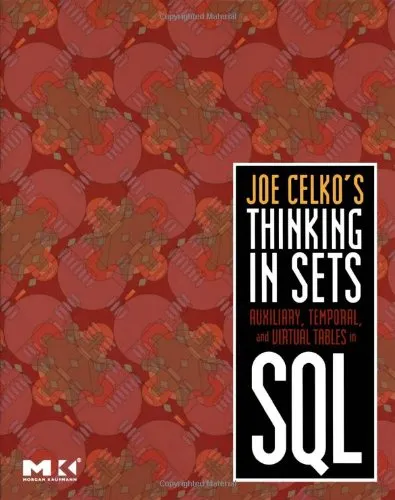
Joe Celko's Thinking in Sets: Auxiliary, Temporal, and Virtual Tables in SQL (The Morgan Kaufmann Series in Data Management Systems)
Joe Celko
English
Unordered
Software Engineering
4.0 / 5
0 reviews
2008
Published
383
pages
500
views
Introduction to Joe Celko's Thinking in Sets Joe Celko's book, "Thinking in Sets: Auxiliary, Temporal, and Virtual Tables in SQL," offers a deep dive into the world of SQL by adopting a set-based approach. This book is a vital resource for both novice and experienced
Before you read
What will you get from this book?
Introduction to Joe Celko's Thinking in Sets
Joe Celko's book, "Thinking in Sets: Auxiliary, Temporal, and Virtual Tables in SQL," offers a deep dive into the world of SQL by adopting a set-based approach. This book is a vital resource for both novice and experienced database professionals who are striving to move beyond procedural programming techniques and embrace the set-oriented nature of SQL.
Detailed Summary of the Book
Joe Celko guides readers through the principles of thinking in sets, encouraging them to leverage the full power of SQL's set-processing capabilities. The book elucidates complex concepts like auxiliary, temporal, and virtual tables, illustrating how these constructs can simplify data management and enhance the efficacy of SQL queries.
The narrative is structured around real-world examples that illustrate how set-based thinking can solve common database problems more elegantly than traditional procedural approaches. By integrating in-depth tutorials with practical insights, Celko's work ensures that readers can apply set-based techniques to real-life scenarios effectively.
The author delves into auxiliary tables, explaining their role in expanding the capabilities of SQL for tasks such as metadata management and cross-referencing datasets. With regard to temporal tables, Joe Celko provides a comprehensive guide on handling time-based data, ensuring the integrity and accuracy of temporal information within databases. The exploration of virtual tables further uncovers the potential of SQL to manage complex data operations dynamically without the need for persistent storage.
Key Takeaways
- Understanding the fundamental shift from procedural to set-based thinking essential for effective SQL programming.
- In-depth knowledge of auxiliary, temporal, and virtual tables and their practical applications in database management.
- Strategies for solving common database challenges using set operations.
- Enhanced skills in structuring complex SQL queries to optimize data retrieval and manipulation.
- Insight into maintaining data integrity and consistency through the use of advanced SQL features.
Famous Quotes from the Book
"SQL is fundamentally a set-oriented language where you ask 'what' you want—not 'how' to get it."
"Understanding temporal data is crucial in making accurate queries and ensuring the data remains true to its real-world counterparts."
Why This Book Matters
This book stands as an essential read in the era of big data and complex analytics. As databases grow increasingly sophisticated, so too does the need for database professionals who can harness the full power of SQL through set-based thinking. By challenging outdated procedural paradigms and offering a new perspective on SQL's capabilities, Joe Celko's "Thinking in Sets" equips readers with the skills necessary to master modern data challenges.
Moreover, the book's focus on advanced SQL topics, such as temporal and virtual tables, prepares readers to tackle issues related to time-sensitive data and dynamic data management. In doing so, it opens the door to innovative problem-solving and efficient data processing strategies, reinforcing the importance of keeping pace with the rapidly evolving landscape of data management.
Ask this book
Your question is answered in the context of this title and author. Each answer uses 2 points.
Sign in to ask the book assistant.
Reader reviews
0 reviews, 4.0 average out of 5
No reviews yet
If you have read this book, help the next reader with your experience.
Write a review
Sign in to publish a review.
Reader questions and answers
Ask a focused question and learn from the community.
Sign in to ask or answer a question.
No questions yet
Be the first to ask a clear, useful question.
What to read next
Related references that continue this learning path.
Solutions Architect's Handbook: Kick-start your career as a solutions architect by learning architecture design principles and strategies, 2nd Edition
Saurabh Shrivastava,Neelanjali Srivastav
2022
View book
Solutions Architect's Handbook - Third Edition: Kick-start your career with architecture design principles, strategies, and generative AI techniques
Saurabh Shrivastava,Neelanjali Srivastav
2024
View book
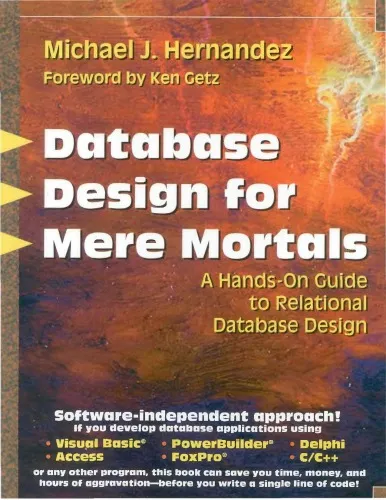
Database design for mere mortals : a hands-on guide to relational database design
Michael J Hernandez
1997
View book