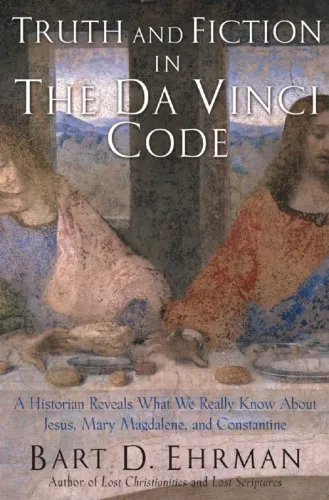
The truth behind the Da Vinci code: a historian explores what we really know about Jesus, Mary Magdalene, and Constantine
Emperor of Rome Constantine I;Brown, Dan;Saint Mary Magdalene;Ehrman, Bart D.;Jesus Christ
2004
View book
Book guide and evaluation
John Philip Jenkins
0 reviews
Published
pages
views
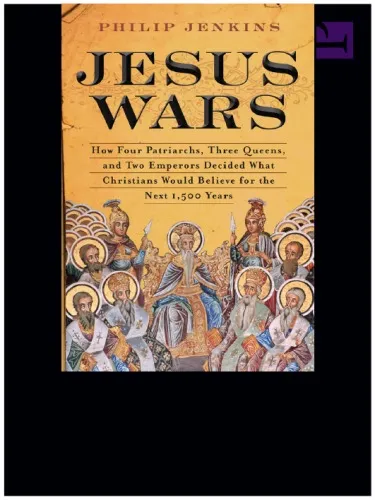
Detailed Introduction to 'Jesus Wars' In his compelling book, "Jesus Wars: How Four Patriarchs, Three Queens, and Two Emperors Decided What Christians Would Believe for the Next 1,500 Years," John Philip Jenkins delves into the tumultuous history of early Christianity. This in
Before you read
In his compelling book, "Jesus Wars: How Four Patriarchs, Three Queens, and Two Emperors Decided What Christians Would Believe for the Next 1,500 Years," John Philip Jenkins delves into the tumultuous history of early Christianity. This insightful narrative explores the complex interplay of religious beliefs, political power, and human ambition that shaped the core doctrines of Christianity as we know it today. Through an engaging account of historical councils and debates, Jenkins uncovers the dramatic story behind the development of the Nicene Creed and the eventual dominance of the Chalcedonian Definition in defining Christian orthodoxy.
Jenkins’s "Jesus Wars" takes readers on a historical journey through the fourth and fifth centuries, a period that proved pivotal for the development of Christian doctrine. The book focuses on a series of intense theological and political disputes among key figures and factions. At the heart of these disputes were debates about the nature of Christ and the Trinity, which culminated in a number of ecumenical councils. These councils, particularly the Council of Nicaea and the Council of Chalcedon, were not just theological assemblies but also battlegrounds of political and personal confrontations.
The narrative is anchored in the alliances and conflicts among four patriarchs, three queens, and two emperors. The patriarchs led powerful sees in Alexandria, Antioch, Constantinople, and Rome, each defending their theological views while vying for supremacy within the Roman Empire's religious landscape. Queens and empresses wielded influence through their political power and ability to sway religious decisions. Meanwhile, emperors often attempted to mediate these theological disputes, understanding the need for a unified doctrine to maintain the empire's stability.
Through rich historical detail, Jenkins illustrates how these figures and events collectively shaped the Christian doctrine and set the foundation for Christian beliefs that endured for millennia.
"The true story of history is not in its stepping-stones, the great events, but in the battles along the way, the struggles over what was considered truth." - John Philip Jenkins, Jesus Wars
"Faith, orthodoxy, power: when these collide, it is not history, but a single dramatic event, an unbroken and unforgivable controversy that starts and consumes time." - John Philip Jenkins, Jesus Wars
"Jesus Wars" offers an enlightening perspective on an era of religious history that vastly influences contemporary Christian belief. Jenkins’s narrative highlights the significance of understanding the past to contextualize present-day religious doctrines and divisions. By examining how theological positions became political tools, Jenkins provides readers with a deeper appreciation for the historical intricacies and human elements that have shaped the spiritual landscape. This book is essential reading for those interested in religious studies, history, and anyone curious about the forces that have shaped Christian doctrine over centuries.
With an engaging writing style and thorough research, Jenkins invites readers to reconsider the simplistic narratives often presented about the history of Christianity, offering a nuanced and thoughtful examination of this transformative period.
Your question is answered in the context of this title and author. Each answer uses 2 points.
0 reviews, 4.2 average out of 5
Sign in to publish a review.
Ask a focused question and learn from the community.
Related references that continue this learning path.
Emperor of Rome Constantine I;Brown, Dan;Saint Mary Magdalene;Ehrman, Bart D.;Jesus Christ
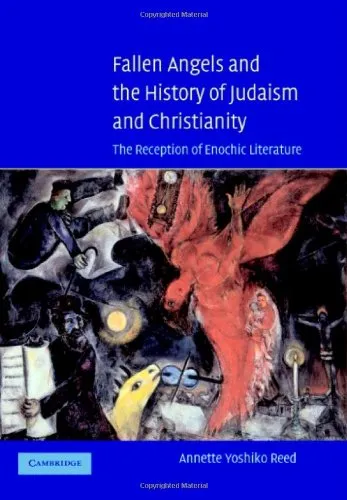
Annette Yoshiko Reed