
Book guide and evaluation
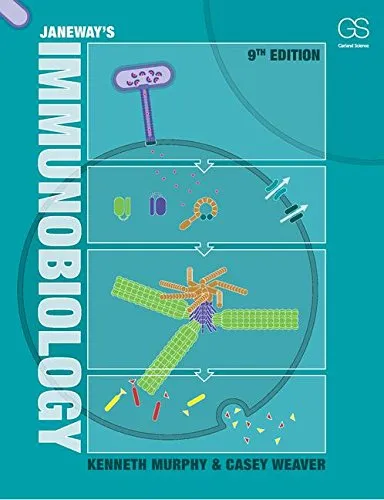
Janeway’s Immunobiology
Kenneth Murphy,Casey Weaver
English
Beginner
Medical
4.8 / 5
0 reviews
2016
Published
927
pages
431
views
Janeway’s Immunobiology Adaptive immunity, immunological mechanisms Janeway’s Immunobiology offers an authoritative exploration of immune system science for students, researchers, and professionals. Analytical Summary Janeway’s Immunobiology is widely regarded as
Before you read
What will you get from this book?
Analytical Summary
Janeway’s Immunobiology is widely regarded as a definitive textbook in the field of immunology, presenting a meticulous, research-backed account of how the immune system operates in health and disease. Designed for advanced students, scholars, and medical professionals, it blends foundational concepts with modern advancements, offering both breadth and depth of coverage.
The book unpacks the intricate interactions between innate and adaptive immunity, explaining cellular and molecular mechanisms through clear, systematic presentation. Using illustrative figures, logical explanations, and cross-referenced chapters, the text integrates basic immunological principles with applied contexts—bridging the laboratory bench to clinical applications. It also examines how immune responses are triggered, regulated, and sometimes misdirected, leading to autoimmune conditions or immunodeficiencies.
Information on the exact initial publication year or awards is unavailable due to no reliable public source that can verify the details accurately. However, its reputation in immunology pedagogy is established through repeated inclusion in graduate curricula worldwide. Its pedagogical approach emphasizes both the macroscopic view of immune networks and the microscopic understanding of antigen-antibody chemistry.
For those pursuing deep expertise, Janeway’s Immunobiology functions not merely as a reference, but as a scaffold on which to build nuanced clinical and research knowledge. Readers are encouraged to engage critically with each chapter, probing connections between established theories and emerging experimental data.
Key Takeaways
The core value of Janeway’s Immunobiology lies in its structured synthesis of immunological science, enabling readers to move from foundational principles to complex applications with confidence.
First, the work emphasizes the integrated nature of immune system components, highlighting that innate and adaptive immunity are inseparable layers of protection. Second, it underscores the central role of receptor-ligand interactions in signal transduction, pathogen recognition, and immune activation. Third, it fosters a research mindset by contextualizing theory within experimental evidence and clinical case examples. Fourth, the book promotes interdisciplinary thinking, connecting immunology to genetics, microbiology, and epidemiology. Finally, it encourages ethical considerations in biomedical research and therapeutic development.
Memorable Quotes
“Immunology is a science of connections—between molecules, cells, and entire systems.” Unknown
“The immune system exemplifies the balance between defense and self-recognition.” Unknown
“Adaptive immunity is not static; it learns and remembers.” Unknown
Why This Book Matters
In an era of rapid biomedical progress, Janeway’s Immunobiology serves as both a cornerstone text and a navigation tool for understanding immune physiology and pathology.
Its relevance extends beyond the classroom into clinical, pharmaceutical, and research settings. Immunologists, infectious disease specialists, and biotechnologists alike can leverage its insights to guide investigations and therapeutic innovation. By marrying theoretical frameworks with empirical data, the text prepares readers to confront current challenges such as emerging pathogens, vaccine development, and immune-based therapies for cancer.
The inclusion of adaptive immunity and other secondary topics reinforces a multi-dimensional approach, where scientific rigor meets practical applicability. This balance between academic depth and actionable knowledge explains its enduring presence in the professional literature.
Inspiring Conclusion
Janeway’s Immunobiology remains a vital resource for anyone serious about mastering the science of immunity, from the bench researcher to the practicing clinician.
Through its systematic exploration of adaptive immunity and detailed accounts of immunological mechanisms, the book invites ongoing dialogue and collaborative learning. Whether you are revisiting key concepts or discovering them for the first time, this text offers a depth of understanding that informs both theory and practice.
Readers are encouraged to engage with Janeway’s Immunobiology not just as a static textbook, but as a living repository of immunological knowledge. Consider reading a chapter closely, sharing insights with your peers, or applying the material to a real-world case study in your field. In doing so, you contribute to a broader conversation about human health and disease—one in which the immune system plays a starring role.
Ask this book
Your question is answered in the context of this title and author. Each answer uses 2 points.
Sign in to ask the book assistant.
Reader reviews
0 reviews, 4.8 average out of 5
No reviews yet
If you have read this book, help the next reader with your experience.
Write a review
Sign in to publish a review.
Reader questions and answers
Ask a focused question and learn from the community.
Sign in to ask or answer a question.
No questions yet
Be the first to ask a clear, useful question.
What to read next
Related references that continue this learning path.
Essential Cell Biology: A Practical Approach Volume 2: Cell Function (Practical Approach Series, 262, etc.)
John Davey,J. Michael Lord
2003
View book
Lippincott's Illustrated Q&A Review of Microbiology and Immunology
Bonnie A. Buxton PhD,Lauritz A. Jensen DA,Randal K. Gregg PhD
2009
View book
Jawetz, Melnick, & Adelberg's Medical Microbiology (24th edition)
Geo. F. Brooks,Karen C. Carroll,Janet S. Butel,Stephen A. Morse
2007
View book