
Book guide and evaluation
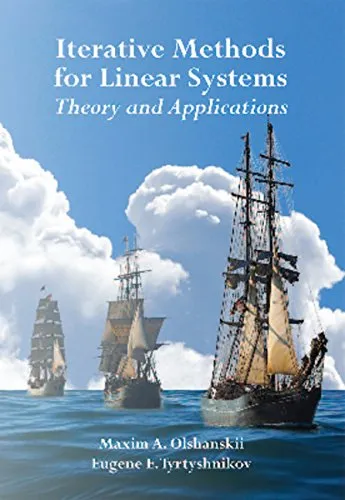
Iterative methods for linear systems: theory and applications
Maxim A. Olshanskii,Eugene E. Tyrtyshnikov
English
Beginner
Mathematics
4.2 / 5
0 reviews
2014
Published
257
pages
206
views
Introduction to "Iterative Methods for Linear Systems: Theory and Applications" “Iterative Methods for Linear Systems: Theory and Applications” is a comprehensive exploration of iterative techniques for solving linear systems, focusing on both theory and
Before you read
What will you get from this book?
Introduction to "Iterative Methods for Linear Systems: Theory and Applications"
“Iterative Methods for Linear Systems: Theory and Applications” is a comprehensive exploration of iterative techniques for solving linear systems, focusing on both theory and practical applications. Authored by Maxim A. Olshanskii and Eugene E. Tyrtyshnikov, this book is a vital resource for mathematicians, computational scientists, and engineers who deal with large-scale scientific computations. With its balanced approach to theory, implementation, and practical examples, the book offers in-depth insights into one of the most critical areas of numerical analysis. Whether you are a researcher, a graduate student, or an industry professional, this resource provides the foundation and tools needed to master state-of-the-art solution techniques.
Detailed Summary of the Book
The book delves into the fundamental challenges associated with solving linear systems, especially large and sparse ones that arise in practical applications like computational physics, engineering simulations, and machine learning. It starts with a discussion of the need for iterative methods, as opposed to direct ones, due to efficiency and scalability in high-dimensional problems.
The authors build a solid theoretical framework by discussing topics such as matrix properties, convergence analysis, and the conditions under which iterative methods outperform classical direct methods. The text progresses systematically to cover prominent iterative techniques, including:
- Jacobi and Gauss-Seidel methods
- Conjugate gradient and Krylov subspace methods
- Multigrid and domain decomposition techniques
- Preconditioning strategies for accelerating convergence
Each chapter couples rigorous mathematical exposition with real-world examples to illustrate how these methods apply in scenarios such as solving elliptic and parabolic PDEs, optimization problems, and graph-based applications. The inclusion of detailed pseudo-code and numerical experiments makes the book an excellent reference for practitioners seeking to implement these methods computationally.
Key Takeaways
The book equips readers with both the theoretical understanding and practical tools required to address large-scale linear system challenges. Here are the key takeaways:
- Comprehensive Coverage of Methods: From basic stationary iterative schemes to advanced multilevel and preconditioning techniques.
- Focus on Applications: The book bridges the gap between theory and real-world problems by demonstrating iterative techniques in practical scenarios.
- Numerical Robustness: Emphasis is placed on the stability, convergence, and efficiency of iterative methods.
- Implementation Guidance: Includes pseudo-code, algorithmic details, and practical advice for effective implementation in software packages.
Famous Quotes from the Book
“Iterative methods are the workhorses of modern numerical mathematics, powering solutions to problems too vast for direct computation.”
"The success of an iterative method lies as much in the choice of preconditioner as in the underlying algorithm."
Why This Book Matters
The significance of “Iterative Methods for Linear Systems” lies in its ability to address the complex problem of solving immense linear systems that frequently arise in modern science and engineering. The increasing demand for computational speed and accuracy makes iterative methods indispensable, as they allow for the efficient handling of millions or even billions of variables.
The book not only provides a roadmap for navigating the diverse landscape of iterative techniques but also fosters deeper understanding through its analytical approach. By covering both traditional and contemporary methods, this volume ensures its readers are well-equipped to tackle evolving computational challenges. Additionally, the authors' expertise ensures the content remains technically rich while being accessible to a wide audience. This makes it a timeless resource for academicians and professionals alike.
Ask this book
Your question is answered in the context of this title and author. Each answer uses 2 points.
Sign in to ask the book assistant.
Reader reviews
0 reviews, 4.2 average out of 5
No reviews yet
If you have read this book, help the next reader with your experience.
Write a review
Sign in to publish a review.
Reader questions and answers
Ask a focused question and learn from the community.
Sign in to ask or answer a question.
No questions yet
Be the first to ask a clear, useful question.
What to read next
Related references that continue this learning path.

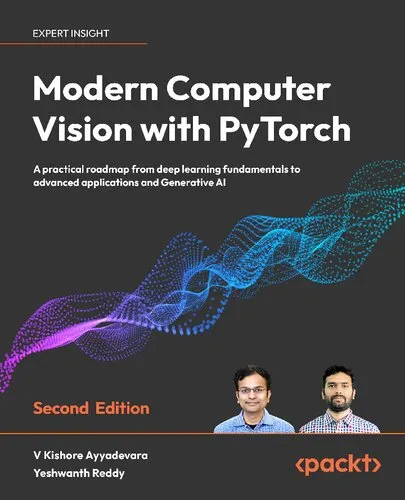
Modern Computer Vision with PyTorch: A Practical Roadmap From Deep Learning Fundamentals to Advanced Applications and Generative AI, 2nd Edition
V Kishore Ayyadevara,Yeshwanth Reddy
2023
View book