111
2025/12/20
5 / 5
I liked this book; it really reveals an important topic in our society. I recommend it to everyone!
Book guide and evaluation
Caroline Criado Perez
1 reviews
Published
pages
views
Welcome to an in-depth introduction to "Invisible Women: Exposing Data Bias in a World Designed for Men," a groundbreaking book by Caroline Criado Perez that reveals the gender data gap through meticulously researched evidence. This book shines a light on the hidden biases in a
Before you read
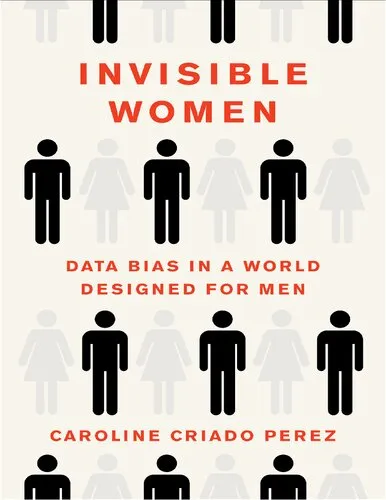
Welcome to an in-depth introduction to "Invisible Women: Exposing Data Bias in a World Designed for Men," a groundbreaking book by Caroline Criado Perez that reveals the gender data gap through meticulously researched evidence. This book shines a light on the hidden biases in a world that has long prioritized male data, often to the detriment of women.
The phrase "gender data gap" refers to the systemic absence of information pertaining to women’s lives and their unique needs. Caroline Criado Perez's "Invisible Women" dissects how this oversight permeates various facets of daily life, from healthcare and safety to the workplace and public planning. The premise is simple yet profound: much of the world's data is designed around men, subsequently marginalizing women and often putting them at risk.
The book is divided into several comprehensive sections that cover a breadth of topics. In healthcare, for example, heart attack symptoms are traditionally associated with the male experience, overlooking how they manifest differently in women, leading to misdiagnoses. The workplace sections explore how office temperatures and equipment are set to male preferences, potentially impacting women's productivity and comfort. Perez also examines urban planning, where public transportation and city designs rarely consider the transit patterns that often differ between genders.
Through researched anecdotes and data analysis, Perez reveals how the inclusion of women's experiences and needs does not only have political implications but substantial economic benefits as well. "Invisible Women" argues for a concerted effort to collect and interpret data that accounts for half the world's population, thus creating a more equitable society.
"The result of this deeply ingrained male bias is that even when we think we have designed something for both men and women, in all likelihood we have actually only designed it for men."
"Seeing men as the default human is fundamental to the structure of human society."
"Invisible Women" is more than just an exposé; it is a call to action. In a time where gender equality is a prominent global discussion, this book presents concrete evidence of one of the less obvious yet pervasive forms of gender inequality — data bias. This work is critical for policymakers, educators, designers, and all those in a position to effect change. It inspires the reader not only to recognize these blind spots but also to challenge the status quo and push for gender-sensitive reforms.
By addressing the gender data gap, "Invisible Women" encourages the collection of richer, more diverse data sets needed to shape a world that respects and accommodates differences between its occupants fairly and equitably.
Your question is answered in the context of this title and author. Each answer uses 2 points.
1 reviews, 5.0 average out of 5
2025/12/20
5 / 5
I liked this book; it really reveals an important topic in our society. I recommend it to everyone!
Sign in to publish a review.
Ask a focused question and learn from the community.
Related references that continue this learning path.


![Cover of Responsible AI in the Enterprise: Practical AI Risk Management for Explainable, Auditable, and Safe Models [Team-IRA]](https://s3.refhub.ir/images/thumb/Responsible_AI_in_the_Enterprise__Practical_A_8189.webp)
Adnan Masood,Heather Dawe