Elements of Programming Interviews in Java: The Insiders’ Guide
Adnan Aziz,Tsung-Hsien Lee,Amit Prakash
2016
View book
Book guide and evaluation
Andi Klein,Alexander Godunov
0 reviews
Published
pages
views
Introduction Welcome to the multifaceted world of computational physics, where numerical algorithms and computers transform complex physical systems into solvable problems! Our book, "Introductory Computational Physics," serves as a bridge between theoretical p
Before you read
Welcome to the multifaceted world of computational physics, where numerical algorithms and computers transform complex physical systems into solvable problems! Our book, "Introductory Computational Physics," serves as a bridge between theoretical physics and computational techniques. This introduction offers an in-depth preview of what lies ahead as you embark on your journey to mastering computational physics.
In "Introductory Computational Physics," we carefully assemble foundational materials essential for understanding the principles of computational techniques applied to physics. The core of this text lies in making physics accessible through computational methods, with clear instructions, practical examples, and well-defined exercises. The book starts with basic numerical analysis concepts, progressively introducing more complex topics such as solving ordinary and partial differential equations, molecular dynamics, Monte Carlo simulations, and spectral analysis.
Each chapter is meticulously crafted to include theoretical grounding, algorithmic implementations, and programming examples, predominantly written in languages such as Python and Fortran. We emphasize problem-solving approaches and scientific thinking, enabling students to solidify their comprehension through application and practice. Designed for undergraduate and early graduate students, the book nurtures conceptual understanding along with technical skills in computation.
"The ability to simplify the intricate through computational models is nothing short of alchemy in the hands of physicists."
"In computational physics, mastery is not just in solving equations, but in understanding the universe one simulation at a time."
In an era defined by rapid technological advancement and data-driven insights, computational physics emerges as a critical area of study. This book serves as an invaluable resource for students and professionals alike who seek to deepen their understanding of the natural world through computation. As traditional experimental techniques meet their limitations, computational tools offer unique advantages in visualizing and analyzing physical phenomena that might be impossible or impractical to study otherwise.
The knowledge encapsulated in "Introductory Computational Physics" not only cultivates proficiency in computational methodologies but also equips readers with the intellectual tools needed to push the boundaries of contemporary physics research. Whether your goal is to pursue a career in academia, research, or industry, this book lays a robust foundation for tackling complex physical problems using computational strategies.
Your question is answered in the context of this title and author. Each answer uses 2 points.
0 reviews, 4.6 average out of 5
Sign in to publish a review.
Ask a focused question and learn from the community.
Related references that continue this learning path.
Adnan Aziz,Tsung-Hsien Lee,Amit Prakash
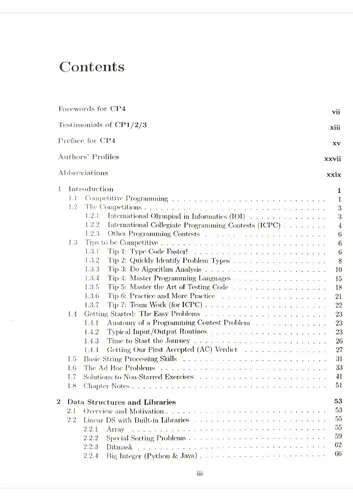
Steven Halim,Felix Halim,Suhendry Effendy