Book guide and evaluation
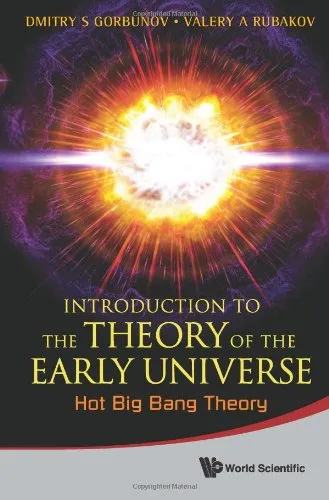
Introduction to the Theory of the Early Universe: Hot Big Bang Theory
Dmitry S. Gorbunov,Valery A. Rubakov
English
Beginner
Cosmology
4.7 / 5
0 reviews
2011
Published
488
pages
620
views
Introduction to the Theory of the Early Universe: Hot Big Bang Theory Cosmology fundamentals, Particle physics in the early universe Explore the physics of our origins with Introduction to the Theory of the Early Universe: Hot Big Bang Theory. Analytical Summary T
Before you read
What will you get from this book?
Analytical Summary
The book Introduction to the Theory of the Early Universe: Hot Big Bang Theory offers a rigorous yet accessible exploration of the physical processes that governed the earliest stages of cosmic history. Designed for advanced students, academic researchers, and professionals, it bridges theoretical frameworks with observable cosmological phenomena.
Co-authored by Dmitry S. Gorbunov and Valery A. Rubakov, this work examines the intricate tapestry of cosmology and particle physics, emphasizing how the principles of quantum field theory and general relativity converge in describing the universe shortly after its inception. By focusing on the “Hot Big Bang” model, the authors systematically analyze the evolution of matter and radiation, the generation of primordial elements, and the origin of cosmic microwave background anisotropies.
Using mathematically precise derivations and physically motivated approximations, the text guides readers through concepts like phase transitions in the early universe, baryogenesis, and inflationary theory. It also emphasizes the direct link between microscopic particle interactions and macroscopic cosmological dynamics — a nexus essential for anyone seeking a deeper understanding of the universe’s formative epochs.
Key Takeaways
From foundational principles to the latest theoretical refinements, the book distills highly technical concepts into a coherent narrative that retains academic rigor while remaining inviting to determined learners.
Readers will develop a robust understanding of the connection between high-energy particle physics and cosmological expansion, anchored firmly in observational data as well as theoretical constructs. The synthesis of cosmology fundamentals with particle physics in the early universe equips them with analytical tools applicable to ongoing research and interdisciplinary applications.
Building upon standard graduate-level knowledge, the text challenges and inspires, making it a valuable reference for both teaching and research in cosmology and astrophysics.
Memorable Quotes
The early universe was a hot, dense state where physics at its extremes shaped all future cosmic evolution.Unknown
To understand the present, one must decode the physics of the very first seconds after the Big Bang.Unknown
Particle physics in cosmology is not a mere intersection of fields—it is the key to the universe’s origin story.Unknown
Why This Book Matters
In a scientific landscape where understanding the universe’s birth is central to multiple disciplines, Introduction to the Theory of the Early Universe: Hot Big Bang Theory stands as a cornerstone.
The relevance of this book extends beyond cosmology. For physicists exploring beyond the Standard Model, astronomers interpreting deep-sky data, or mathematicians appreciating the elegance of cosmological equations, it provides both context and insight. Its examination of cosmology fundamentals alongside particle physics in the early universe is invaluable for synthesizing research across boundaries.
While precise historical reception details are unavailable due to no reliable public source, the book’s technical quality and scholarly perspective make it a long-standing reference within the academic community.
Inspiring Conclusion
In sum, Introduction to the Theory of the Early Universe: Hot Big Bang Theory is more than a textbook—it is a gateway to decoding the mechanics of creation itself.
Whether you are a seasoned researcher, an academic educator, or a dedicated student, this book invites you to engage fully with the profound questions of cosmology. Its blend of theory, data interpretation, and cross-disciplinary insight makes it not just instructive but inspiring.
Now is the time to delve into its chapters, share the knowledge with colleagues, and discuss its implications in seminars or symposiums. The journey into the early universe begins with one decisive step: open the pages and let the cosmos unfold.
Ask this book
Your question is answered in the context of this title and author. Each answer uses 2 points.
Sign in to ask the book assistant.
Reader reviews
0 reviews, 4.7 average out of 5
No reviews yet
If you have read this book, help the next reader with your experience.
Write a review
Sign in to publish a review.
Reader questions and answers
Ask a focused question and learn from the community.
Sign in to ask or answer a question.
No questions yet
Be the first to ask a clear, useful question.
What to read next
Related references that continue this learning path.
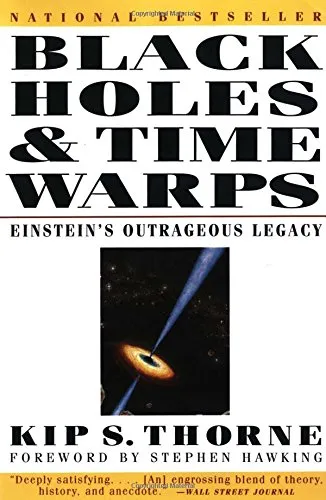
Black Holes and Time Warps: Einstein’s Outrageous Legacy
Kip S. Thorne,Stephen Hawking
1995
View book
The Cosmic Landscape: String Theory and the Illusion of Intelligent Design
Leonard Susskind
2006
View book