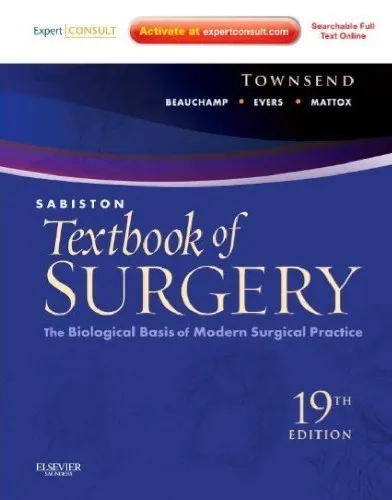
Sabiston Textbook of Surgery The Biological Basis of Modern Surgical Practice
Courtney M. Townsend Jr.,R. D. Beauchamp,B. M. Evers,K. L. Mattox
Book guide and evaluation
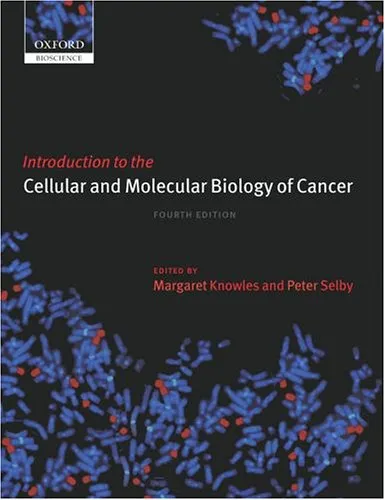
Margaret A. Knowles (Editor),Peter J. Selby (Editor)
0 reviews
Published
pages
views
Introduction to the Cellular and Molecular Biology of Cancer Cancer cell biology, molecular oncology Comprehensive guide to cancer science: Introduction to the Cellular and Molecular Biology of Cancer explained for experts and learners. Analytical Summary The book Introduct
Before you read
The book Introduction to the Cellular and Molecular Biology of Cancer, edited by Margaret A. Knowles and Peter J. Selby, serves as a definitive resource for understanding the fundamental mechanisms that drive cancer at the cellular and molecular levels. This academically rigorous text is designed to equip scientists, medical professionals, and serious students with a thorough grounding in the intricacies of oncogenesis, tumour progression, and the cellular systems involved.
This title bridges the gap between foundational biological principles and the latest developments in molecular oncology. It examines a wide spectrum of topics, from genetic mutations and signalling pathways to tumour microenvironments and metastasis. Each chapter is authored or contributed by experts in respective subsections, ensuring factual accuracy and clarity. While the exact publication year is marked as “Information unavailable” due to no reliable public source, the enduring relevance of its scientific discussions is unquestionable.
By methodically unpacking aspects such as oncogenes, tumour suppressor genes, epigenetic changes, and the interplay between malignant cells and immune responses, the work enables the reader to conceptually connect basic cell biology with clinical implications. This analytical framework positions the book as essential reading for anyone seeking a deep, practical understanding of cancer biology’s molecular foundations.
Readers will come away with a structured knowledge base that integrates cellular mechanisms with the complex molecular events that characterise cancer.
One major takeaway is the importance of genetic and epigenetic regulation in tumour development. Understanding this dual influence is crucial for designing therapeutic strategies.
Another key insight is the role of cellular signalling and communication in both tumour suppression and progression. Disruptions here often lead to invasive phenotypes.
The book underscores how advances in molecular oncology are evolving diagnostic and treatment approaches, reinforcing the importance of keeping pace with emerging research.
Finally, it highlights the necessity of interdisciplinary collaboration — merging insights from cell biology, biochemistry, immunology, and clinical oncology for comprehensive solutions.
“To understand cancer, one must first understand normal cell behaviour.” Unknown
“Molecular oncology bridges laboratory discovery with clinical impact.” Unknown
“The complexity of cancer lies in its cellular adaptability.” Unknown
In an era where cancer research is rapidly evolving, Introduction to the Cellular and Molecular Biology of Cancer retains its position as a cornerstone reference.
For academics and practitioners, the book stands out because it delivers both conceptual clarity and granular scientific detail. The editors bring together trusted voices in the field, making complex subjects accessible while retaining precision. It helps bridge theoretical knowledge with experimental and clinical evidence, enabling readers to translate molecular insights into tangible interventions.
Secondary keywords such as “cancer cell biology” and “molecular oncology” are not merely placeholders; they encapsulate the thematic essence of the work and the scope of its applied relevance across research and clinical domains.
In absorbing the full breadth of insights from Introduction to the Cellular and Molecular Biology of Cancer, readers position themselves to contribute meaningfully to the global discourse on cancer science.
Whether your goal is to undertake advanced research, improve clinical practice, or deepen academic understanding, this book provides the solid foundation upon which innovation and discovery can thrive. It invites you not only to read but to share and discuss its insights within professional and scholarly circles, fostering collaborative advancement in molecular oncology and cancer cell biology.
Your question is answered in the context of this title and author. Each answer uses 2 points.
0 reviews, 4.8 average out of 5
Sign in to publish a review.
Ask a focused question and learn from the community.
Related references that continue this learning path.
Courtney M. Townsend Jr.,R. D. Beauchamp,B. M. Evers,K. L. Mattox
N Cherny,M Fallon,S Kaasa,R K Portenoy,D C Currow (eds.)

John Davey,J. Michael Lord