
Six Easy Pieces: Essentials of Physics Explained by Its Most Brilliant Teacher
Richard P. Feynman,Robert B. Leighton,Matthew Sands
2011
View book
Book guide and evaluation
Robert J. Goldston,Paul H. Rutherford
0 reviews
Published
pages
views
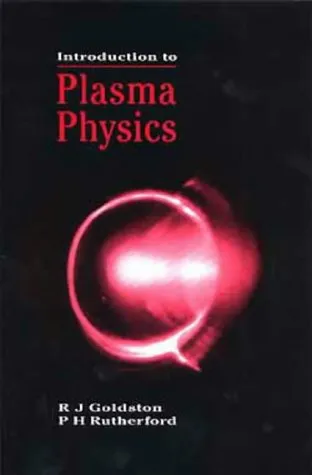
Introduction to Plasma Physics "Introduction to Plasma Physics" by Robert J. Goldston and Paul H. Rutherford is a seminal work that serves as both a comprehensive textbook and a key reference for students, researchers, and professionals in the field of plasma p
Before you read
"Introduction to Plasma Physics" by Robert J. Goldston and Paul H. Rutherford is a seminal work that serves as both a comprehensive textbook and a key reference for students, researchers, and professionals in the field of plasma physics. Designed to balance the theoretical rigor with practical applications, this book delves into the fundamental principles, mathematical frameworks, and experimental methods essential to mastering plasma physics. Whether you are a novice seeking foundational knowledge or a seasoned physicist exploring advanced applications, the text offers valuable insights into this vast domain.
This book provides a structured and accessible overview of plasma physics, starting from basic principles and gradually moving toward complex phenomena. It begins with introductory concepts such as the properties of plasmas, plasma confinement, and the role of electromagnetic fields. Readers are introduced to kinetic and fluid descriptions of plasmas, including the guiding center approximation, MHD (magnetohydrodynamics), and other essential frameworks used in plasma physics research.
Key mathematical tools and techniques utilized in the study of plasmas are thoroughly explained. The book emphasizes the derivation of important equations like Maxwell's equations, the Boltzmann equation, and the Vlasov equation, ensuring readers build a robust conceptual and computational understanding. Topics such as wave propagation in plasmas, instabilities, and nonlinear phenomena are explored in depth, supported by diagrams, mathematical models, and examples from real-world applications.
The authors also shed light on the application of plasma physics in various domains, such as controlled nuclear fusion, astrophysical plasmas, and industrial processes. With its meticulous focus on both the theoretical and experimental aspects of plasma dynamics, the book presents a well-rounded picture of the subject to inspire further study and innovation.
"Plasma physics is a bridge connecting the microscopic world of particle interactions with the macroscopic world of large-scale electromagnetic fields."
"Understanding the instabilities of plasmas is key to unlocking their potential for controlled nuclear fusion – the power source of the stars."
"In plasma dynamics, the interplay between order and chaos is what gives rise to astonishingly intricate and beautiful phenomena."
"Introduction to Plasma Physics" holds immense significance within the scientific community. Written by two leading experts, it has become a cornerstone for those studying or working in one of the most dynamic fields of modern physics. Plasma physics impacts everything from the quest for sustainable energy through nuclear fusion to understanding cosmic phenomena such as solar flares and interstellar plasmas. This book offers a balance of theoretical understanding and practical relevance, making it a must-have for researchers and students with aspirations in high-energy physics, astrophysics, and advanced engineering.
The carefully designed progression of topics ensures the material is digestible for newcomers, while the depth of content makes it invaluable even for experienced plasma physicists. Moreover, it emphasizes the multidisciplinary nature of plasma physics, encouraging readers to connect concepts across fields and push the boundaries of human knowledge. This is why "Introduction to Plasma Physics" continues to remain a vital resource in academia and beyond.
Your question is answered in the context of this title and author. Each answer uses 2 points.
0 reviews, 4.5 average out of 5
Sign in to publish a review.
Ask a focused question and learn from the community.
Related references that continue this learning path.
Richard P. Feynman,Robert B. Leighton,Matthew Sands

Richard P. Feynman,Robert B. Leighton,Matthew Sands