
Book guide and evaluation
Introduction to Management of Reverse Logistics and Closed Loop Supply Chain Processes
Donald F. Blumberg
English
Beginner
Economics
4.4 / 5
0 reviews
2004
Published
264
pages
211
views
Introduction to the Book Reverse logistics and closed-loop supply chain management are integral components of today's business operations, fostering sustainability, efficiency, and cost-effectiveness. My book, Introduction to Management of Reverse Logistics and Closed Loop Sup
Before you read
What will you get from this book?
Introduction to the Book
Reverse logistics and closed-loop supply chain management are integral components of today's business operations, fostering sustainability, efficiency, and cost-effectiveness. My book, Introduction to Management of Reverse Logistics and Closed Loop Supply Chain Processes, is a comprehensive guide designed to help readers understand and manage these essential systems in a dynamic and evolving business environment.
The book serves as a roadmap for professionals, students, and academics who are striving to comprehend the core principles of reverse logistics and closed-loop processes. It aims to provide readers with the necessary insights, strategies, and tools to integrate these practices into their supply chain operations effectively. By seamlessly bringing together theoretical frameworks and practical applications, this book bridges the gap between conceptual understanding and real-world implementation.
Detailed Summary of the Book
The book explores the strategic, managerial, and operational dimensions of reverse logistics and closed-loop supply chain processes. Structured across a spectrum of topics, it examines how businesses can minimize waste while maximizing the value of returned goods, refurbishments, remanufacturing, and product lifecycle management. Starting with foundational concepts, it gradually progresses into more complex discussions around technology integration, regulatory compliance, and sustainability goals.
Throughout the book, case studies, industry examples, and statistical analyses are leveraged to make the content practical and relatable. Concepts such as end-of-life management, environmental regulations, and the financial impacts of reverse logistics decisions are clearly articulated. Furthermore, the text emphasizes the interconnectedness of reverse logistics with forward supply chains, stressing the need for a holistic approach.
Readers will particularly appreciate the chapters dedicated to best practices and strategies for managing returns, reducing carbon footprints, and enhancing operational excellence. The book not only caters to supply chain practitioners but also illuminates the path for researchers and policymakers interested in fostering closed-loop systems to address global sustainability challenges.
Key Takeaways
- An in-depth understanding of reverse logistics processes and their critical role in modern supply chains.
- How businesses can develop closed-loop systems to capitalize on waste reduction, cost optimization, and sustainability.
- Practical tools and methodologies to manage returns and repair/refurbishment cycles efficiently.
- Strategies to align environmental compliance with corporate profitability for sustainable success.
- Integration of state-of-the-art technologies such as IoT, blockchain, and AI in reverse logistics and closed-loop supply chain processes.
Famous Quotes from the Book
"The real innovation in supply chain management is not just in moving products forward but in mastering the art of bringing them back."
"Closed-loop supply chains are not just an operational necessity; they are a moral imperative in a world driven by resource scarcity and environmental concerns."
"Reverse logistics is not merely the opposite of forward logistics; it is a discipline that requires its own set of rules, tools, and strategic thinking."
Why This Book Matters
The importance of reverse logistics and closed-loop supply chain management cannot be overstated in today's interconnected and environmentally conscious world. As businesses grapple with rising customer expectations, tighter regulatory mandates, and the call for sustainability, this book offers actionable insights and solutions to address these complex challenges.
Without structured and efficient reverse logistics processes, companies risk losing revenue, incurring waste management costs, and damaging their brand reputation. Similarly, establishing closed-loop supply chains is critical to achieving both economic and environmental objectives. This book serves as a guide for navigating these challenges, enabling businesses to maintain their competitive edge and make meaningful contributions to global sustainability goals.
Ultimately, Introduction to Management of Reverse Logistics and Closed Loop Supply Chain Processes stands as a comprehensive resource for readers eager to make a positive impact in their organizations, industries, and environment. It provides not only the foundational knowledge but also the forward-thinking strategies necessary for excelling in this domain.
Ask this book
Your question is answered in the context of this title and author. Each answer uses 2 points.
Sign in to ask the book assistant.
Reader reviews
0 reviews, 4.4 average out of 5
No reviews yet
If you have read this book, help the next reader with your experience.
Write a review
Sign in to publish a review.
Reader questions and answers
Ask a focused question and learn from the community.
Sign in to ask or answer a question.
No questions yet
Be the first to ask a clear, useful question.
What to read next
Related references that continue this learning path.

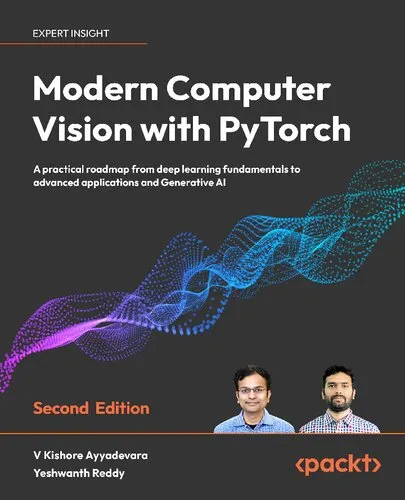
Modern Computer Vision with PyTorch: A Practical Roadmap From Deep Learning Fundamentals to Advanced Applications and Generative AI, 2nd Edition
V Kishore Ayyadevara,Yeshwanth Reddy
2023
View book