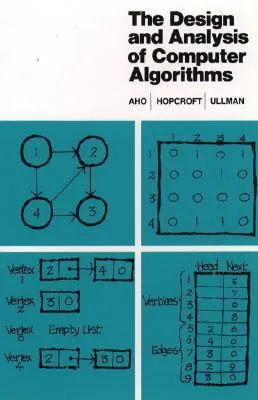
The Design and Analysis of Computer Algorithms
Alfred V. Aho;John E. Hopcroft;Jeffrey D. Ullman
1974
View book
Book guide and evaluation
Victor Eijkhout
0 reviews
Published
pages
views
Welcome to the introduction of Introduction to High Performance Scientific Computing, a comprehensive guide for those looking to explore the ever-growing field of parallel and high-performance computing (HPC). This book has been specifically designed for s
Before you read
Welcome to the introduction of Introduction to High Performance Scientific Computing, a comprehensive guide for those looking to explore the ever-growing field of parallel and high-performance computing (HPC). This book has been specifically designed for students, researchers, and professionals who want to deepen their understanding of computational techniques and learn how to leverage advanced systems to solve challenging scientific problems efficiently.
Introduction to High Performance Scientific Computing is a foundational text that covers the principles, techniques, and tools used in high-performance computing for solving scientific and engineering problems. The book starts with the motivation behind HPC, explaining its importance in tackling large-scale scientific applications like climate modeling, molecular dynamics, and fluid dynamics simulations. It builds up from basic computational concepts to more complex topics tailored for real-world applications.
Key areas covered in the book include an introduction to modern computer architectures, parallel programming paradigms (including shared and distributed memory systems), and numerical algorithms designed for scalable performance. There is also an in-depth exploration of optimization techniques, data locality, and memory management to enable readers to fully exploit the capabilities of high-performance computers.
The book uses plenty of examples and practical exercises to ensure readers not only learn the fundamental principles but also understand how to apply them effectively. Moreover, it discusses common pitfalls in HPC and how to avoid them, emphasizing robust and efficient coding practices. By the end of the book, readers are expected to have a strong grasp of how to design, implement, and optimize high-performance scientific codes.
"In high-performance computing, success is measured not only by correctness but by scalability and efficiency — finding the balance is more art than science."
"A program that runs fast on a single core might fail miserably when scaled across thousands. The secret lies in understanding both the architecture and the algorithm."
"Parallelism is not just a tool for speed—it is a necessity for modern science."
The field of high-performance computing has rapidly evolved over the years, becoming a cornerstone for scientific discovery and technological innovation. As researchers push the boundaries of what is computationally feasible, HPC has become an indispensable tool for solving problems that were once deemed intractable. However, while the hardware for HPC continues to advance, the ability to effectively use this hardware remains a challenging endeavor.
This book bridges the gap between theory and practice, equipping readers with the skills and knowledge to harness the full power of high-performance systems. It is not just a manual for programming or algorithms; it is a guide that introduces readers to the mindset of a computational scientist who must think critically about hardware, software, and algorithms in unison. For anyone wishing to engage in cutting-edge research or engineering, this book provides a solid platform to begin that journey.
Your question is answered in the context of this title and author. Each answer uses 2 points.
0 reviews, 4.5 average out of 5
Sign in to publish a review.
Ask a focused question and learn from the community.
Related references that continue this learning path.
Alfred V. Aho;John E. Hopcroft;Jeffrey D. Ullman