
Book guide and evaluation
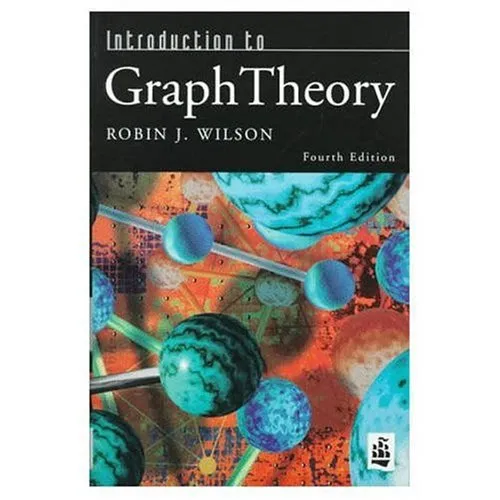
Introduction to Graph Theory, Fourth Edition
Robin J. Wilson
English
Beginner
Graph Theory
4.5 / 5
0 reviews
1996
Published
180
pages
589
views
Introduction to Graph Theory, Fourth Edition "Introduction to Graph Theory, Fourth Edition" by Robin J. Wilson is a comprehensive guide to the fascinating world of graph theory, appealing to both novice learners and seasoned mathematicians. This edition continues t
Before you read
What will you get from this book?
Introduction to Graph Theory, Fourth Edition
"Introduction to Graph Theory, Fourth Edition" by Robin J. Wilson is a comprehensive guide to the fascinating world of graph theory, appealing to both novice learners and seasoned mathematicians. This edition continues to delve into the depths of graph theoretical structures, offering insights into both fundamental concepts and advanced applications.
Detailed Summary of the Book
The book is structured to provide a clear, progressive understanding of graph theory. It begins with the basics, introducing simple graphs and moving to more complex concepts like Eulerian and Hamiltonian circuits, trees, planar graphs, and graph coloring. Each chapter builds upon the previous, ensuring that readers have a strong foundation before moving on to more complicated subjects. Robin J. Wilson masterfully combines theoretical principles with practical applications, illustrating how graph theory is integral to various fields, including computer science, biology, and social sciences. This edition also includes new sections on algorithms, network theory, and real-world problems, which reflect the rapid development of these areas in contemporary mathematics.
Key Takeaways
Readers can expect to gain a multitude of insights and skills from this book. Key takeaways include:
- Understanding the fundamental definitions and properties of graphs.
- Developing the ability to analyze graph structures and solve related problems.
- Learning about important algorithms used in graph theory, such as Dijkstra’s and Kruskal's algorithms.
- Applying graph theoretical concepts to practical scenarios like network flows and coding theory.
- Improving problem-solving skills with the plethora of exercises included at the end of each chapter.
Famous Quotes from the Book
Robin J. Wilson's writing is not only precise but also engaging, capturing the essence of mathematical beauty. Here are some memorable quotes from the book:
"Graph theory can be as beautiful and abstract as a piece of art, yet as practical and crucial as a road map."
"In the realm of graphs, simplicity and complexity coexist, challenging our intellect while igniting curiosity."
Why This Book Matters
"Introduction to Graph Theory, Fourth Edition" holds significant importance for several reasons. Graph theory itself is a vital part of modern mathematics and computer science, providing the tools needed to model pairwise relations between objects. The book is particularly valuable because:
- It offers a solid foundational resource for students and professionals entering this field, equipping them with the necessary concepts to advance their understanding.
- Through its comprehensive coverage, it bridges the gap between mathematics theory and practical application, making it incredibly relevant in today’s data-driven world.
- Its engaging style and the careful structuring of content make it accessible to readers, regardless of their prior exposure to the subject.
Through this text, Robin J. Wilson ensures that readers appreciate the elegance and utility of graph theory, fostering a deeper interest and understanding in a discipline that is fundamental to advancements in technology and theoretical research.
Ask this book
Your question is answered in the context of this title and author. Each answer uses 2 points.
Sign in to ask the book assistant.
Reader reviews
0 reviews, 4.5 average out of 5
No reviews yet
If you have read this book, help the next reader with your experience.
Write a review
Sign in to publish a review.
Reader questions and answers
Ask a focused question and learn from the community.
Sign in to ask or answer a question.
No questions yet
Be the first to ask a clear, useful question.
What to read next
Related references that continue this learning path.
Applied Graph Theory in Computer Vision and Pattern Recognition
Walter G. Kropatsch,Yll Haxhimusa,Adrian Ion (auth.),Prof. Abraham Kandel,Prof. Dr. Horst Bunke,Dr. Mark Last (eds.)
2007
View book