

Book guide and evaluation
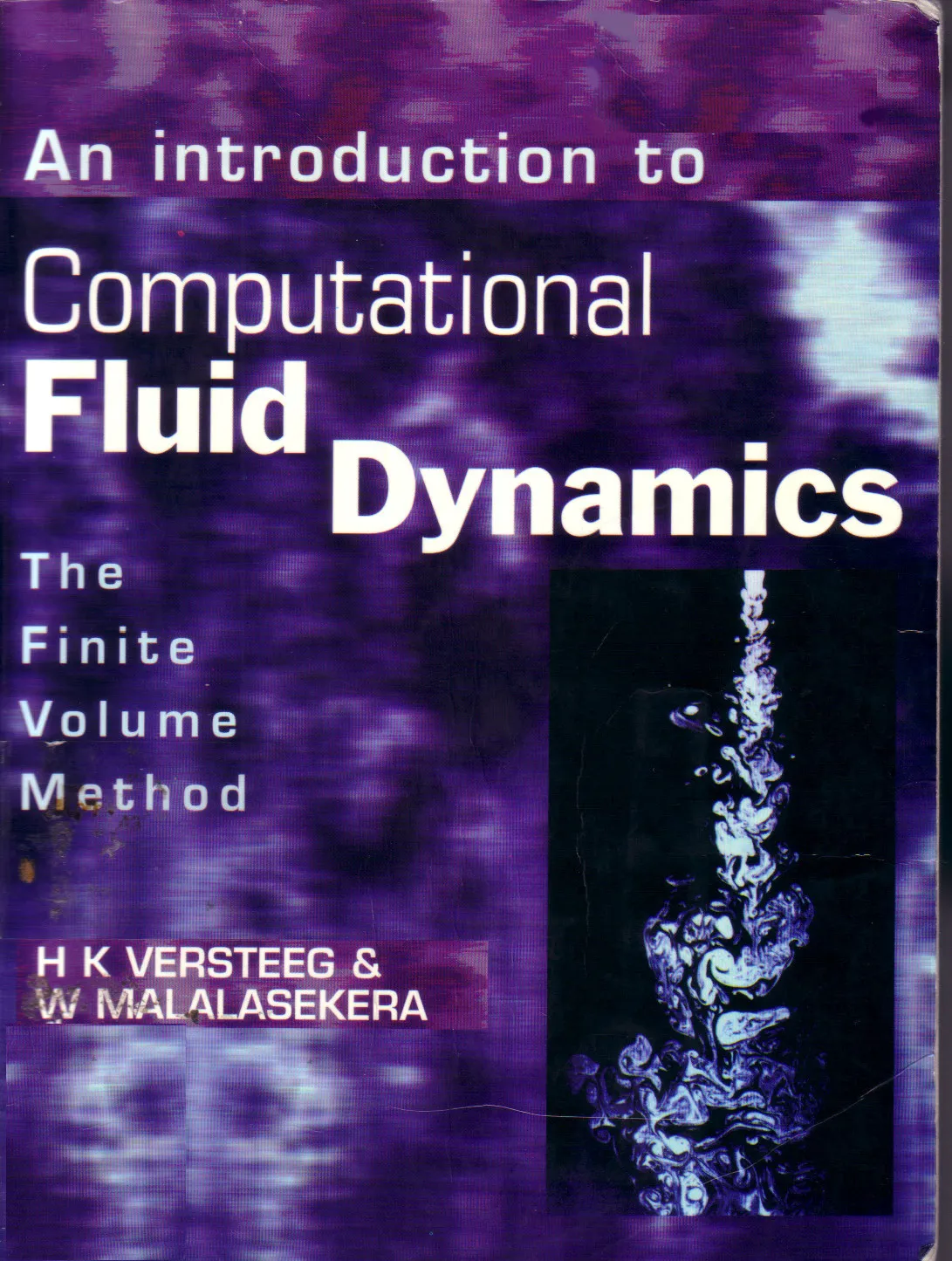
Introduction to computational fluid dynamics. The finite volume method
Versteeg H.K.,Malalasekera W.
English
Beginner
Engineering
4.8 / 5
0 reviews
1995
Published
267
pages
171
views
This textbook explores both the theoretical foundation of the Finite Volume Method (FVM) and its applications in Computational Fluid Dynamics (CFD). Readers will discover a thorough explanation of the FVM numerics and algorithms used for the simulation of incompressible and compr
Before you read
What will you get from this book?
This textbook explores both the theoretical foundation of the Finite Volume Method (FVM) and its applications in Computational Fluid Dynamics (CFD). Readers will discover a thorough explanation of the FVM numerics and algorithms used for the simulation of incompressible and compressible fluid flows, along with a detailed examination of the components needed for the development of a collocated unstructured pressure-based CFD solver. Two particular CFD codes are explored. The first is uFVM, a three-dimensional unstructured pressure-based finite volume academic CFD code, implemented within Matlab. The second is OpenFOAM®, an open source framework used in the development of a range of CFD programs for the simulation of industrial scale flow problems. With over 220 figures, numerous examples and more than one hundred exercise on FVM numerics, programming, and applications, this textbook is suitable for use in an introductory course on the FVM, in an advanced course on numerics, and as a reference for CFD programmers and researchers.
Ask this book
Your question is answered in the context of this title and author. Each answer uses 2 points.
Sign in to ask the book assistant.
Reader reviews
0 reviews, 4.8 average out of 5
No reviews yet
If you have read this book, help the next reader with your experience.
Write a review
Sign in to publish a review.
Reader questions and answers
Ask a focused question and learn from the community.
Sign in to ask or answer a question.
No questions yet
Be the first to ask a clear, useful question.
What to read next
Related references that continue this learning path.



Modern Computer Vision with PyTorch: A Practical Roadmap From Deep Learning Fundamentals to Advanced Applications and Generative AI, 2nd Edition
V Kishore Ayyadevara,Yeshwanth Reddy
2023
View book