Book guide and evaluation
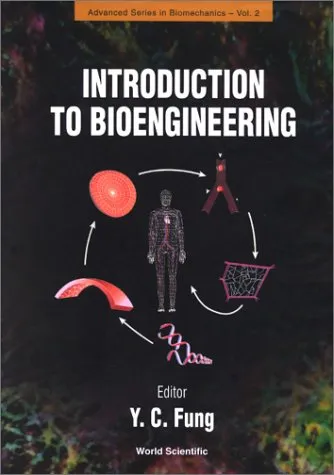
Introduction to Bioengineering (Advanced Series in Biomechanics, Vol 2)
Y. C. Fung
English
Intermediate
Medical
4.3 / 5
0 reviews
2001
Published
311
pages
512
views
Introduction to Bioengineering (Advanced Series in Biomechanics, Vol 2) is a comprehensive resource designed to bridge the gap between engineering principles and biological applications. Authored by Y. C. Fung, a pioneer in the field of biomechanics, this book offers both stude
Before you read
What will you get from this book?
Introduction to Bioengineering (Advanced Series in Biomechanics, Vol 2) is a comprehensive resource designed to bridge the gap between engineering principles and biological applications. Authored by Y. C. Fung, a pioneer in the field of biomechanics, this book offers both students and professionals a deep dive into the interdisciplinary world of bioengineering.
Detailed Summary of the Book
At its core, 'Introduction to Bioengineering' guides readers through the fundamental concepts and methodologies that underpin the field. Combining principles of physics, chemistry, biology, and engineering, the book illustrates how these disciplines converge to solve complex biological problems. The text is meticulously structured to take the reader from basic principles to advanced applications, ensuring a thorough understanding of the field's breadth and depth.
The opening chapters introduce fundamental biomechanical concepts, equipping readers with a foundation in essential topics such as fluid dynamics, material mechanics, and thermodynamics as they apply to biological systems. As the book progresses, these principles are applied to more complex systems, such as the mechanics of blood flow, tissue engineering, and the biomechanical properties of bones and tissues.
Y. C. Fung enriches the text with numerous real-world examples that illustrate how bioengineering solutions can be applied to address challenges in healthcare and biological research. Through these examples, the book not only teaches technical skills but also encourages readers to think critically about the future of medical technology and patient care.
Key Takeaways
- Interdisciplinary Approach: Learn the integration of engineering and biological sciences to foster innovation in medical technology.
- Critical Thinking: Develop the ability to apply engineering principles to solve biological problemas effectively.
- Practical Applications: Gain insights through real-world examples that enhance the understanding of complex biological phenomena.
- Foundation Building: Acquire a solid groundwork in biomechanics, vital for advancing in bioengineering research and applications.
- Future-Oriented: Perspectives on the evolving landscape of bioengineering, enabling readers to anticipate and contribute to future breakthroughs in the field.
Famous Quotes from the Book
“The essence of engineering in biology is not to replicate life itself, but to understand its principles so thoroughly that we can innovate to ease life's ailments.”
“In every heartbeat, in every breath, lies the confluence of engineering precision and the mystery of life—a relationship we explore tirelessly in the realm of bioengineering.”
Why This Book Matters
'Introduction to Bioengineering' is a seminal text because it not only furnishes engineers and scientists with the tools they need to traverse the complexities of biological systems, but it also endeavors to inspire the next generation of bioengineers. At a time when the demand for innovative healthcare solutions is more pressing than ever, this book serves as both a comprehensive guide and a source of inspiration to those fueled by curiosity.
The book's significance lies in its ability to convey profound concepts with clarity and precision, making it accessible to newcomers while still challenging seasoned professionals to expand their horizons. By embracing an interdisciplinary approach, Y. C. Fung emphasizes the importance of collaboration across scientific domains to drive progress and impact positively on human health. This holistic view makes 'Introduction to Bioengineering' a vital and timely contribution to the field, ensuring its enduring relevance in advancing both science and society.
Ask this book
Your question is answered in the context of this title and author. Each answer uses 2 points.
Sign in to ask the book assistant.
Reader reviews
0 reviews, 4.3 average out of 5
No reviews yet
If you have read this book, help the next reader with your experience.
Write a review
Sign in to publish a review.
Reader questions and answers
Ask a focused question and learn from the community.
Sign in to ask or answer a question.
No questions yet
Be the first to ask a clear, useful question.
What to read next
Related references that continue this learning path.
Williams Obstetrics, 26th Edition
F. Gary Cunningham,Kenneth J. Leveno,Jodi S. Dashe,Barbara L. Hoffman,Catherine Y. Spong,Brian M. Casey
2022
View book