
Book guide and evaluation
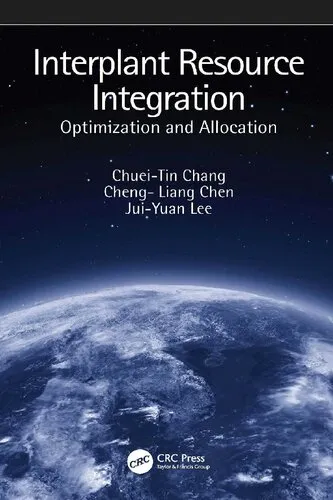
Interplant Resource Integration: Optimization and Allocation
Chuei-Tin Chang,Cheng-Liang Chen,Jui-Yuan Lee
English
Beginner
Physics
4.8 / 5
0 reviews
2021
Published
379
pages
196
views
Introduction to "Interplant Resource Integration: Optimization and Allocation" Welcome to the comprehensive exploration of interplant resource integration and allocation strategies in industrial systems. This book, “Interplant Resource Integration: Optimization and Allocat
Before you read
What will you get from this book?
Introduction to "Interplant Resource Integration: Optimization and Allocation"
Welcome to the comprehensive exploration of interplant resource integration and allocation strategies in industrial systems. This book, “Interplant Resource Integration: Optimization and Allocation”, is a meticulously crafted guide that equips readers with a detailed understanding of optimization techniques for manufacturing resources across multiple plants. Authored with a deep conviction for operational excellence, the book delves into the principles, methodologies, and practical tools required to achieve efficient resource utilization within interconnected industrial systems.
In today's era of increasing industrial integration and global supply chain dynamics, the ability to optimize resources across different plants is no longer a luxury—it is a necessity. This book bridges the knowledge gap between theory and practice, empowering professionals, academics, and students with actionable insights for robust resource allocation. If you are someone keen on driving efficiency, reducing costs, and fostering sustainable manufacturing practices, this book is your ultimate guide.
Detailed Summary of the Book
“Interplant Resource Integration: Optimization and Allocation” takes readers on an enlightening journey starting with the foundational concepts of resource integration. The book begins by explaining why interplant resource optimization is crucial for modern industries working in a globally networked environment. Through vivid case studies and theoretical models, it introduces readers to key challenges industries face, such as resource redundancy, allocation inefficiencies, and rising operational costs.
Subsequent chapters delve into optimization algorithms, resource-sharing techniques, and advanced methods of data modeling specific to multi-plant operations. The integration of optimization theory with practical applications is a cornerstone of the book, providing readers with a roadmap to strike a balance between agility, cost-effectiveness, and real-time responsiveness. Additionally, the book emphasizes sustainability, showing how resource optimization contributes to greener industrial operations by minimizing waste.
The later sections include tools and frameworks for decision-making, real-world implementation strategies, and case studies from various industries, ranging from automotive to electronics. The book concludes by looking into future trends such as artificial intelligence in manufacturing optimization, shedding light on how technology will further transform interplant resource allocation.
Key Takeaways
- A detailed understanding of interplant resource integration concepts and their importance in modern manufacturing.
- Step-by-step guidance on implementing resource allocation models to optimize operational efficiency.
- Insights into advanced optimization algorithms tailored for multi-plant resource sharing.
- A focus on sustainability and reducing waste through resource integration strategies.
- Practical examples and case studies from real-world industrial contexts.
- Futuristic outlook on AI and emerging technologies in optimization and resource integration.
Famous Quotes from the Book
"Resource optimization is not merely a technical challenge; it is a gateway to sustainable industrial practices that shape our future."
"The strength of interplant operations lies in their interconnectedness; the power of optimization lies in the efficiency it delivers."
Why This Book Matters
With the advent of globalization and technological advances, industries are no longer isolated entities but intricate networks of interconnected plants and supply chains. This book matters because it addresses the operational challenges posed by such complexity and provides real-world solutions that are as relevant as they are practical. It empowers industries to embrace resource sharing as a key performance driver while fostering sustainability and resilience.
Furthermore, this book stands as a bridge between academia and the industrial world. It equips technical professionals with actionable insights while giving academics robust theoretical models to build upon. The seamless integration of theory and practice ensures that the book’s lessons are applicable across various industries and operational scales.
Ultimately, “Interplant Resource Integration: Optimization and Allocation” paves the way for enhanced industrial efficiency, reduced operational costs, and an environmentally conscious future—all of which are paramount in today’s competitive and resource-sensitive world.
Ask this book
Your question is answered in the context of this title and author. Each answer uses 2 points.
Sign in to ask the book assistant.
Reader reviews
0 reviews, 4.8 average out of 5
No reviews yet
If you have read this book, help the next reader with your experience.
Write a review
Sign in to publish a review.
Reader questions and answers
Ask a focused question and learn from the community.
Sign in to ask or answer a question.
No questions yet
Be the first to ask a clear, useful question.
What to read next
Related references that continue this learning path.


Modern Computer Vision with PyTorch: A Practical Roadmap From Deep Learning Fundamentals to Advanced Applications and Generative AI, 2nd Edition
V Kishore Ayyadevara,Yeshwanth Reddy
2023
View book