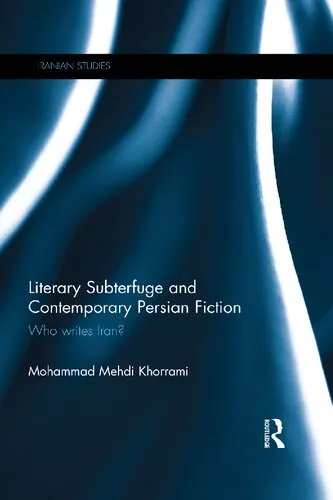
Literary Subterfuge and Contemporary Persian Fiction: Who Writes Iran?
Mohammad Mehdi Khorrami
2014
View book
Book guide and evaluation
WOOLARD, KATHRYN A.
0 reviews
Published
pages
views
International Journal of the Sociology of Language Language policy, Sociolinguistic research Explore the International Journal of the Sociology of Language, a leading resource for global sociolinguistic insights and analysis. Analytical Summary The International J
Before you read
The International Journal of the Sociology of Language is a respected academic platform dedicated to examining the complex relationships between language, society, and culture. Since its inception, it has provided critical perspectives from leading scholars worldwide, making it a cornerstone for sociolinguistic research and dialogue. Its interdisciplinary approach allows for discussion ranging from micro-level interactions to macro-level policy analysis.
Positioned at the intersection of linguistics and social science, the journal explores topics such as language maintenance, shift, death, multilingualism, and language ideology. For professionals, academics, and graduate students, the journal serves as an indispensable resource to understand how language both shapes and is shaped by societal forces. The range of articles includes case studies, theoretical explorations, and methodological discussions, allowing diverse entry points for readers with different scholarly interests.
Information about the specific inaugural year or editorial milestones may be “Information unavailable,” as there is no reliable public source verifying these details. Nevertheless, the consistent global reach and diversity of submissions underscore its authority in the field. By engaging with contributions from multiple regions, the journal captures the dynamic interplay of linguistic phenomena under varying socio-political contexts.
The International Journal of the Sociology of Language offers invaluable insights into the mechanisms that govern linguistic diversity and transformation within societies.
Readers gain analytical tools to approach issues such as language rights, the politics of multilingual education, and the socio-economic dimensions of language use. The journal’s interdisciplinary nature bridges gaps between theory and practice, encouraging deeper discussion about the role of language policy in shaping human interaction.
Secondary themes, notably language policy and sociolinguistic research, recur across multiple issues, providing continuity and coherence for sustained academic engagement.
Language is not merely a tool for communication; it is a vehicle of identity and social power. Unknown
The study of sociolinguistics reveals how words can mirror societal structures and cultural complexities. Unknown
Policies around language use often dictate who gets to participate in public life and whose voices are marginalized. Unknown
The importance of the International Journal of the Sociology of Language lies in its consistent ability to illuminate the social dimensions of language in diverse contexts.
For policymakers, educators, and cultural leaders, the journal offers evidence-based insights that inform inclusive language policy and equitable social frameworks. Its breadth of case studies showcases how local linguistic practices connect to global sociopolitical realities.
Furthermore, it acts as a collaborative forum for scholars from varied disciplines, thereby enhancing the quality and reach of sociolinguistic research. In an era of globalization and rapid technological change, this engagement becomes not only relevant but urgent.
Engaging with the International Journal of the Sociology of Language offers readers more than a collection of academic articles—it delivers a window into the dynamic interplay between language and society across different cultural landscapes.
For serious readers, scholars, and professionals, the journal is an invitation to explore pressing sociolinguistic questions and share these insights with their communities. The value lies not only in the knowledge gained but in the action it inspires—whether in contributing to research, shaping language policy, or fostering informed public discourse.
We encourage you to read, reflect, and discuss this influential work. By doing so, you help ensure that critical conversations on language and society remain vibrant and impactful in academia and beyond.
Your question is answered in the context of this title and author. Each answer uses 2 points.
0 reviews, 4.0 average out of 5
Sign in to publish a review.
Ask a focused question and learn from the community.
Related references that continue this learning path.
Mohammad Mehdi Khorrami

Noam Chomsky,James McGilvray