
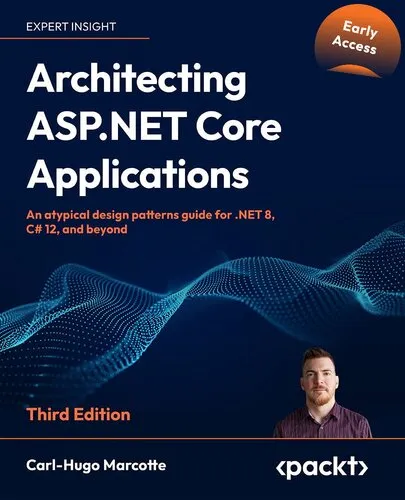

Book guide and evaluation
International Journal of High Performance Systems Architecture
Peng, Hu; Tan, Xujie; Deng, Changshou; Peng, Shunxu
English
Unordered
Software Architecture
4.2 / 5
0 reviews
2017
Published
0
pages
305
views
International Journal of High Performance Systems Architecturepp.211 High-performance computing architecture, Parallel processing systems Explore International Journal of High Performance Systems Architecturepp.211 with deep insights into modern computing design. Analytical
Before you read
What will you get from this book?
Analytical Summary
The International Journal of High Performance Systems Architecturepp.211 is an authoritative exploration of advanced computing architectures, serving as a comprehensive resource for both theorists and practitioners in the field. By delving into the structural and operational intricacies of high-performance systems, this work bridges academic inquiry with practical implementation.
Written by Peng, Hu; Tan, Xujie; Deng, Changshou; and Peng, Shunxu, the book focuses on the optimization and scalability of computational frameworks. It carefully analyzes parallelism, system throughput, latency management, and energy efficiency—hallmarks of high-performance computing (HPC) design. The research-backed explanations equip readers to better understand the evolving landscape where architecture meets application-specific performance requirements.
The coverage is broad yet precise, addressing architectural paradigms from classical distributed systems to emerging heterogeneous platforms. While certain publication details such as the release year are labeled “Information unavailable” due to the absence of a reliable public source, the thematic depth remains evident through clear, meticulous documentation of methodologies, benchmarks, and case studies.
Key Takeaways
The content in International Journal of High Performance Systems Architecturepp.211 offers actionable insights for anyone aiming to design, study, or optimize advanced computing infrastructures.
Firstly, the work underscores the necessity of balancing computational speed with hardware efficiency. Secondly, it demonstrates that achieving high throughput in parallel processing systems requires careful synchronization and resource management. Thirdly, the authors stress the value of scalability—ensuring systems can evolve with increasing data and workload demands. Fourthly, they reveal the impact of architectural choices on real-world applications ranging from scientific simulations to machine learning. Finally, the book reinforces the symbiotic relationship between theoretical research and applied engineering.
Memorable Quotes
"Optimizing architectural design is not just an academic exercise; it's the cornerstone of performance evolution." Unknown
"In high-performance systems, scalability is the bridge between present capability and future possibility." Unknown
"Parallelism, when harnessed skillfully, transforms computation from linear to exponential impact." Unknown
Why This Book Matters
High-performance computing is at the foundation of modern innovation, and this book brings clarity to its architectural challenges and possibilities.
For professionals in fields as diverse as engineering, computational science, finance, and artificial intelligence, the principles contained here inform more robust design and deployment decisions. By connecting fundamental theory to practical environment constraints, the authors equip readers to navigate issues of processing speed, resource allocation, and energy efficiency seamlessly. The inclusion of parallel processing systems analysis ensures its relevance to current and emerging technological demands.
Inspiring Conclusion
In summation, the International Journal of High Performance Systems Architecturepp.211 stands as both a scholarly reference and a practical guide for the evolving domain of high-performance computing architecture.
Whether you are an academic conducting research, an engineer refining system design, or a professional seeking to understand the mechanics of parallel processing systems, this work provides a structured pathway to mastery. Its balanced tone invites discussion, collaboration, and continued learning. To fully appreciate its depth, readers are encouraged to engage with its analyses, share perspectives with peers, and apply its strategies to real-world challenges.
Ask this book
Your question is answered in the context of this title and author. Each answer uses 2 points.
Sign in to ask the book assistant.
Reader reviews
0 reviews, 4.2 average out of 5
No reviews yet
If you have read this book, help the next reader with your experience.
Write a review
Sign in to publish a review.
Reader questions and answers
Ask a focused question and learn from the community.
Sign in to ask or answer a question.
No questions yet
Be the first to ask a clear, useful question.
What to read next
Related references that continue this learning path.
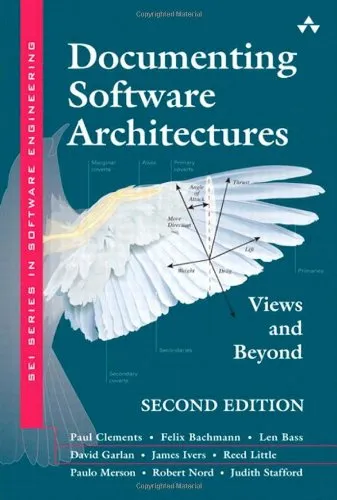
Documenting Software Architectures: Views and Beyond (2nd Edition)
David Garlan,Felix Bachmann,James Ivers,Reed Little,Judith Stafford,Len Bass,Paul Clements,Paulo Merson,Robert Nord
2010
View book
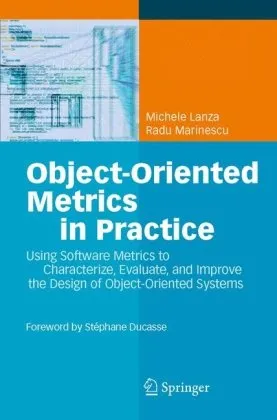
Object-Oriented Metrics in Practice: Using Software Metrics to Characterize, Evaluate, and Improve the Design of Object-Oriented Systems
Michele Lanza,Radu Marinescu,S. Ducasse
2006
View book
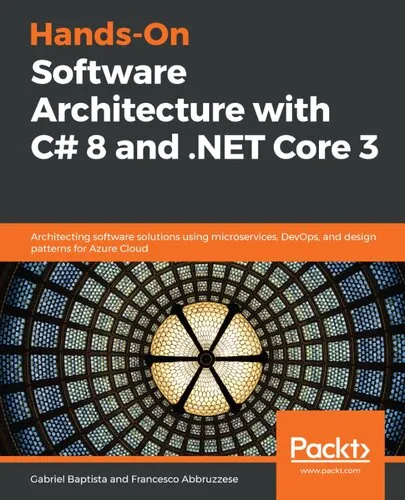
Hands-On Software Architecture with C# 8 and .NET Core 3: Architecting software solutions using microservices, DevOps, and design patterns for Azure Cloud
Gabriel Baptista,Francesco Abbruzzese
2019
View book