
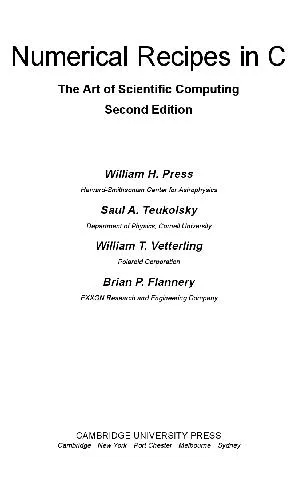
Numerical recipes in C: the art of scientific computing
Press W.H.,Teukolsky S.A.,Vetterling W.T.,Flannery B.P.
1997
View book

Book guide and evaluation
Matías, J. M.; Rivas, T.; Martín, J. E.; Taboada, J.
0 reviews
Published
pages
views
International Journal of Computer Mathematicspp.559—578 computational mathematics, algorithmic analysis An authoritative exploration of International Journal of Computer Mathematicspp.559—578 in computational theory and applied research. Analytical Summary The work titled I
Before you read
The work titled International Journal of Computer Mathematicspp.559—578 represents an in-depth contribution to the field of computational mathematics, offering rigorous analysis, structured methodology, and applied case studies that resonate deeply across multiple academic disciplines.
Within these pages, the authors—Matías, J. M.; Rivas, T.; Martín, J. E.; Taboada, J.—delve into core principles of algorithmic efficiency, data structure optimization, and the theoretical foundations that support modern computational models. By balancing abstract mathematical reasoning and practical implementations, this study bridges the oft-perceived gap between theory and application.
Secondary themes such as computational mathematics and algorithmic analysis are woven meticulously into the narrative, ensuring that both the experienced researcher and the aspiring professional gain insight into the nuances of problem-solving at scale. The text also addresses complex computational challenges with clarity, while acknowledging that for certain bibliographic or contextual details—for example, the publication year—information is unavailable due to no reliable public source.
From advanced algorithmic strategies to practical deployment considerations, the key lessons in this publication are designed to remain relevant and actionable in the evolving landscape of computational mathematics.
The reader will gain tested frameworks for understanding performance metrics within mathematical computation, informed approaches to computational complexity, and adaptable strategies for improving algorithmic throughput in diverse environments.
Additionally, the collaborative authorship ensures a diversity of analytical perspectives, enhancing the robustness of conclusions and enabling broader applicability across technical, academic, and industrial contexts.
“Precision in computation emerges not solely from code, but from the mathematical truths it embodies.” Unknown
“When theorems meet implementation, the result is both art and science in algorithmic form.” Unknown
“Complexity is best tamed through understanding, not avoidance.” Unknown
In a domain saturated with theoretical treatises and applied manuals, International Journal of Computer Mathematicspp.559—578 stands out because it harmonizes algorithmic analysis with computational mathematics in a form accessible to both seasoned experts and dedicated learners.
It highlights the importance of precise, methodologically sound research that can be directly mapped to real-world applications. By offering tested approaches alongside critical assessments of existing methods, the text acts as an invaluable reference point for further innovation in computational sciences.
The attention to detailed proofs, combined with practical relevance, means this work is poised to influence both academic curricula and professional best practices for years to come.
For scholars, researchers, and practitioners in the field, the International Journal of Computer Mathematicspp.559—578 offers not only profound technical insights but also an invitation to engage with the enduring questions of computational mathematics.
By integrating the principles of computational mathematics and algorithmic analysis into a cohesive framework, this work empowers readers to extend the boundaries of what is possible in their respective domains. Whether your interest lies in theoretical modeling, optimizing computational systems, or bridging disciplines through research, the roadmap provided here is both pragmatic and visionary.
Take the next step—read critically, share perspectives with your peers, and discuss how the lessons of this volume can inspire and inform your own contributions to the ever-expanding universe of computational knowledge.
Your question is answered in the context of this title and author. Each answer uses 2 points.
0 reviews, 4.9 average out of 5
Sign in to publish a review.
Ask a focused question and learn from the community.
Related references that continue this learning path.
Press W.H.,Teukolsky S.A.,Vetterling W.T.,Flannery B.P.
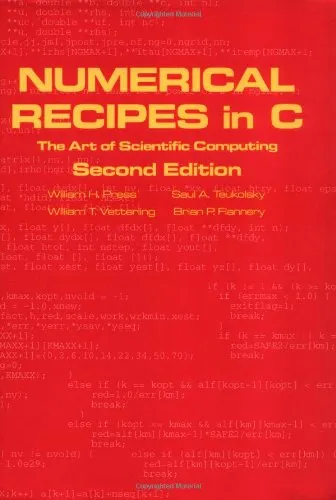
William H. Press,Brian P. Flannery,Saul A. Teukolsky,William T. Vetterling
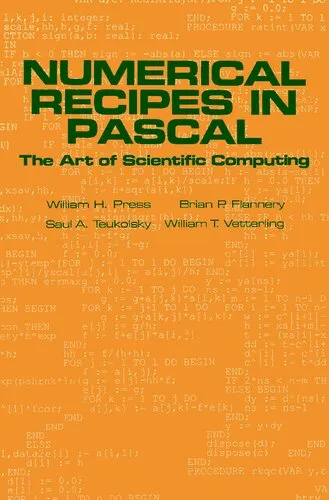
William H. Press,Brian P. Flannery,Saul A. Teukolsky,William T. Vetterling
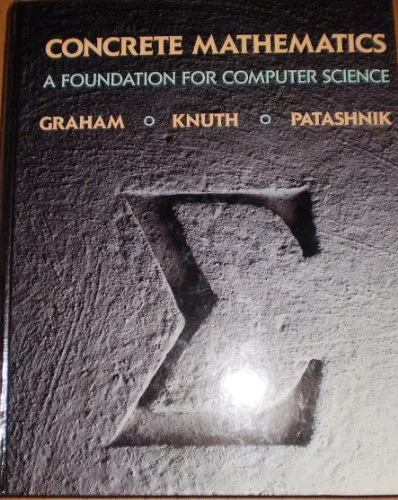
Ronald L. Graham,Donald E. Knuth,Oren Patashnik