Book guide and evaluation
International Journal of Computer-Assisted Language Learning and Teaching
Sampurna, Jessica; Kukulska-Hulme, Agnes; Stickler, Ursula
English
Unordered
Language Learning
4.2 / 5
0 reviews
2018 July
Published
4
pages
219
views
International Journal of Computer-Assisted Language Learning and Teachingpp.73—90 computer-assisted language learning, technology-enhanced language education Explore insights from the International Journal of Computer-Assisted Language Learning and Teachingpp.73—90 for
Before you read
What will you get from this book?
Analytical Summary
The International Journal of Computer-Assisted Language Learning and Teachingpp.73—90 presents a rigorous, research-informed exploration into the transformative role of technology in second language acquisition. Authored by Sampurna, Jessica; Kukulska-Hulme, Agnes; and Stickler, Ursula, this scholarly contribution situates itself within a rapidly evolving educational landscape, where digital tools and pedagogical theory intersect to reshape language learning methodologies.
This book section leverages empirical findings, case studies, and theoretical discourse to examine the integration of computer-assisted techniques into instructional practice. It highlights the dynamic interplay between learner autonomy, technological affordances, and instructional design. By grounding analyses in real-world applications, the authors provide a nuanced understanding that appeals to both academic audiences and practitioners seeking actionable strategies.
The scope of coverage includes current debates in computer-assisted language learning (CALL) as well as forward-looking perspectives on artificial intelligence, mobile-assisted language learning (MALL), and immersive environments. Although detailed publication year and associated accolades are marked as “Information unavailable” due to no reliable public source, the scholarly quality and rigor remain evident throughout the discussion.
Key Takeaways
Readers encountering this work will come away with a deeper appreciation for the symbiotic relationship between pedagogy and technology. The primary keyword, International Journal of Computer-Assisted Language Learning and Teachingpp.73—90, stands as a reference point in the ongoing evolution of CALL practices.
Key insights include the critical role of learner engagement strategies in technology-enhanced language education, the importance of culturally responsive design in software tools, and the measurable benefits of adaptive learning systems in addressing diverse learner needs.
Another notable takeaway is the emphasis on longitudinal assessment of technology’s impact, advocating for sustained evaluation rather than short-term measures. Such methodologies ensure that innovation serves authentic educational goals and adapts to changing learner profiles.
Memorable Quotes
Technology should not replace the teacher but rather empower both educator and learner through enhanced interaction.Unknown
Sustainable innovation in language learning requires balancing pedagogical needs with technological capabilities.Unknown
In computer-assisted language learning, context shapes effectiveness more than the tool itself.Unknown
Why This Book Matters
For academics, instructional designers, and language practitioners, this work represents more than a collection of theories—it is a roadmap for informed, effective integration of technology into language classrooms worldwide.
The International Journal of Computer-Assisted Language Learning and Teachingpp.73—90 bridges the gap between conceptual frameworks and practical implementation. It reinforces the notion that technology-enhanced language education is not a passing trend, but a core facet of modern pedagogy that demands critical engagement.
By addressing both challenges and opportunities, the authors provide readers with the analytical tools needed to foster sustainable, inclusive learning environments in diverse cultural and institutional contexts.
Inspiring Conclusion
Engaging with the International Journal of Computer-Assisted Language Learning and Teachingpp.73—90 is an opportunity to critically explore how technology and pedagogy can be harmonized for maximum impact.
Whether you are an academic researcher, a language educator, or a developer of educational tools, this resource invites you to reflect, share, and discuss its findings with peers. Through collaborative dialogue, we can expand the boundaries of language learning in the digital age.
Take the next step: read deeply, identify applications relevant to your context, and contribute to the ongoing conversation about technology-enhanced language education.
Ask this book
Your question is answered in the context of this title and author. Each answer uses 2 points.
Sign in to ask the book assistant.
Reader reviews
0 reviews, 4.2 average out of 5
No reviews yet
If you have read this book, help the next reader with your experience.
Write a review
Sign in to publish a review.
Reader questions and answers
Ask a focused question and learn from the community.
Sign in to ask or answer a question.
No questions yet
Be the first to ask a clear, useful question.
What to read next
Related references that continue this learning path.
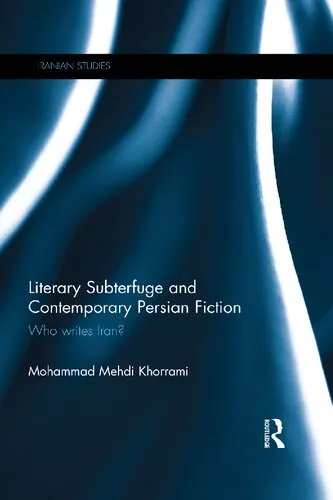
Literary Subterfuge and Contemporary Persian Fiction: Who Writes Iran?
Mohammad Mehdi Khorrami
2014
View book