
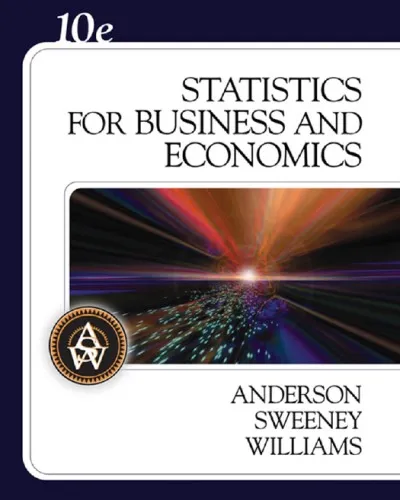
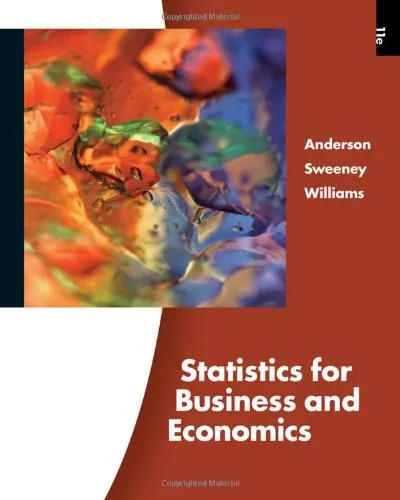
Statistics for Business and Economics, Tenth Edition
David R. Anderson,Dennis J. Sweeney,Thomas A. Williams
2008
View book
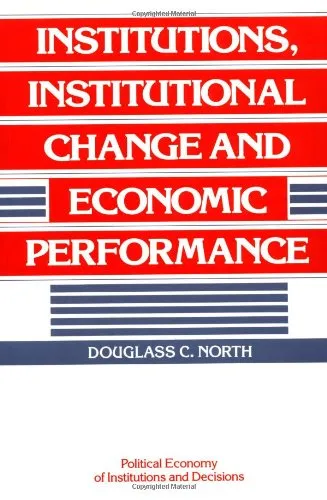
Book guide and evaluation
Douglass C. North
0 reviews
Published
pages
views
Introduction to "Institutions, Institutional Change, and Economic Performance" Written by the Nobel Prize-winning economist Douglass C. North, "Institutions, Institutional Change, and Economic Performance" is a groundbreaking exploration of the role institutions play in sh
Before you read
Written by the Nobel Prize-winning economist Douglass C. North, "Institutions, Institutional Change, and Economic Performance" is a groundbreaking exploration of the role institutions play in shaping economic outcomes. First published in 1990, this seminal work establishes a firm foundation for understanding how rules, norms, and organizations—referred to collectively as institutions—structure economic, political, and social interactions. Through its rich analysis, the book seeks to answer a pivotal question in economics: why do some economies develop and perform well, while others stagnate or regress over time?
North argues that institutions are the key to unlocking long-term growth and prosperity. By influencing the incentives and constraints that shape human behavior, institutions determine whether cooperation or conflict, innovation or stagnation, will dominate an economy. This book integrates insights from economics, history, political science, and sociology into a cohesive framework for understanding how formal rules and informal norms evolve, why some persist, and how they impact economic performance over centuries. Its analytical framework reshapes our understanding of economic development, providing a powerful toolset for policymakers, economists, and historians.
"Institutions, Institutional Change and Economic Performance" is organized into three core sections. First, North defines what institutions are and how they serve as both the "rules of the game" and the constraints within which economic actors operate. He distinguishes between formal institutions, such as laws and constitutions, and informal institutions, such as customs, traditions, and codes of conduct. These institutions shape the costs and benefits of economic activity, influencing how resources are allocated and how economies perform.
The second section delves into the dynamics of institutional change. North postulates that institutional evolution is driven by a combination of intentional design and unintended consequences. While political and economic elites often establish institutions to protect their interests, these institutions may adapt as individuals and groups respond to new challenges and opportunities. The author emphasizes that the process of institutional change tends to be incremental, path-dependent, and uneven, as it reflects the historical context in which organizations and individuals operate.
In the final section, North examines the long-term relationship between institutions and economic performance. He argues that successful economies are those whose institutions reduce transaction costs, provide incentives for innovation, secure property rights, and encourage cooperation. Conversely, extractive or inefficient institutions can trap societies in cycles of poverty, corruption, and underdevelopment. Using historical case studies, North illustrates how institutional frameworks have played a decisive role in the economic trajectories of nations, from medieval times to the modern era.
"Institutions are the humanly devised constraints that structure political, economic, and social interaction."
"It is the composite of formal rules, informal norms, and enforcement characteristics that together shape human behavior."
"The inability of societies to develop effective, low-cost enforcement of contracts is the most important source of both historical stagnation and contemporary underdevelopment."
"Institutions, Institutional Change and Economic Performance" is a cornerstone in the field of institutional economics and remains a must-read for anyone seeking to understand the complex interplay between rules, norms, and economic development. By bridging the gap between economic theory and historical analysis, Douglass C. North provides invaluable insights into why nations succeed or fail economically.
This book's relevance extends far beyond the academy. Policymakers, development practitioners, and business leaders can all benefit from North's detailed examination of how institutions shape economic performance. It equips decision-makers with a deeper understanding of how to foster institutional frameworks that promote long-term growth and reduce inequality.
Ultimately, North's work underscores the importance of institutions in shaping not only economic outcomes but also the broader trajectory of societies. Its lessons remain crucial in addressing today's pressing global challenges, from poverty alleviation to governance reforms.
Your question is answered in the context of this title and author. Each answer uses 2 points.
0 reviews, 4.5 average out of 5
Sign in to publish a review.
Ask a focused question and learn from the community.
Related references that continue this learning path.
David R. Anderson,Dennis J. Sweeney,Thomas A. Williams
David R. Anderson,Dennis J. Sweeney,Thomas A. Williams
David R. Anderson,Dennis J. Sweeney,Thomas A. Williams