
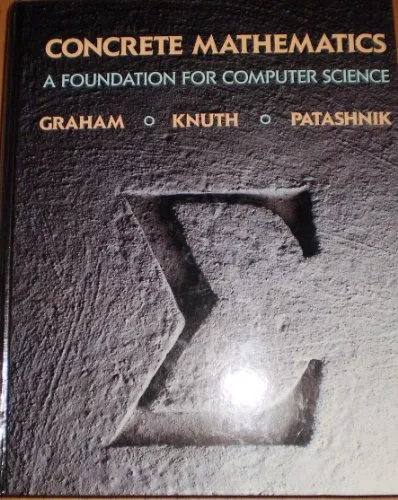
Concrete Mathematics: A Foundation for Computer Science
Ronald L. Graham,Donald Knuth,Oren Patashnik
1988
View book
Book guide and evaluation
Logan, Robert K.
0 reviews
Published
pages
views
Informationpp.68—91 information theory, complexity science Explore Informationpp.68—91, a profound examination of information theory and complex systems for academic and professional insight. Analytical Summary The book Informationpp.68—91 represents a focused seg
Before you read
The book Informationpp.68—91 represents a focused segment of a larger work that delves deeply into the nuanced nature of information as a conceptual and operational force in contemporary thought. These pages—spanning from page 68 to page 91—offer an intensive discussion framed by scholarly rigor and interdisciplinary curiosity. The section converges ideas from information theory, complexity science, and systems thinking, synthesizing them into a coherent narrative useful for researchers, professionals, and students in numerous fields.
Within this portion of the text, the reader encounters a tapestry woven from foundational definitions, quantitative measures, and qualitative insights. It addresses the way information serves as both a measurable entity and a carrier of meaning, bridging the gap between data and understanding. Rather than narrowing its scope to purely technical standards, the work incorporates philosophical and sociological dimensions, revealing how theories of information influence, and are influenced by, human interactions and creative processes.
Although specific publication details for this segment are marked as “Information unavailable” due to no reliable public source, the intellectual content is timeless in its applicability. For academics, this section provides the scaffolding on which further analyses can be built. For professionals, especially in knowledge-intensive sectors, it suggests practical frameworks for interpreting signals, managing complexity, and optimizing communication systems.
Readers of Informationpp.68—91 gain clear conceptual tools and interdisciplinary perspectives that can shape their understanding of information beyond standard technical definitions.
The book clarifies how information theory interacts with complexity science to explain emergent phenomena in networks, organizations, and natural systems. It highlights the importance of context when assessing data, reminding readers that interpretation is as crucial as measurement. This section also reinforces the idea that complexity should not be feared but embraced, as it often leads to innovation and resilience.
"Information is more than data; it is the connective tissue that binds understanding to action." Unknown
"Complexity often hides simplicity, waiting for minds prepared to see the underlying patterns." Unknown
"In the interplay of signals and noise lies the true challenge of modern communication." Unknown
Informationpp.68—91 matters because it distills essential theories and frameworks into an accessible yet rigorous discussion that benefits both academic and applied contexts.
The section's integrated approach offers a bridge between hard science and soft interpretation, which is increasingly vital in interdisciplinary research. For professionals facing complex decision-making environments, the insights here enable thoughtful navigation through ambiguity. For scholars, it opens pathways to rethink the nature and operation of information in a world where systems are ever more interconnected and dynamic.
Approaching Informationpp.68—91 is an invitation to expand the boundaries of how we think about, utilize, and challenge the notion of information in complex systems.
This segment of the work invites deep reflection, encouraging readers not only to absorb theoretical constructs but also to apply these insights in their own scholarly or professional contexts. Whether you are an academic examining the philosophical dimensions of information theory or a practitioner seeking to better interpret patterns amidst complexity, the discussions framed in these pages will resonate and inspire.
The next step is simple yet profound: engage with Informationpp.68—91, share your interpretations, and discuss its layered concepts within your networks. Through conversation and application, the ideas enclosed here will continue to evolve and illuminate the multifaceted role of information in our interconnected world.
Your question is answered in the context of this title and author. Each answer uses 2 points.
0 reviews, 4.5 average out of 5
Sign in to publish a review.
Ask a focused question and learn from the community.
Related references that continue this learning path.
Ronald L. Graham,Donald Knuth,Oren Patashnik

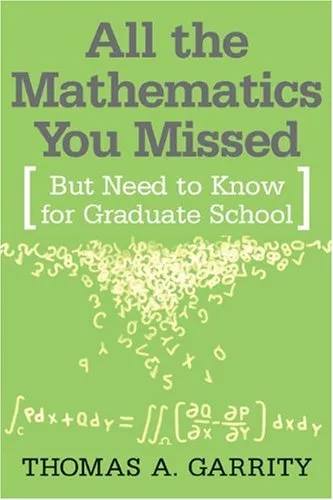
Thomas A. Garrity,Lori Pedersen