
Book guide and evaluation
Information management: a consolidation of operations, analysis and strategy
Michael Robert Middleton,Charles Sturt University. Centre for Information Studies
English
Beginner
Electromagnetism
4.9 / 5
0 reviews
2002
Published
542
pages
150
views
Introduction Welcome to "Information Management: A Consolidation of Operations, Analysis and Strategy," a comprehensive resource designed to empower practitioners, researchers, and strategists in the field of information management. This book focuses on bringing together the c
Before you read
What will you get from this book?
Introduction
Welcome to "Information Management: A Consolidation of Operations, Analysis and Strategy," a comprehensive resource designed to empower practitioners, researchers, and strategists in the field of information management. This book focuses on bringing together the critical elements of operational efficiency, analytical techniques, and strategic foresight to help readers better understand, utilize, and manage information in an ever-evolving digital landscape.
In an era where data is hailed as the new oil, effective information management is not just a tool for success but a necessity. This book unpacks the principles and practices that enable organizations and individuals to leverage information assets for decision-making, innovation, and competitive advantage. By addressing both the macro-level theoretical frameworks and micro-level practical tools, the book bridges the gap between abstract concepts and real-world applications.
The purpose of this book is to offer a holistic approach to information management that integrates the technological, managerial, and strategic dimensions. Whether you are a student aiming to grasp the core tenets of the field, or a professional seeking actionable insights, this book serves as a vital resource for deep and informed engagement with the subject.
Summary of the Book
This book is structured around three intertwined pillars: operations, analysis, and strategy, offering a multidimensional perspective on information management.
Operations: The first section explores the fundamental building blocks of information management operations. It delves into topics like data collection, storage, and retrieval, ensuring that readers have a solid foundation in the practical aspects of managing information systems.
Analysis: Analysis is the second core focus of the book. Here, readers will find detailed guidance on interpreting and processing data to derive actionable insights. Tools such as data visualization, statistical methods, and predictive modeling are unpacked, helping readers sharpen their analytical capabilities.
Strategy: Finally, the book concludes with an emphasis on the strategic value of information. It addresses questions like how leaders can use information to drive innovation, gain competitive advantage, and foster sustainable growth in a rapidly changing marketplace.
Each chapter of the book is designed with case studies, best practices, and thought-provoking exercises to ensure that readers can apply the concepts in diverse real-world scenarios. This approach makes the book both theoretically robust and practically engaging.
Key Takeaways
Here are the most important lessons you'll gain from this book:
- A clear understanding of the underlying principles of information management.
- Practical methods for organizing and maintaining data effectively.
- Techniques for analyzing data to deliver actionable insights.
- Strategies for leveraging information for long-term competitive advantage.
- Skills to navigate the complexities of a rapidly evolving digital landscape.
Famous Quotes from the Book
Highlighted below are some memorable quotes from the book, designed to inspire and provoke thought:
"Information is not merely a resource; it is the currency of success in the modern economy."
"The power of data lies not in its collection but in its transformation into critical knowledge."
"Strategic information management begins where raw data ends and decision-making starts."
Why This Book Matters
The increasing significance of information in today's world cannot be overstated. This book captures the importance of managing data effectively to unlock its true potential. Here's why "Information Management: A Consolidation of Operations, Analysis and Strategy" stands out:
First, it addresses the pressing need for information management practitioners to adopt a unified approach that balances operations, analysis, and strategy. As industries and organizations transform digitally, the demand for professionals who understand how to harness data and information assets effectively continues to grow.
Second, the concepts and methodologies discussed in this book are indispensable for decision-makers striving to stay competitive. Modern organizations operate in environments characterized by volatility, uncertainty, complexity, and ambiguity. This book provides the frameworks needed to navigate these challenges successfully.
Lastly, the book elevates its value by blending academic rigor with practical utility, making it equally valuable for students and working professionals. The inclusion of case studies, industry insights, and hands-on exercises ensures that the knowledge shared here can be directly translated into measurable outcomes.
In conclusion, "Information Management: A Consolidation of Operations, Analysis and Strategy" is not just a book—it's a roadmap for mastering the art and science of managing information in a way that drives growth, innovation, and sustainability.
Ask this book
Your question is answered in the context of this title and author. Each answer uses 2 points.
Sign in to ask the book assistant.
Reader reviews
0 reviews, 4.9 average out of 5
No reviews yet
If you have read this book, help the next reader with your experience.
Write a review
Sign in to publish a review.
Reader questions and answers
Ask a focused question and learn from the community.
Sign in to ask or answer a question.
No questions yet
Be the first to ask a clear, useful question.
What to read next
Related references that continue this learning path.

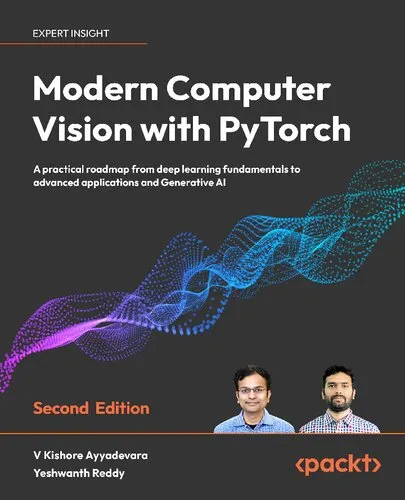
Modern Computer Vision with PyTorch: A Practical Roadmap From Deep Learning Fundamentals to Advanced Applications and Generative AI, 2nd Edition
V Kishore Ayyadevara,Yeshwanth Reddy
2023
View book