
Loading
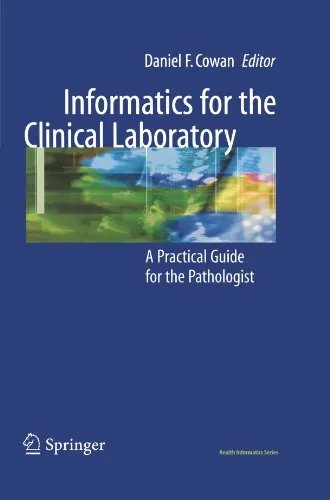
Cover of Informatics for the Clinical Laboratory: A Practical Guide for the Pathologist (Health Informatics)

Book guide and evaluation

Informatics for the Clinical Laboratory: A Practical Guide for the Pathologist (Health Informatics)

Daniel Cowan

English Unordered Medical
4.7 / 5

0 reviews

2005

Published

330

pages

258

views

This book will highlight all aspects of laboratory informatics, with a focus on information management and the corresponding hardware and technical processes involved. In addition to a comprehensive introduction on laboratory informatics, the book emphasizes the importance of inf

Before you read

What will you get from this book?

This book will highlight all aspects of laboratory informatics, with a focus on information management and the corresponding hardware and technical processes involved. In addition to a comprehensive introduction on laboratory informatics, the book emphasizes the importance of information and resource management as opposed to simply covering the role of computers that support the information system. As a Professor of Pathology and the Director of Laboratory Information Services at the University of Texas Medical Branch at Galveston, Dr. Cowan has witnessed the shift in focus in the laboratory from the information generation to information management, and increasing resource limitations demand a higher level of management precision than can be gained from manual methods. The American Board of Pathology now requires an increasing sophistication in information management from candidates for certification. Thus, this book is intended for pathologists and residents in pathology, clinical laboratory scientists, and laboratory and information managers. Following the broad-based introduction on laboratory informatics, the book's topics include: computer basics; development and validation of the laboratory information system; computer networks; security and confidentiality on computer systems and networks; total cost of ownership; essential software; interfaces; process modeling; artificial intelligence and expert systems; bar coding in the laboratory; image analysis and computer-assisted quantitation; and telepathology.

Ask this book

Your question is answered in the context of this title and author. Each answer uses 2 points.

Sign in to ask the book assistant.

Reader reviews

0 reviews, 4.7 average out of 5

No reviews yet

If you have read this book, help the next reader with your experience.

Write a review

Sign in to publish a review.

Reader questions and answers

Ask a focused question and learn from the community.

Sign in to ask or answer a question.

No questions yet

Be the first to ask a clear, useful question.