React Interact: Situations for Communication, Third Edition
Donald R. H. Byrd,Isis C. Clemente
2001
View book
Book guide and evaluation
Robert B. Cialdini
0 reviews
Published
pages
views
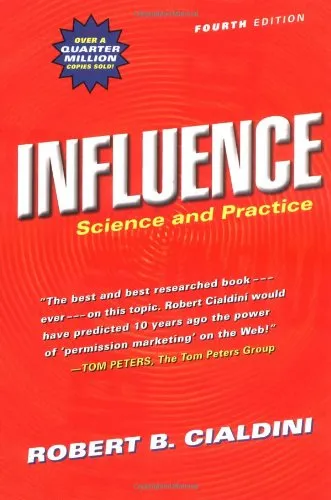
Introduction to 'Influence: Science and Practice' Welcome to a detailed exploration of "Influence: Science and Practice," a seminal work by Robert B. Cialdini. In this book, readers are taken on an enlightening journey through the mechanisms of influence and how they operate i
Before you read
Welcome to a detailed exploration of "Influence: Science and Practice," a seminal work by Robert B. Cialdini. In this book, readers are taken on an enlightening journey through the mechanisms of influence and how they operate in our daily lives. Cialdini, with his profound understanding of human psychology, opens a window into the realm of persuasion, making this book a must-read for anyone looking to grasp the art and science of influence.
"Influence: Science and Practice" is grounded in rigorous research and is designed to provide both theoretical and practical insights into the process of persuasion. Cialdini identifies six key principles that underlie the art of persuasion: Reciprocity, Commitment and Consistency, Social Proof, Authority, Liking, and Scarcity. Each principle is explored in detail, supported by empirical research and real-world examples that illustrate their power and impact.
The principle of Reciprocity refers to the intrinsic human tendency to return favors. Cialdini explains that when people receive something, they feel compelled to give back. Commitment and Consistency relate to the desire to align actions with proclamations. When individuals make commitments, especially publicly, they strive to conform to those commitments.
Next, Social Proof outlines how individuals often look to the behavior of others when making decisions, especially in situations of uncertainty. Authority reveals the extent to which people are influenced by perceptions of expertise, while Liking demonstrates that people are more easily persuaded by people they like. Lastly, Scarcity captures how limited availability or a perceived rarity increases desirability.
“A well-known principle of human behavior says that when we ask someone to do us a favor, we will be more successful if we provide a reason.”
“The truly gifted negotiator is able to get what he wants largely because he’s so eminently likable.”
“Where all think alike, no one thinks very much.”
The significance of "Influence: Science and Practice" lies in its universal applicability and its ability to bridge the gap between academic theory and real-world practice. It is invaluable to marketers, negotiators, managers, and essentially anyone who wishes to influence others. Furthermore, by exposing the psychological triggers of influence, Cialdini effectively arms readers against manipulation, fostering more informed decision-making in both personal and professional spheres.
Cialdini's work is not only a toolkit for persuasion but also a reflective lens on human nature. It encourages self-awareness regarding susceptibility to influence and promotes ethical influence practices. By understanding and respecting the principles outlined in this book, individuals can improve their ability to lead, sell, and inspire, while ensuring their decisions are fair and well-grounded.
Ultimately, "Influence: Science and Practice" continues to stand as a foundational text in the fields of psychology and persuasion, offering timeless insights into the subtle forces that shape human behavior.
Your question is answered in the context of this title and author. Each answer uses 2 points.
0 reviews, 5.0 average out of 5
Sign in to publish a review.
Ask a focused question and learn from the community.
Related references that continue this learning path.
Donald R. H. Byrd,Isis C. Clemente