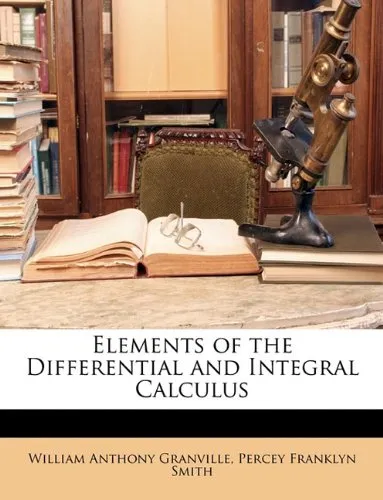
Elements of Differential and Integral Calculus
William Anthony Granville,Percey Franklyn Smith
2010
View book
Book guide and evaluation
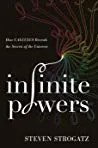
Steven H. Strogatz
0 reviews
Published
pages
views
Introduction to "Infinite Powers: How Calculus Reveals the Secrets of the Universe" Mathematics is often regarded as a tool for understanding the natural world, but few branches of math encapsulate the beauty, utility, and depth of the universe as p
Before you read
Mathematics is often regarded as a tool for understanding the natural world, but few branches of math encapsulate the beauty, utility, and depth of the universe as powerfully as calculus. In "Infinite Powers: How Calculus Reveals the Secrets of the Universe," renowned mathematician Steven H. Strogatz brings calculus to life in a way that is both inspiring and accessible. This book tells the story of how calculus, one of the most revolutionary ideas in human history, has shaped science, technology, and modern-day life.
With a blend of elegant storytelling, historical insights, and mathematical clarity, "Infinite Powers" takes readers on a journey from ancient mathematical concepts to contemporary scientific achievements. The author reveals the profound ways in which calculus has allowed us to make sense of the infinite and the infinitesimal, solve real-world problems, and unlock the mysteries of nature.
Written for curious minds—whether you're a math enthusiast, a science lover, or a newcomer to the subject—this book offers a fresh perspective on calculus and demonstrates why it holds a central place in the intellectual history of humanity.
At its core, "Infinite Powers" explains that calculus is the mathematics of change and motion. It is the language that scientists, engineers, and anyone studying the natural world use to describe how things evolve and interact over time and space. Steven Strogatz describes calculus as the "greatest breakthrough in the history of humanity," likening it to a superpower that allows us to make sense of the chaos around us.
The book is divided into thematic chapters, each exploring a different era in the history of calculus or a foundational principle. From the ancient Greeks' fascination with infinity to the invention of calculus by Isaac Newton and Gottfried Wilhelm Leibniz in the 17th century, the narrative delves into the key milestones that have shaped the discipline. Strogatz also brings the story into the modern era by showing how calculus is the engine driving cutting-edge developments in artificial intelligence, medical imaging, space exploration, and beyond.
With vivid anecdotes and real-world examples, the author reveals how calculus is not merely an abstract mathematical concept but an indispensable tool for understanding the world. Along the way, readers gain a fresh appreciation for concepts such as limits, derivatives, integrals, and infinite series—ideas that are at the heart of calculus—and see how these ideas connect to everyday phenomena like the spread of diseases, the trajectory of a rocket, or even how a smartphone functions.
"Calculus is the studying of the continuous—how things change smoothly, not in jumps."
"The infinity principle is the mathematical version of slicing things into ultra-thin pieces, ambitious enough to solve the unsolvable."
"Newton and Leibniz didn’t invent the universe’s rules; they discovered them, unveiling a hidden language woven into the fabric of reality."
"Infinite Powers" is more than a book about calculus; it is a story about humanity's relentless quest to understand the universe. It speaks to the innate human curiosity to explore the unknown and make sense of the infinite. This book matters because it bridges the gap between the abstract world of mathematics and its tangible applications in daily life, science, and technology.
By elucidating one of the greatest ideas ever conceived, Strogatz empowers readers not only to appreciate the history of calculus but also to harness its insights in the challenges of the modern era. It is a celebration of intellectual triumph and a timely reminder of the interconnections between science, mathematics, and human progress.
Your question is answered in the context of this title and author. Each answer uses 2 points.
0 reviews, 4.7 average out of 5
Sign in to publish a review.
Ask a focused question and learn from the community.
Related references that continue this learning path.
William Anthony Granville,Percey Franklyn Smith