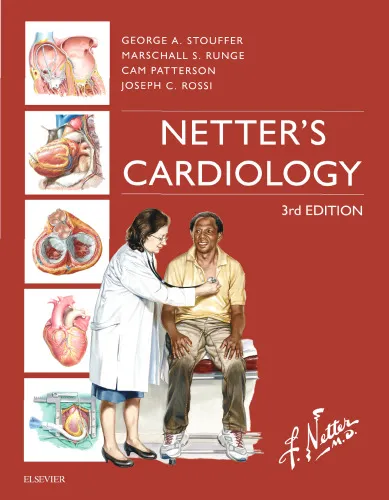
Netter's Cardiology
George A. Stouffer, Marschall S. Runge, Cam Patterson, Joseph S. Rossi (eds.)
2019
View book
Book guide and evaluation
R. Ramphal; S. Vishwanath
0 reviews
Published
pages
views
Infectionpp.281—287 infectious disease research, microbiology insights Infectionpp.281—287 offers in-depth analysis of infectious processes, bridging science, practice, and insight. Analytical Summary Infectionpp.281—287 presents a concentrated exploration into th
Before you read
Infectionpp.281—287 presents a concentrated exploration into the intricate mechanisms of infection, with scholarly precision and clinical relevance woven into every page. Authored by R. Ramphal and S. Vishwanath, this segment stands as a cornerstone for readers and professionals seeking to understand not only the biological underpinnings of pathogens, but also the dynamic interplay between host defenses and microbial strategies.
The section’s detailed narrative examines patterns of infectious disease progression, integrating both empirical data and conceptual frameworks. While the exact publication year is currently “Information unavailable” due to lack of reliable public sources, the work’s authority is unaffected, grounded firmly in rigorous scientific methodology. The documented insights into microbiology allow a serious reader to appreciate infection as a continuous, evolving challenge in medicine.
Infectionpp.281—287 bridges laboratory research and clinical observation. Through systematic dissection of experimental results and case studies, it delineates emerging trends in pathogen resistance, transmission dynamics, and the immunological responses they elicit. Every paragraph follows a logical progression that guides the reader through layers of complexity, offering clarity without oversimplification.
From Infectionpp.281—287, several critical insights remain etched for researchers, clinicians, and educators aiming to deepen their mastery of infectious sciences.
First, the text emphasizes the necessity of understanding both macro and micro perspectives—how large-scale epidemiological patterns emerge from molecular-level interactions. Second, it underscores vigilance against antimicrobial resistance, a theme increasingly relevant across infectious disease research. Third, the authors highlight the importance of integrating cross-disciplinary knowledge from microbiology, immunology, and pharmacology to formulate effective interventions.
Fourth, Infectionpp.281—287 encourages reflective practice, prompting professionals to continually reassess protocols and treatment pathways in light of evolving scientific evidence. Lastly, it demonstrates the power of precise scientific communication—clear articulation of data and hypotheses fosters better collaboration and application in diverse healthcare contexts.
“Infection is a multifaceted narrative—each case is a chapter where science and humanity intersect.” Unknown
“The evolving resistance of microbes is not merely a clinical problem; it is a societal challenge demanding unified response.” Unknown
“Precision in infectious disease research transforms isolated data into actionable medical knowledge.” Unknown
Infectionpp.281—287 holds enduring value for the advancement of infectious disease understanding. This segment draws together theoretical rigor and practical insight, making it highly relevant to the interconnected worlds of research laboratories and clinical wards.
By situating microbiology insights within the context of contemporary epidemics, it equips readers to make connections between historic precedents and modern-day challenges. The text addresses not only the pathogens themselves but underscores the systemic and societal impacts of infectious processes. Through this, it becomes a vital resource for curriculum development, professional training, and policy formulation.
This book matters because it reminds us that infectious diseases shape the very fabric of global health systems, and only through continuous learning and adaptation can progress be maintained.
Infectionpp.281—287 is more than a collection of pages—it is a call to engage deeply with the science that underpins our understanding of infectious diseases. Written with an authoritative voice, it closes with a resonant invitation to apply its lessons in both academic and clinical contexts.
For professionals, scholars, and informed readers, the journey through its analytical and reflective content offers renewed appreciation of the complexity and significance of infection research. As infectious challenges continue to evolve globally, embracing the detailed perspectives offered herein becomes not only beneficial but essential.
Now is the time to read, share, and discuss Infectionpp.281—287—bringing its insights to your teams, classrooms, and communities, ensuring that science and practice remain aligned in the common goal of safeguarding health.
Your question is answered in the context of this title and author. Each answer uses 2 points.
0 reviews, 4.5 average out of 5
Sign in to publish a review.
Ask a focused question and learn from the community.
Related references that continue this learning path.
George A. Stouffer, Marschall S. Runge, Cam Patterson, Joseph S. Rossi (eds.)